

An entrepreneur researching business formation discovered conflicting information about LLC costs. One website quoted $50 total, another claimed $500, while a third mentioned ongoing annual fees she hadn't budgeted for. Without understanding how much does it cost to start an LLC, she couldn't accurately plan her startup budget or compare formation options effectively.
How much does it cost to start an LLC depends on state filing fees, required compliance costs, and optional services chosen. As of 2025-2026, the average cost to form an LLC across all U.S. states, including the state filing fee and typical annual report fee, is about $224 in the first year. This includes an average filing fee of roughly $123 and an average annual fee of about $73.
Understanding both mandatory and optional expenses helps prospective business owners budget realistically for LLC formation and ongoing maintenance. Forbes provides guidance on LLC setup steps and associated costs.
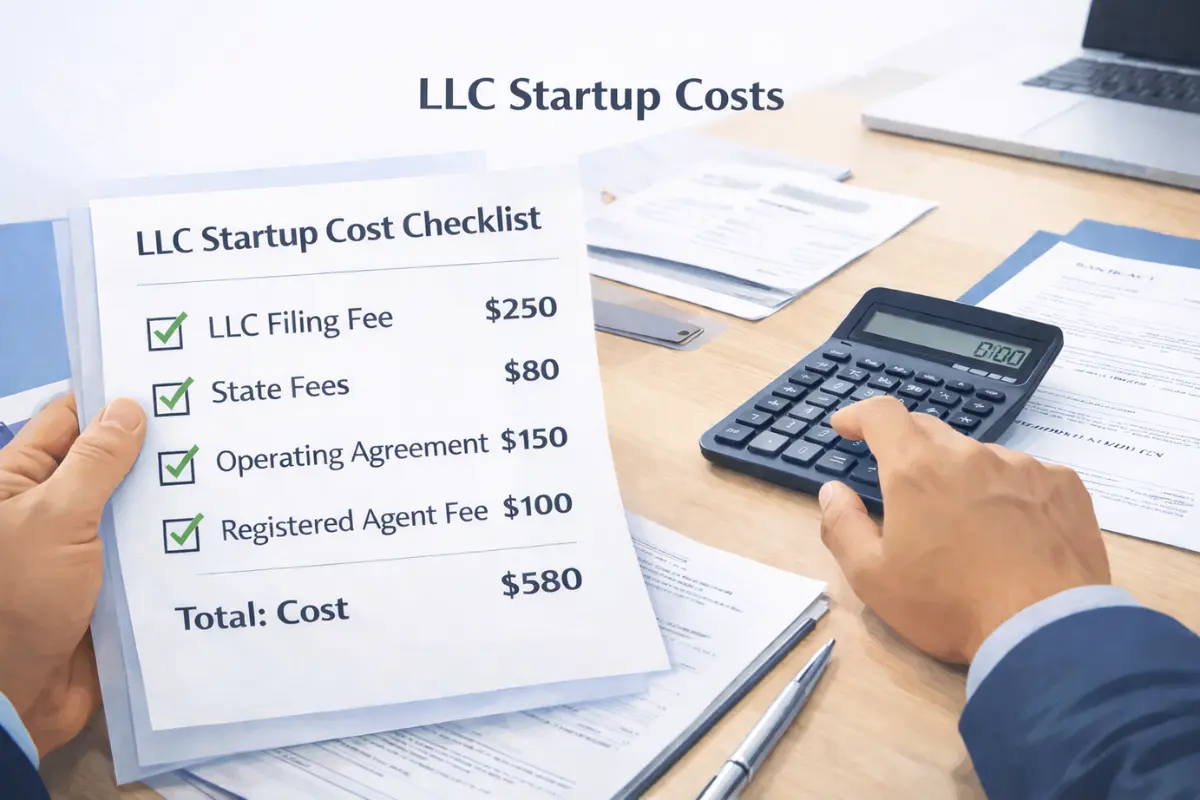
These costs are for demonstration only; actual LLC fees vary by state and may change over time.
Key takeaways
-
LLC startup costs vary widely by state, with initial filing fees ranging from about $35 in low-cost states like Montana to around $500 in high-cost states such as Massachusetts.
-
The average first-year cost to form and maintain an LLC across all states is approximately $224, including both the initial state filing fee and a typical annual report fee.
-
Ongoing LLC expenses can include annual or biennial reports, franchise taxes (such as California’s $800 minimum tax), and other state-specific maintenance fees.
-
Optional costs—such as professional registered agent services, operating agreement preparation, name reservations, and DBA filings—can add convenience and protection but increase the total budget.
-
A bare‑bones DIY LLC in the cheapest states may cost roughly $150–$250 for the first year, while using professional formation and compliance services in higher‑cost states can push first‑year costs toward $700–$1,000 or more
What Is an LLC and Why Do Formation Costs Vary
Limited Liability Companies combine liability protection with operational flexibility. Business entity filing cost structures vary because each state sets its own Secretary of State filing fees and compliance requirements. No single nationwide price exists for LLC formation.
LLC filing fees by state range from $35 in Montana to $500 in Massachusetts. These variations reflect different state administrative costs, legislative priorities, and revenue needs. State business filing fees fund state agencies that process formation documents and maintain business databases.
Formation costs depend on state rules, filing methods, and service choices. Online filings typically cost less than paper submissions in most jurisdictions. Professional formation services charge fees but offer convenience and reduce errors. Understanding cost components helps business owners make informed budgeting decisions and avoid surprise expenses during the formation process.
Mandatory State Filing Fees (The Base Cost)
Every state charges an Articles of Organization fee or Certificate of Formation cost for processing LLC formation documents. These mandatory fees represent the minimum LLC registration fee required to legally establish an LLC. The SBA explains how to plan startup costs for small businesses.
Secretary of State filing fees cover document processing, database entry, and certificate issuance. States with higher administrative costs typically charge more. Geographic location significantly affects formation costs, with coastal states generally charging higher fees than inland states.
The total cost of forming an LLC begins with this base filing fee that cannot be avoided. Montana charges $35 while Massachusetts requires $500 for the same basic service. Most states fall between $50 and $200 for standard processing. These fees apply whether you file independently or use formation services, though service providers add their own fees on top of state costs.
Annual & Ongoing State Fees
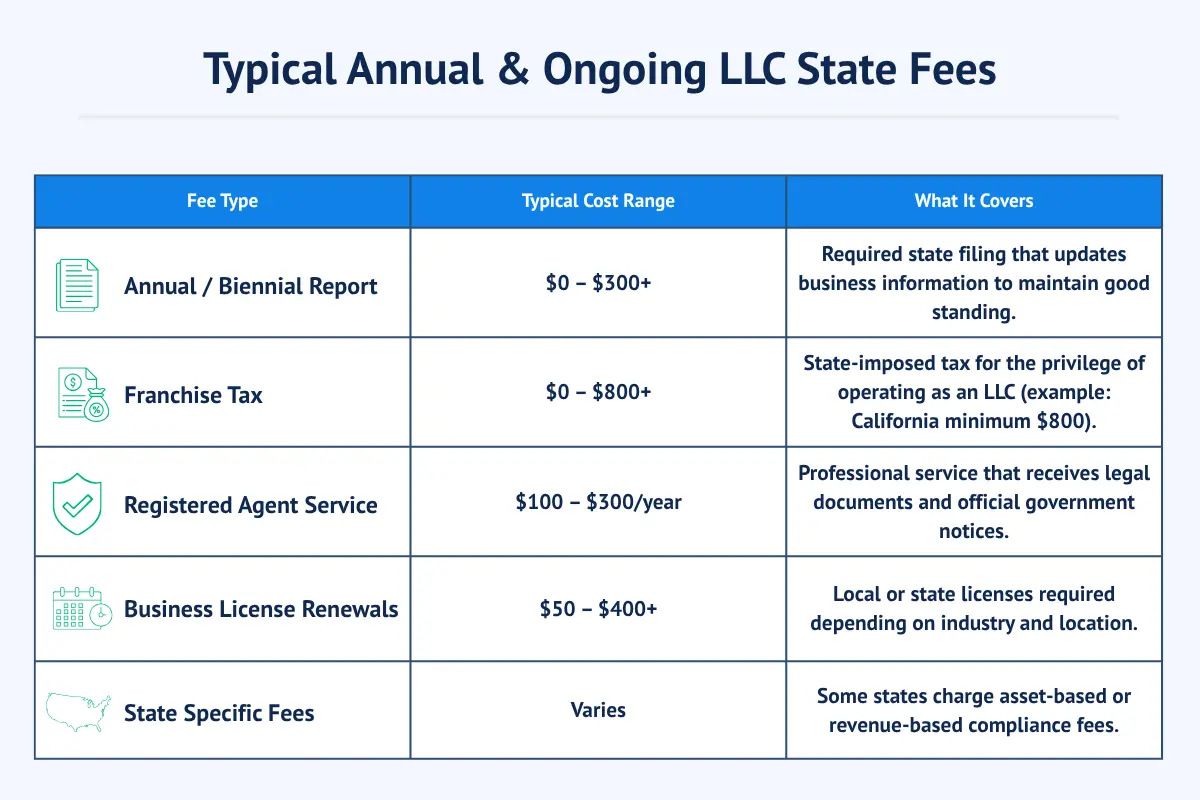
Annual report filing requirements maintain LLC active status and good standing. Business compliance costs continue after formation through periodic reporting obligations. States require annual or biennial reports updating business information, including registered agent addresses, member names, and principal office locations.
Biennial report fee structures vary by state, with some jurisdictions requiring updates every two years instead of annually. Some charge flat fees while others calculate costs based on LLC members, revenue, or assets. California requires an annual $800 franchise tax for LLCs, regardless of revenue, making it one of the most expensive states for ongoing LLC maintenance.
LLC renewal fee amounts range from zero in some states to several hundred dollars in others. How much does an LLC cost per year depends on state requirements and business characteristics. Tennessee charges a minimum annual fee of $300, while Arizona requires no annual fee but requires filing a periodic report to maintain good standing.
Optional LLC Startup Costs to Consider
Beyond mandatory state fees, business owners face optional expenses related to LLC operations. These LLC formation service cost items vary based on business goals, state rules, and owner preferences. Optional services add convenience but aren't legally required.
Service selection significantly affects the total cost of forming an LLC. Budgeting for both mandatory and optional expenses provides realistic financial planning. Understanding available options helps owners prioritize spending.
Name Reservation
Name reservation through California's Secretary of State secures business names before filing formation documents. This optional service prevents others from claiming desired names during preparation periods.
Reservation fees typically range from $10 to $75, depending onthe state. Reservation periods last 30 to 120 days. Businesses with specific naming needs or lengthy formation timelines benefit from reservation services.
Fictitious Business Name (DBA)
DBA registration allows LLCs operating under names different from their legal entity names. Fictitious names support branding while maintaining official LLC designations. County or state filings establish DBA rights.
DBA fees range from $10 to $150, depending on the jurisdiction. Some states require renewals every few years. Businesses that use public-facing brands different from their LLC names typically file DBAs.
Expedited Filing Fee
Expedited processing accelerates state approval timelines for urgent launches. Additional government fees provide faster document review and approval. Standard processing takes weeks, while expedited service may be completed within days.
Expedited costs range from $25 to $500, depending on the turnaround time. Same-day processing costs significantly more than 3-5 day options. Time-sensitive launches justify expedited expenses.
Registered Agent Services
Professional registered agent fees for LLC services provide privacy and reliability. While owners can serve as their own agents, registered agent services offer consistent availability and professional document handling.
Annual service fees typically range from $100 to $300. Services include mail scanning, compliance reminders, and permanent business addresses. Privacy-conscious owners particularly value professional agent services.
LLC Operating Agreement
Operating agreements establish ownership structures, management procedures, and member rights. Some states don't legally require them, but many owners enter into agreements to prevent future disputes.
Agreement costs range from free DIY templates to $1,000 for attorney-drafted documents. Multi-member LLCs particularly benefit from detailed agreements clarifying roles and responsibilities.
Annual Report Fee
Managed report services track filing deadlines, and submit required reports. This ongoing business compliance costs item maintains a good standing status. Forgetting annual reports risks administrative dissolution.
Filing fees vary from $0 to $500, depending on the state. Some states base fees on member count or revenue. Professional services charge additional fees for deadline tracking and submission management.
Costs of Legal and Tax Advice
Professional consultations provide personalized guidance during the formation process. Attorneys help structure LLCs appropriately while accountants advise on tax elections. These optional expenses increase upfront costs but prevent expensive mistakes.
Consultation costs vary widely based on complexity and professional experience. Simple consultations may cost $200-500, while comprehensive formation assistance can exceed $2,000. Complex business structures particularly benefit from professional guidance.
What Is the Total Cost to Start an LLC in 2026?
The cheapest state to form an LLC (Montana at $35), plus minimum expenses, totals approximately $150-250 for a completely DIY formation. This includes state filing, registered agent designation, and a basic operating agreement created from free templates.
LLC formation service cost packages typically range from $0 service fees plus state costs to $300-500 service fees plus state costs. Professional services handle paperwork, ensure accuracy, and provide ongoing support. Mid-range options, including professional registered agent service, operating agreement preparation, and expedited filing, total $700-1,000 for the first year.
First-year startup costs combine formation fees, registered agent fees, and initial compliance requirements. Ongoing annual costs include registered agent renewals, annual reports, and franchise taxes where applicable. How much does an LLC cost per year? The average costs $200-400 for basic compliance in moderate-cost states, though high-cost states like California can exceed $1,000 annually when including all required fees and taxes.
Budget planning should account for both predictable costs, such as annual reports, and potential expenses, such as amendments, name changes, or additional state registrations, if expanding into new markets.
Final Thoughts: Planning Your LLC Formation Budget
The Cost to form an LLC varies significantly based on the state selected and service options. Mandatory state business filing fees are the minimum costs, while optional services provide convenience and professional support. Realistic budgeting accounts for both startup and recurring expenses.
State-specific requirements significantly impact total costs. LLC filing fees by state range from $35 to $500, with annual fees adding $0 to $800 or more. Researching home-state requirements helps ensure accurate budget planning.
Professional services simplify formation but increase costs. Balancing DIY savings against professional expertise depends on the owner's experience and time availability. Contact InCorp to explore formation services and cost-effective compliance support.
FAQ's
What is the cost to file LLC formation documents?
The primary cost to form an LLC is the state filing fee, which typically ranges from about $35 to $500, depending on the state. State fees vary widely, with Montana at the lower end while states like Massachusetts are at the high end.
Are there ongoing fees after LLC formation?
Yes. Most states require an annual or biennial report fee or franchise tax to keep an LLC in good standing. These ongoing fees can range from around $0 up to several hundred dollars per year, depending on the state's requirements.
Do I have to hire a registered agent, and does it cost extra?
Every LLC is required to designate a registered agent to receive official legal and tax correspondence. While owners can technically serve as their own agent if they meet state requirements, doing so creates risks such as losing privacy, missing important notices, or being tied to a single location during business hours. That's why many companies hire a professional registered agent service instead. These services typically cost between $100 and $300 per year and help ensure compliance and peace of mind.
Are there optional or additional formation costs?
Yes. Business owners may incur optional expenses such as LLC operating agreements, name reservations, or DBA filings, which add to total start-up costs but are not required in every state.
Can LLC costs vary based on where I form my LLC?
Yes. The state of formation has a major impact on cost. For example, the filing fee in Montana is around $35, whereas in other states it can be closer to $500, and some states also require expensive annual maintenance.
How do LLC formation fees differ between domestic LLCs and foreign LLCs?
A domestic LLC pays the initial filing fee only in its home state, while a foreign LLC must also register and pay additional filing fees in every other state where it conducts business. These extra registrations can add several hundred dollars per state in formation and annual report fees, so multi‑state operations should plan for higher total LLC costs.
Do I need a separate business bank account for my LLC, and does it affect cost?
Opening a dedicated business bank account for your LLC is strongly recommended to separate personal and business finances and help protect your personal assets. While some banks waive monthly fees if you maintain a minimum balance, others charge ongoing account or transaction fees that should be included in your LLC's operating budget.
How does an LLC operating agreement impact costs and legal protection?
A basic operating agreement template can be free or low‑cost, but a customized agreement drafted by an attorney can cost several hundred dollars or more. Investing in a thorough operating agreement helps clarify ownership, profit sharing, and management rights, which can reduce the risk of costly disputes later.
Can expedited processing and expedited filing fees significantly change how much it costs to start an LLC in 2026?
Expedited processing is optional but can substantially increase your upfront cost to start an LLC in 2026, especially in states that charge high rush fees. Many business owners choose expedited filing when they need an LLC approved quickly to sign contracts, open a business bank account, or begin hiring employees on a tight timeline.
How do business licenses, sales tax licenses, and renewal fees affect total LLC costs over time?
Beyond LLC filing fees, many businesses must obtain a state or local business license, and retailers often need a sales tax license before they can operate legally. These licenses can involve initial application fees plus recurring renewal costs, which become part of the LLC's long‑term ongoing costs and should be built into the annual budget.
Disclaimer: This content is intended for general educational and informational purposes only and does not constitute legal, tax, or accounting advice. Every effort is made to keep the information current and accurate; however, laws, regulations, and guidance can change, and no representation or warranty is given that the content is complete, up to date, or suitable for any particular situation. You should not rely on this material as a substitute for advice from a qualified professional who can consider your specific facts and objectives before you make decisions or take action.