
Scaling a Service-Based Business from Solo to Team


A freelance marketing consultant turned away lucrative contracts for three years because she couldn't handle the workload alone. When a Fortune 500 company requested a $180,000 retainer, she finally faced reality: growth required help. Within six months of hiring her first team member, her revenue doubled, and she reclaimed evenings and weekends.
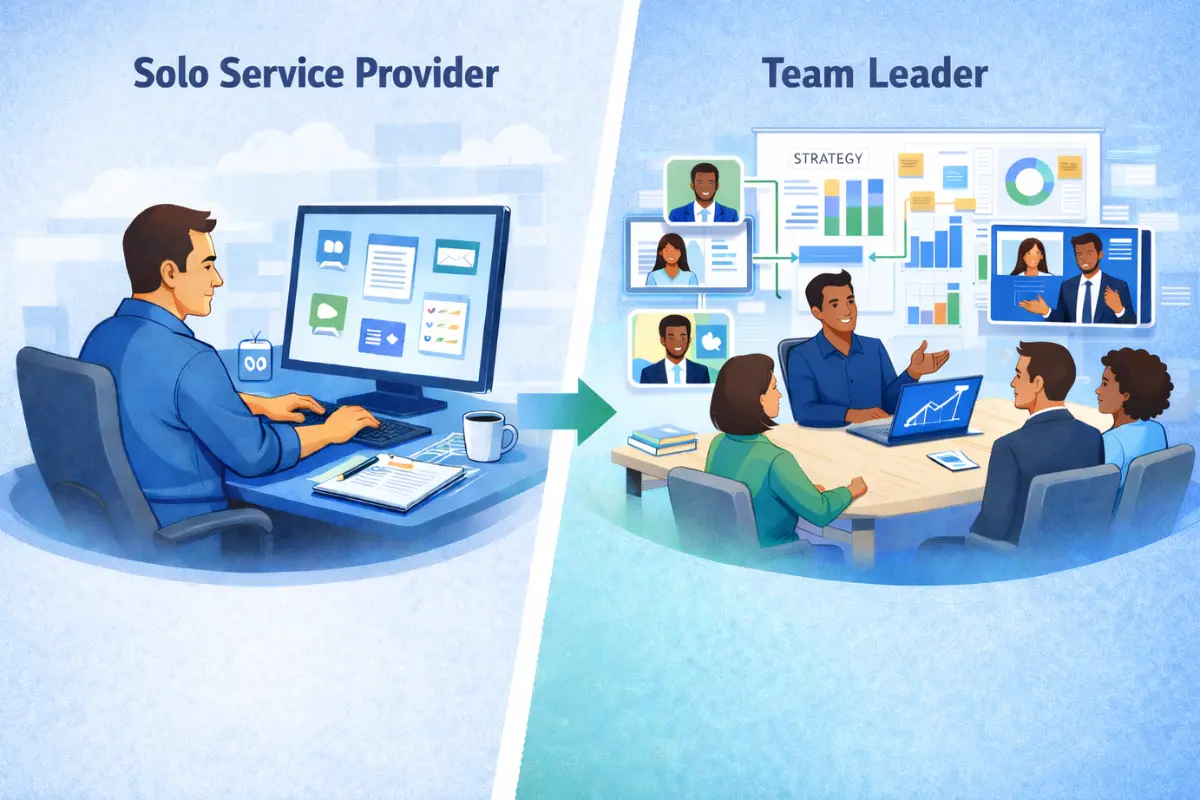
The journey from solo entrepreneur to team leader represents one of the most challenging transitions for service-based business owners. Unlike product companies that scale through inventory, service businesses grow through people and systems. According to Whop, about 81% of small businesses are non-employer firms, highlighting how common solo service business formation is before scaling. Understanding the differences between selling products and services helps entrepreneurs recognize that service businesses require different growth strategies.
This guide provides a roadmap for formalizing your entity, hiring compliant talent, and building operational infrastructure. Small service and professional businesses represent about 20% of U.S. employer firms, according to Bankrate. The transition from technician to CEO requires strategic planning and leadership development.
Key Takeaways
-
Scaling a service-based business from solo to team requires shifting from doing all the work yourself to building systems, hiring compliantly, and leading others instead of just executing.
-
Moving from a sole proprietorship to an LLC (and later, if appropriate, electing S‑Corp status) can improve personal asset protection, tax efficiency, and credibility with larger corporate clients.
-
Hiring even one employee creates new compliance obligations around EIN registration, payroll taxes, workers’ compensation, and forms like I‑9 and W‑4, so processes need to be in place before the first hire.
-
Documented standard operating procedures, clear roles, and basic tools (project management, CRM, communication platforms) are essential for consistent delivery as more people touch client work.
-
Professional registered agent and compliance monitoring services become more valuable as you expand into multiple states, helping maintain good standing so you can qualify for contracts, financing, and long-term growth.
Structural Evolution: Moving from Sole Proprietor to Entity
Operating as a sole proprietorship offers simplicity, but this informal structure becomes a liability as teams grow. Choosing the right service business legal structure protects personal assets and provides credibility. Without formal entity protection, client disputes or professional mistakes put your home and savings at risk. Proper service business registration through state filing establishes legal separation between the owner and the business.
The LLC as the Foundation for Growth
The Limited Liability Company (LLC) serves as the preferred vehicle for service firms due to its pass-through taxation and ease of management. Many consultants, coaches, and freelancers find that an LLC for service-based business operations provides the ideal balance of protection and simplicity. An LLC protects personal assets from business liabilities, critical when others represent your brand. Formation requires filing Articles of Organization with your state and adopting an Operating Agreement documenting ownership percentages and profit distribution methods.
Pass-through taxation means the LLC itself doesn't pay income taxes; profits and losses flow to members' personal returns, avoiding the double taxation faced by C-Corporations. For service-based business owners earning under $60,000 annually, the LLC provides optimal liability protection without compliance burdens.
The S-Corp Election for Tax Optimization
Established service teams can elect S-Corporation status to reduce self-employment taxes by paying the founder a reasonable salary and taking the remaining profits as distributions. Many accountants and consultants find that an S Corp for service business operations provides significant tax advantages once revenue grows. This election signals corporate maturity and requires disciplined payroll practices.
While LLC members pay 15.3% self-employment tax on all income, S-Corp owners pay payroll taxes only on salary, not on distributions. A consultant earning $150,000 could pay themselves an $80,000 salary and take $70,000 in distributions, saving approximately $10,710 annually. Understanding LLC vs S-Corp taxation helps founders determine when tax savings justify compliance costs.
S-Corp election requires processing payroll, filing quarterly Form 941 returns, and paying yourself a "reasonable salary" based on industry standards. Most tax professionals recommend the S-Corp election only when net business income exceeds $60,000 annually.
Implementing a Functional Organizational Structure
Shifting from a flat model in which everyone reports to the founder requires establishing functional departments such as Operations, Sales, and Delivery. Creating an organizational chart, even for small teams, provides structure and prevents confusion about roles.
Functional structure allows specialists to focus on specific areas while establishing clear chains of command. Founders must transition from doing the work to managing those who do it.
The Compliance Roadmap for Hiring Your First Team Members
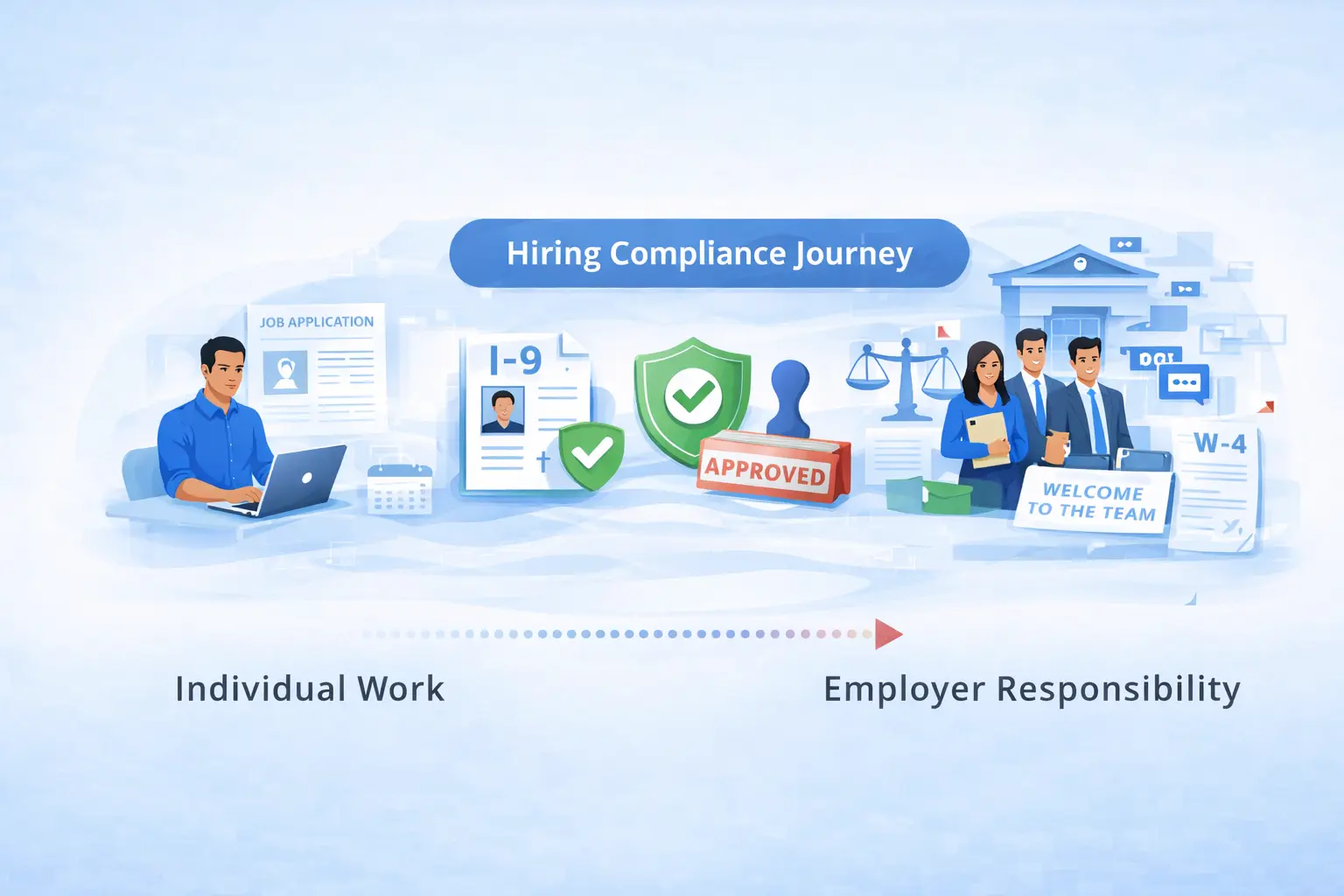
Hiring transforms your business into an employer with federal and state obligations that carry significant penalties for non-compliance. Proactive compliance prevents costly mistakes and ensures fair working environments.
Federal and State Tax Registrations
Obtaining an EIN (Employer Identification Number) is mandatory for payroll tax reporting. Apply through the IRS website and receive your EIN immediately.
Register with state agencies for withholding taxes and unemployment insurance. Most states require registration with the Department of Revenue for income tax withholding and the Department of Labor for unemployment insurance.
Mandatory Employee Documentation
Every new hire must complete Form I-9 (Employment Eligibility Verification) within three days of their start date. This federal form verifies legal authorization to work in the United States and requires examination of original identity documents. Failing to properly complete and retain I-9 forms can result in fines ranging from hundreds to thousands of dollars per employee.
Form W-4 (Employee's Withholding Allowance Certificate) determines how much federal income tax to withhold from paychecks. Employees complete this form based on their personal tax situations. Employers must report new hires to the state directory within 20 days to comply with national child support enforcement programs. This requirement helps states locate parents who owe child support and prevents unemployment insurance fraud.
Workers' Compensation and Liability Insurance
Most states mandate Workers' Compensation insurance as soon as you have one employee. This coverage protects both the employer and employee by providing medical benefits and wage replacement for work-related injuries. Requirements for workers' compensation insurance vary by state, and understanding where workers' compensation insurance is required by law helps ensure compliance.
Professional Liability insurance (Errors and Omissions) should cover work performed by team members. As your team delivers services on your behalf, their mistakes become your liability.
Developing Scalable Operations and Leadership Systems
The mindset shift from doing the work to managing people represents the most difficult transition for founders. Successful teams rely on clear systems ensuring consistent results without constant founder intervention.
Standard Operating Procedures (SOPs)
Documenting your service delivery process enables delegation without compromising quality. SOPs serve as compliance assets, ensuring team members follow safe, ethical, and legal work practices. According to research on Standard Operating Procedures, proper documentation reduces errors and accelerates training.
Effective SOPs include step-by-step instructions, screenshots, tools required, and expected outcomes. Start with high-frequency tasks impacting client satisfaction, such as project onboarding or customer communication protocols.
Moving from "Doer" to Trainer and CEO
Document your "secret sauce" early by summarizing discovery calls, delivery methods, and client relationship strategies into training materials. The founder's role is to empower the team through mentorship, feedback, and strategic vision.
This transition requires letting go of perfectionism and accepting different approaches. Focus on outcomes rather than methods, providing clear expectations while allowing autonomy.
Implementing Technology for Team Oversight
Project management tools like ClickUp or Asana create transparency and track task progress. CRM software manages client relationships consistently as touchpoints increase.
Technology should support, not replace, human communication. Regular team meetings and check-ins build a culture that software alone cannot provide.
The Role of a Professional Registered Agent in Team Expansion
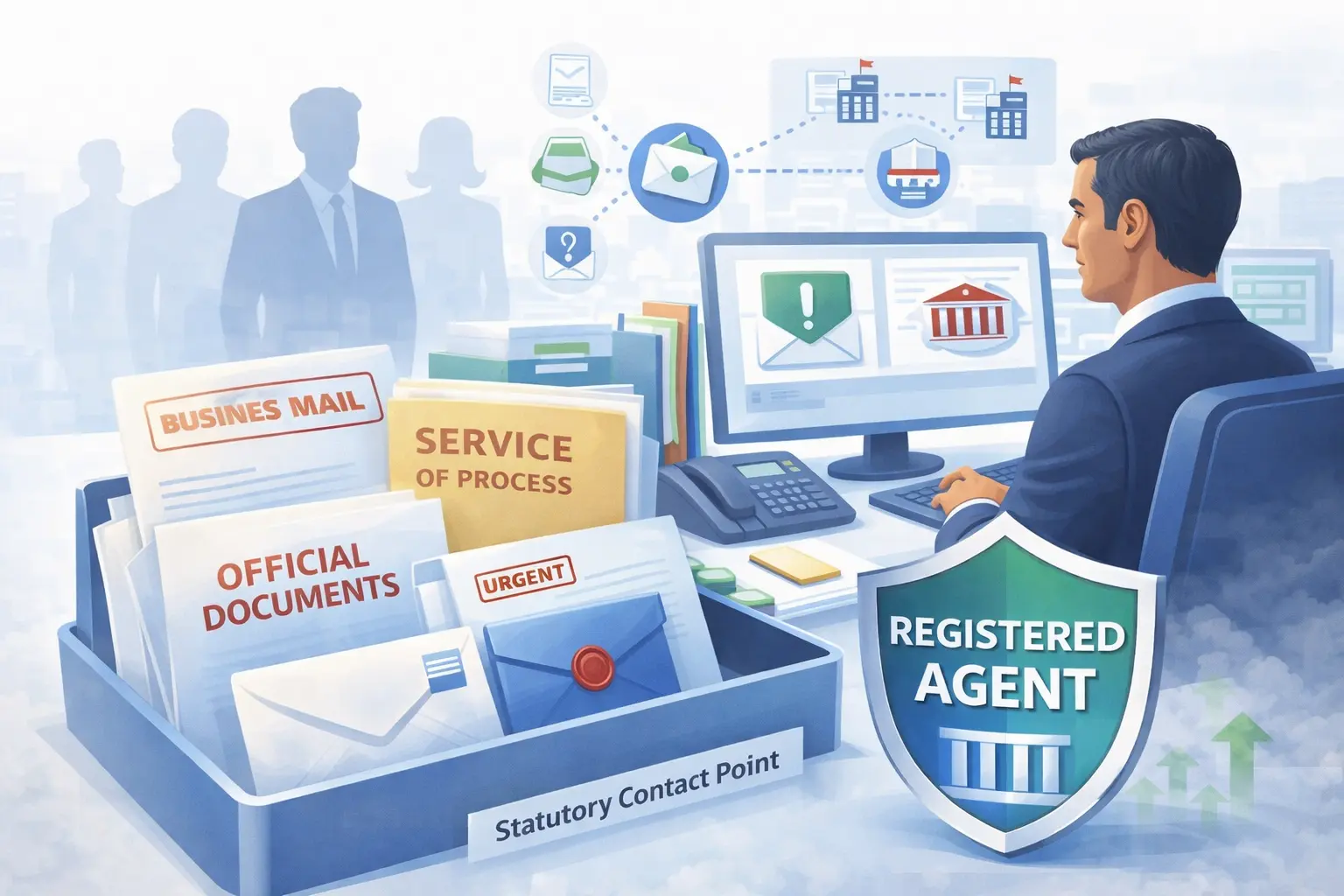
As teams grow, so does the volume of official state and legal correspondence. The mandatory registered agent requirement serves as the entity's statutory point of contact. Missing legal notices can result in administrative dissolution or default judgments.
Privacy Protection for Growing Brands
Professional services like InCorp keep founder home addresses off public state databases, preventing process servers or state auditors from appearing at your office in front of employees or clients. This privacy protection becomes increasingly valuable as your business profile grows.
Understanding how to choose the right registered agent helps founders select reliable, professional services that protect privacy while ensuring compliance. Professional registered agents maintain consistent business hours and provide secure document handling.
National Presence for Remote and Distributed Teams
Hiring employees in different states requires registering as a foreign entity in each state. A national registered agent provider manages these registrations through a single dashboard, providing a consistent presence nationwide.
Multi-state expansion increases complexity with varying employment laws and tax requirements. Professional registered agent services centralize management and ensure timely filings.
Monitoring Long-Term Compliance with EntityWatch®
InCorp's proprietary EntityWatch® system provides real-time monitoring of state records and automated alerts for upcoming annual corporate filings and franchise tax payments. This proactive oversight proves essential for maintaining Good Standing, often a prerequisite for securing business loans or winning large corporate contracts.
The system monitors entities across all 50 states, tracking filing deadlines, fee changes, and regulatory updates. Automated reminders prevent missed deadlines that could result in late fees, penalties, or administrative dissolution. For growing service-based business teams juggling multiple priorities, automated compliance monitoring through EntityWatch® eliminates administrative burden while ensuring regulatory adherence.
Professional compliance monitoring becomes increasingly valuable as operations grow complex. Rather than managing calendars, tracking deadlines, and researching requirements across multiple states, founders can focus on strategic growth while compliance systems work in the background.
Build the Legal and Operational Backbone Your Team Needs to Grow
Transitioning from solo to team requires a robust legal structure and commitment to operational discipline. Business compliance for small teams includes proper entity formation, compliant hiring practices, documented processes, and professional support systems. The foundation you build today determines your capacity to scale tomorrow. Without proper entity formation, compliant hiring practices, documented processes, and professional support systems, growth becomes chaotic and unsustainable.
Explore InCorp's formation and registered agent services to scale your service-based business professionally. Proper formation lays a strong foundation for growth, fundraising, and eventual exits. The EntityWatch® system maintains compliance necessary for sustainable team growth and business expansion planning.
Visit InCorp's business services to discover comprehensive solutions supporting service business formation, compliance, and growth across all jurisdictions. Building the right foundation now prevents costly restructuring, legal complications, and operational chaos later.
FAQ's
When is the right time to stop operating as a solopreneur?
When client demand consistently exceeds your personal capacity and revenue growth is limited by your available hours, it's a strong signal to build a team-based structure. Other indicators include regularly working evenings and weekends, declining profitable opportunities, or experiencing burnout from managing every aspect of the business yourself.
Can contractors be used instead of employees during early team growth?
Yes, but only if the working relationship meets federal and state independent contractor classification standards to avoid misclassification risks. Understanding how to hire contractors properly requires following the IRS three-factor test, which examines behavioral control, financial control, and the nature of the relationship. Contractors must maintain independence, work for multiple clients, use their own tools, and set their own schedules. Misclassifying employees as contractors can result in back taxes, penalties, and legal liability.
Does expanding a team require changes to client contracts?
Often, yes—contracts may need updated language addressing delegation of work, confidentiality, and liability when team members deliver services. Clients want assurance that quality standards remain consistent regardless of which team member performs the work. Clear contract language about team delivery, supervision, and quality control protects both parties and sets appropriate expectations.
How early should leadership and management training begin?
Leadership systems should be developed before rapid hiring to ensure consistency, accountability, and smooth onboarding experiences. Founders transitioning from doer to manager benefit from formal leadership training, management courses, or executive coaching. Developing delegation skills, communication strategies, and performance management frameworks before hiring prevents common mistakes and fosters a positive team culture from day one.
What's the smartest first hire when scaling a service-based business from solo to team?
The best first hire is usually someone who removes the work that pulls you away from revenue-generating activities—often an operations assistant or virtual assistant to handle admin, client communication, and repetitive tasks. This lets a service business owner stay focused on sales calls, service delivery, and content creation that brings in qualified leads and total revenue, while still improving customer experience for current clients.
How can I tell if my service business model is truly scalable?
A scalable service business has clearly defined service offerings, consistent processes, and systems that allow more clients to be served without the founder doing every task. If you can document step-by-step workflows, delegate delivery to a team, and maintain quality while increasing client volume and cash flow, your business model is moving toward genuine scalability rather than just "working harder."
What processes should I document first when preparing to scale from solo to team?
Start with the parts of your growth engine that you repeat most often and that affect revenue and client experience: lead handling, sales calls, client onboarding, and core service delivery steps. Writing out exact steps, adding checklists, and embedding these in project management tools creates a playbook new hires can follow so you don't have to re‑train from scratch every time you add someone to the team.
How do I keep cash flow stable while hiring and scaling a service team?
Use retainers, upfront deposits, or milestone billing so payments arrive predictably and cover new payroll or contractor costs. Before hiring, review data on your pipeline and recurring revenue, then make informed decisions about how many new clients your current cash flow can support without putting the business under pressure if a project is delayed or a customer churns.
What role does a tech stack play in scaling a service-based business?
A thoughtful tech stack—project management, CRM, time-tracking, and basic automation—reduces overhead by handling repetitive tasks and keeping client and project data centralized. With the right tools in place, business leaders can coordinate marketing, sales, and service delivery across a growing team, making it easier to onboard new hires, track performance, and keep operations lean as demand and revenue increase.
Disclaimer: This content is intended for general educational and informational purposes only and does not constitute legal, tax, or accounting advice. Every effort is made to keep the information current and accurate; however, laws, regulations, and guidance can change, and no representation or warranty is given that the content is complete, up to date, or suitable for any particular situation. You should not rely on this material as a substitute for advice from a qualified professional who can consider your specific facts and objectives before you make decisions or take action.
Share This Article:
Stay in the know!
Join our newsletter for special offers.