
What Is an Apostille? Explore Its Role in International Documents


A U.S.-based technology company is prepared to launch operations in Germany. Their German legal counsel requested certified copies of their Articles of Incorporation and Certificate of Good Standing. The company submitted notarized versions, assuming notarization would suffice for international recognition. German authorities rejected the documents, explaining that member countries of the Hague Convention require apostilles rather than simple notarization. The company then spent additional weeks obtaining proper apostilles, delaying their market entry and costing valuable time in a competitive landscape.
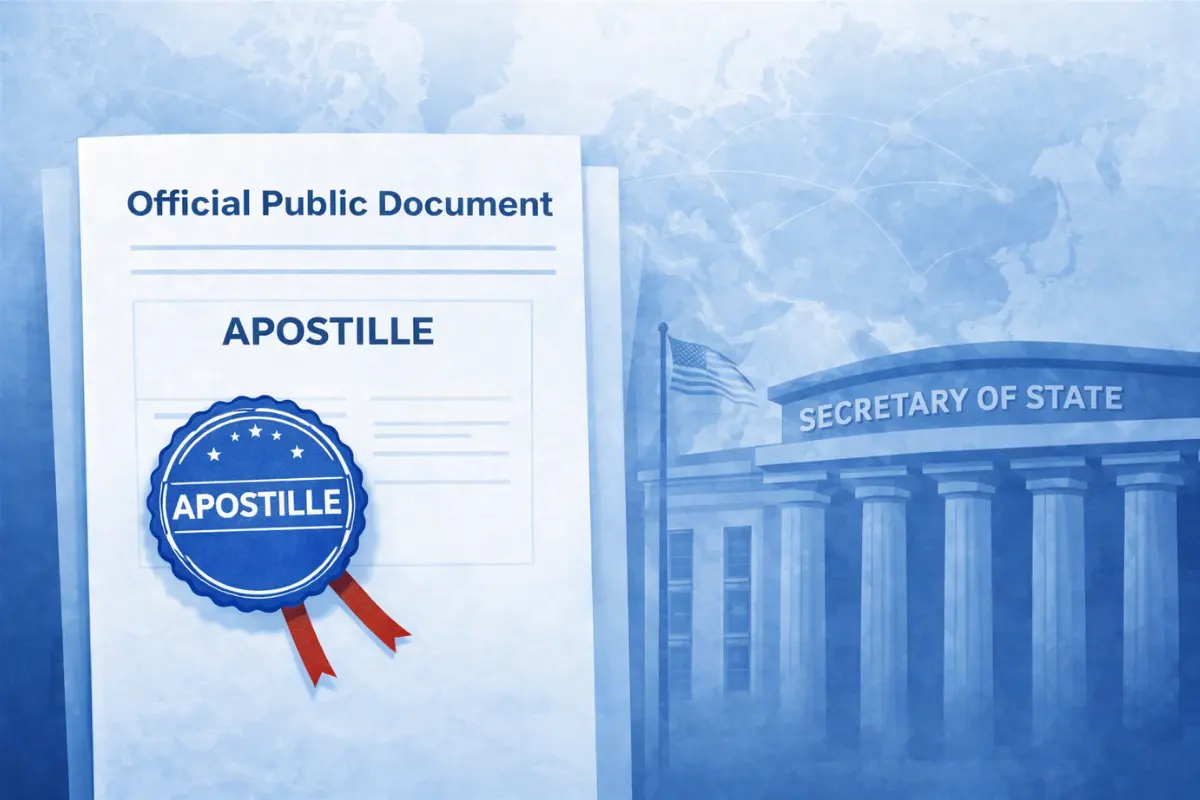
What is an Apostille? An apostille is a specialized certificate issued by a Secretary of State or other authorized body that authenticates the seal and signature on a public document. This process is governed by the Hague Apostille Convention, which streamlines the legalization of documents for use in foreign countries.
An apostille confirms the document is authentic and legally recognized in its country of origin, allowing it to be accepted by other member nations. It is important to note that only the 125+ member countries of the Hague Apostille Convention accept apostilles. Non-member countries such as Canada and the United Arab Emirates require different legalization processes through embassy or consular authentication.
Over 52 million apostilles are issued worldwide each year, meaning, on average, one apostille is issued every second, highlighting the sheer volume of international document legalization required globally, according to the Hague Conference on Private International Law (HCCH) 2023 Annual Report. Understanding apostille requirements by country helps businesses navigate cross-border recognition efficiently. The U.S. Department of State provides guidance on apostille requirements for federal documents used internationally.
Key Takeaways
-
An apostille is a special certificate that authenticates the signature and seal on a public document so it can be legally recognized in another country that is a member of the 1961 Hague Apostille Convention.
-
Apostilles are issued by designated authorities (such as state Secretaries of State or the U.S. Department of State) and do not confirm the content of a document—only the authority and authenticity of the official who signed or sealed it.
-
Only Hague Convention member countries accept apostilles; non‑member countries require traditional embassy or consular legalization, so businesses must confirm the target country’s status before choosing an authentication method.
-
Common business uses for apostilles include forming foreign subsidiaries, executing international contracts, opening overseas bank accounts, registering intellectual property, and participating in cross‑border M&A and government tenders.
-
Processing rules, fees, and timelines vary by state and by whether documents are state‑issued or federal, so planning ahead—or using professional apostille services and tracking tools—helps avoid delays in international deals or market expansion.
What Is an Apostille?
An apostille is a physical certificate attached to an original document that includes a specific numbered header and the seal of the issuing authority. The certificate does not validate the document's content; it only verifies the authority of the official who signed or sealed it. This document authentication process ensures that receiving countries can trust the document's origin without requiring additional verification through embassies or consulates.
The distinction between an apostille and regular notarization proves critical for business document authentication. Notarization verifies a signer's identity, while an apostille authenticates the authority of the notary or official who certified the document. Understanding apostille vs notarization prevents costly delays when preparing documents for international use.
Types of Documents Eligible for an Apostille
Common business-related documents requiring authentication include Articles of Incorporation, Certificates of Good Standing, Powers of Attorney, corporate resolutions, and trademark registration certificates. Financial documents such as bank statements, audit reports, and tax clearance certificates also frequently require apostilles for foreign government validation. Personal documents such as diplomas, transcripts, birth certificates, marriage licenses, and background checks may require apostilles depending on their intended international use.
Certified copies of original documents can receive apostilles if properly certified by the appropriate authority. The underlying document must be an original or a copy certified by the issuing agency before apostille authentication occurs. The International Journal of Professional Notaries explains understanding apostilles and what notaries do in the authentication process.
The Issuing Authorities in the United States
For state-issued documents, the Secretary of State in the jurisdiction where the document originated typically issues the apostille. Each state maintains its own apostille office with specific procedures, fees, and processing times. Documents originating from county clerks, state courts, or state agencies require authentication from that state's designated authority.
Federal documents, such as those from the FBI, the USPTO, the Department of Commerce, or federal courts, require authentication by the U.S. Department of State's Office of Authentications. Federal apostilles follow different procedures and timelines from state-level authentications. Military documents notarized by military notaries or judge advocates also require authentication through the U.S. Department of State.
Why Do Businesses Need One?
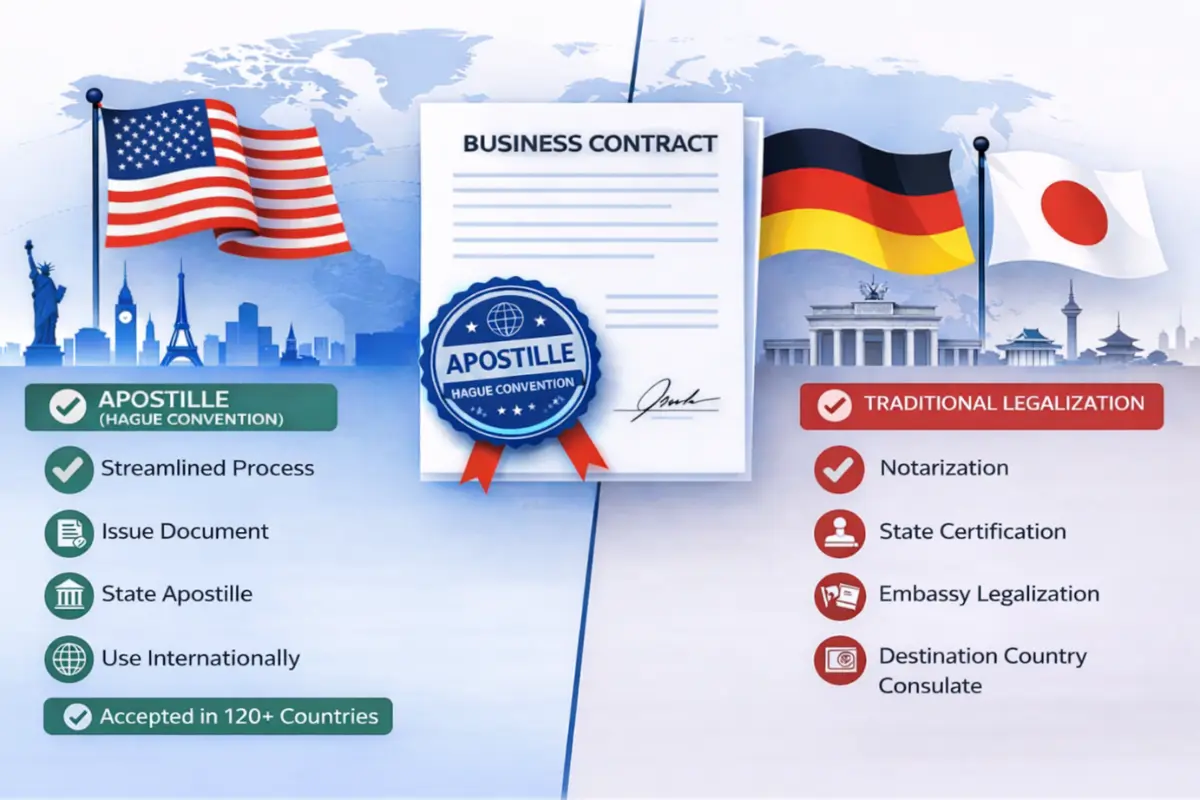
Apostilles facilitate international commerce by reducing the administrative burden of document authentication for international use. Without this standardized authentication, businesses face lengthy, complex legalization processes with foreign embassies or consulates. The Hague Convention created the apostille system specifically to eliminate these time-consuming procedures for member countries.
The apostille provides legal recognition abroad by confirming that documents meet international authentication standards. Foreign authorities trust the standardized certification process and accept apostilled documents without requiring additional verification. This streamlined approach saves businesses weeks or months compared to traditional embassy legalization procedures.
E-Apostille usage is rapidly growing worldwide. Over 12 million digital apostilles were issued globally in 2025 across 50+ countries, up significantly from previous years as countries adopt electronic processes, according to the Hague Conference on Private International Law. Digital authentication processes further accelerate international document processing while maintaining security standards.
Expanding Operations into Foreign Jurisdictions
An apostille is often required when an LLC or corporation seeks to register a branch office or subsidiary in another country. Foreign authorities use the apostille to verify that the entity is legally formed and currently exists in its home country. Registration processes in most Hague Convention countries explicitly require apostilled formation documents as part of foreign subsidiary formation procedures.
Corporate documents requiring apostilles for international expansion typically include Articles of Incorporation, corporate bylaws, board resolutions authorizing foreign operations, and current Certificates of Good Standing. Understanding which state is best for LLC formation for non-residents helps businesses plan international expansion strategies effectively.
Executing International Contracts and Agreements
An apostille for contracts helps ensure that signatures on cross-border contracts, distribution agreements, or licensing deals are recognized as valid by foreign courts. This authentication provides certainty for international partners, helping facilitate smoother business transactions. Contractual disputes in foreign jurisdictions often require proof that the parties signing the contract had proper authority.
Powers of Attorney used in international transactions typically require apostilles to confirm the authority of the person executing agreements on behalf of the company. Agency agreements, franchise contracts, and joint venture agreements benefit from apostille authentication when the parties operate in different countries that are parties to the Hague Convention.
Opening International Bank Accounts
Many foreign financial institutions require apostilled formation and compliance documents before allowing a U.S. entity to open an account. This step is a standard part of international Know Your Customer (KYC) and due diligence procedures. Banks typically request apostilled Articles of Incorporation, Certificates of Good Standing, and corporate resolutions authorizing the opening of an account.
Overseas bank account setup processes commonly require authentication of beneficial ownership documentation, board resolutions appointing authorized signatories, and proof of the company's registered address. Some jurisdictions additionally require apostilled tax identification documentation or certificates confirming the company's tax residence status.
Participating in Foreign Government Tenders and Procurement
Many foreign governments require apostilled corporate documents—such as Articles of Incorporation or financial statements—as part of the formal bidding process for public contracts. This authentication verifies the entity's legal standing and authority to enter into high-value government agreements in a foreign jurisdiction.
Government procurement processes frequently mandate apostilled certificates proving the company's good standing, tax compliance, and absence of bankruptcy proceedings. Financial capacity documentation, including audited financial statements and bank references, often requires authentication for significant government contracts.
Protecting Intellectual Property Rights Abroad
When a business seeks to register trademarks, patents, or copyrights in another Hague Convention country, the local IP office may require apostilled documents to prove ownership. This helps the entity defend its intellectual property in foreign courts by providing universally recognized evidence of its domestic filings. Understanding how to trademark a business name supports businesses in planning international IP protection strategies.
Facilitating International Mergers and Acquisitions
Apostilles play a critical role during the due diligence phase of cross-border mergers or acquisitions to verify the target entity's corporate history. Authenticated documents help reduce the risk of delays in closing the transaction by providing reliable, standardized proof of the entity's legal structure and capitalization.
Due diligence processes typically require apostilled Articles of Incorporation, all amendments to formation documents, stock certificates, shareholder registers, and minutes of major corporate actions. Verification of ownership structures and capital contributions often necessitates authenticated documentation to satisfy acquiring parties and their legal counsel.
Managing Global Employment and Work Visas
Businesses often need to provide apostilled corporate records to foreign immigration authorities when sponsoring employees for international assignments or work permits. This authentication helps verify the relationship between the parent entity and the employee, supporting the legitimate transfer of personnel across borders.
Employment verification letters, corporate organizational charts, and business registration documents frequently require apostilles for visa applications. Immigration authorities use authenticated documents to confirm that sponsoring companies operate legitimately and have the authority to employ foreign workers.
Selling Products in International Markets
Certain regulatory agencies in foreign countries require apostilled Certificates of Free Sale or manufacturing licenses before allowing a business to import and sell its goods locally. These authenticated documents help the entity demonstrate that its products meet the legal and safety standards of its home country.
Product certifications, quality management system certificates, and regulatory compliance documentation often require apostilles when registering products in foreign markets. Health authorities, customs agencies, and product safety regulators commonly mandate authenticated documentation as part of import approval processes.
Utilizing Professional Services for International Filing
While business owners can navigate the apostille process independently, many prefer professional support to manage the logistics. Service providers coordinate the retrieval of certified documents and subsequent submission for apostille across multiple states. Understanding apostilles for business registration requirements helps businesses determine when professional assistance proves beneficial.
Professional apostille services maintain relationships with state and federal authentication offices and understand specific procedural requirements and common reasons for rejection. This expertise helps prevent delays caused by improperly prepared documents or incomplete submissions. InCorp's apostille services help businesses efficiently manage international document authentication.
Processing timelines vary significantly among states, ranging from same-day service in some jurisdictions to several weeks in others. State apostille fees typically range from $10 to $50, with expedited services costing $100 or more. Federal apostilles from the U.S. Department of State cost $20 and take 4-6 weeks to process. State processing varies from 1 business day in Arizona to 12 weeks in New York during peak periods.
Professional services familiar with these timelines help businesses plan appropriately for international deadlines. Learning how to get an apostille through professional services often proves more efficient than navigating unfamiliar state procedures independently.
How Digital Tools Support Document Tracking
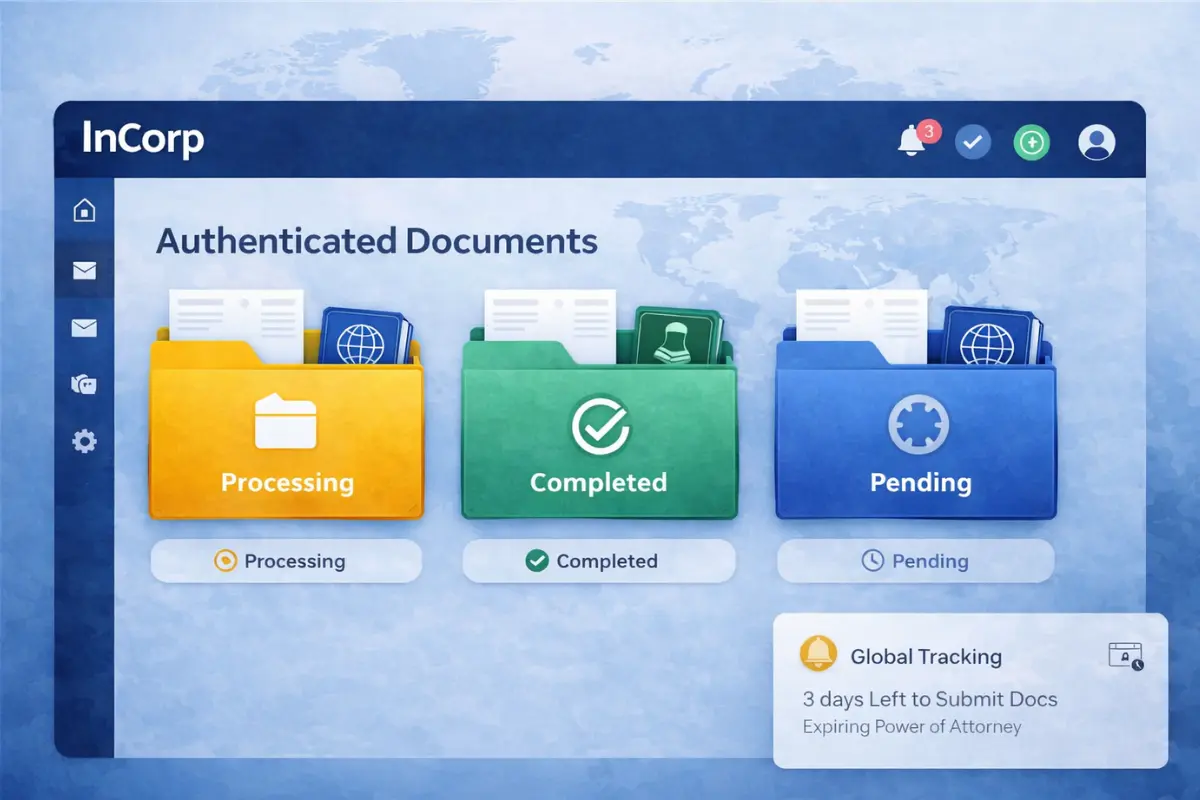
Centralized platforms help businesses store and monitor the status of their authenticated documents. Systems like InCorp's Entity Management System with the EntityWatch® feature help entities maintain organized records of their international filings and upcoming administrative needs. Digital tracking prevents loss of critical documents and ensures authenticated materials remain accessible when needed.
Document management systems supporting international operations should track apostille expiration considerations, which vary by receiving country and institution. While apostilles themselves do not expire, some foreign authorities require that the underlying documents be recently issued. These tools help manage documentation requirements across multiple jurisdictions, maintaining clear records of which documents have been authenticated for use in specific countries.
While these tools help manage documentation, the entity remains responsible for meeting all specific foreign regulatory requirements. Digital systems support compliance efforts but do not replace the need for understanding jurisdiction-specific authentication and legalization requirements.
Prepare Your Documents for International Recognition Today
Obtaining an apostille is a fundamental step for any business looking to operate or execute legal agreements internationally. Proper authentication ensures that foreign authorities recognize U.S. business documents without requiring additional verification procedures. Planning for apostille requirements prevents delays when entering new markets or executing international transactions.
InCorp's apostille and document retrieval services help streamline international administrative obligations. Professional support ensures that documents meet authentication requirements and reach the appropriate authorities efficiently. Businesses benefit from expertise in navigating state-specific procedures and federal authentication processes.
InCorp's expert team and EMS system with the EntityWatch® feature help monitor filing deadlines and maintain the entity's standing across all jurisdictions. Systematic tracking of international compliance obligations supports smooth global operations. Contact InCorp to explore business services supporting your international expansion and document authentication needs.
FAQ's
Is an apostille the same as notarization?
No. Notarization verifies the identity of the signer, while an apostille authenticates the authority of the official or notary who signed the document. Notarization is often a prerequisite for a document to receive an apostille, but the two serve different purposes in the authentication process.
Do apostilles ever expire?
The apostille itself does not expire, but the receiving country or institution may require that the underlying documents be recently issued. Some jurisdictions specify maximum document ages, such as requiring Certificates of Good Standing issued within the past 90 days, regardless of apostille date.
Can a document be apostilled before it is signed?
No. The document must be fully executed, notarized, or officially issued before it can be apostilled. The apostille authenticates an existing signature or seal, so that signature must be present before authentication occurs.
Do all countries accept apostilles?
Only countries that are members of the Hague Apostille Convention accept apostilles. Non-member countries require a different legalization process through an embassy or consular authentication. Businesses should verify whether their target country is a party to the Hague Convention before requesting an apostille.
Which types of documents most often need an apostille for international use?
Many countries frequently require apostilles on vital records (birth certificates, marriage certificates, death certificates), court documents (court orders, divorce decrees, judgments), and educational documents (diplomas and transcripts) when they are used abroad. Business-related official documents such as corporate records, powers of attorney, and notarized affidavits may also require apostille certification, depending on the destination country's rules.
Who is allowed to issue an apostille in the United States?
In the U.S., each state's Secretary of State (or equivalent competent authority) issues apostilles for state and local public documents, including notarized documents, court documents, and vital records that originated in that state. For federal documents—such as FBI background checks or documents signed by a federal official—the U.S. Department of State's Office of Authentications is the competent authority that issues the apostille certificate.
Can a notarized copy be apostilled, or do I need the original document?
It depends on the document and the issuing authority's rules. Vital records and many court documents usually must be certified copies issued by the appropriate government office (for example, a state vital records office) before they can receive a state apostille. Other documents may be apostilled after they are properly notarized by a notary public, but the apostille still authenticates the notary's signature or certifying official—not the underlying content of the document.
How does the Hague Apostille Convention change the way documents are legalized for foreign use?
The Hague Apostille Convention abolishes the traditional requirement of full consular or embassy legalisation for public documents exchanged between member countries. Instead of multiple layers of certification by different authorities, a single apostille certificate from the competent authority in the country where the document originated is enough for the receiving party in another member country to accept the document for legal purposes.
How should I prepare documents to avoid delays in the apostille process?
First, confirm the destination country's apostille requirements and whether it is a member of the Hague Convention. Then ensure you have the correct form of the document—such as a recent certified copy of a birth certificate or a properly notarized affidavit—issued in the state or federal jurisdiction where the document originated. Finally, verify which office (state Secretary of State, county clerk in some states, or the U.S. Department of State for federal documents) is the right place to submit the document so processing time is not lost sending it to the wrong authority.
Disclaimer: This content is intended for general educational and informational purposes only and does not constitute legal, tax, or accounting advice. Every effort is made to keep the information current and accurate; however, laws, regulations, and guidance can change, and no representation or warranty is given that the content is complete, up to date, or suitable for any particular situation. You should not rely on this material as a substitute for advice from a qualified professional who can consider your specific facts and objectives before you make decisions or take action.
Share This Article:
Stay in the know!
Join our newsletter for special offers.