

A family-owned manufacturing LLC faced a crisis when the 68-year-old founder suffered a sudden stroke. Without a succession plan, the company's three co-owners spent nine months fighting over control while revenue dropped 40%. Key clients left due to leadership uncertainty. The company that took 30 years to build nearly collapsed in under a year.
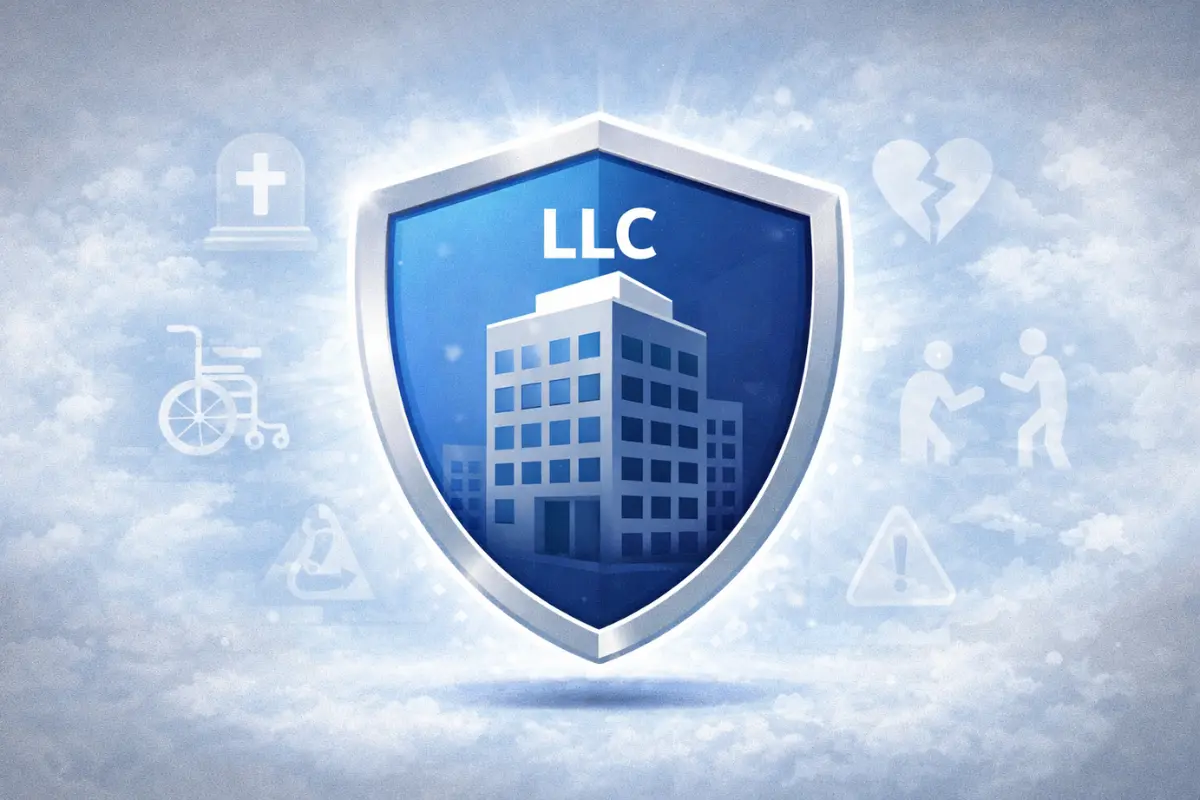
Business succession planning is the strategic process of preparing for the transfer of ownership and management to ensure business continuity when current owners exit. Statistics reveal that nearly 50% of business exits are involuntary, often triggered by "The 5 Ds": Death, Disability, Divorce, Disagreement, and Distress. The global business succession planning services market was valued at over $3.3 billion in 2024 and is projected to grow substantially as succession becomes a strategic priority for business longevity.
For LLCs specifically, LLC succession planning has become increasingly critical in 2026 due to evolving federal compliance requirements and permanent tax provisions affecting wealth transfer. Without a documented plan, your LLC risks operational chaos, forced liquidation, and family disputes that destroy decades of value.

Key Takeaways
-
Business succession planning protects LLCs from the “5 Ds” (Death, Disability, Divorce, Disagreement, Distress), which cause nearly half of all business exits and can destroy value without a clear plan.
-
Well-drafted operating agreements and buy-sell agreements define what happens to an owner’s interest, how the business is valued, and who can take control, reducing the risk of probate delays, forced liquidation, and family disputes.
-
Choice of buy-sell structure (cross-purchase vs. entity redemption) and funding mechanisms (insurance, installment payments, reserves, financing) determines how smoothly and affordably ownership transfers when a triggering event occurs.
-
Coordinated tax and estate planning using tools like lifetime gifting, valuation discounts, ILITs, FLPs, GRATs, QBI optimization, and step-up in basis can preserve more business wealth for heirs while maintaining operating capital.
-
Professional support—legal, tax, insurance, valuation, and compliance services such as InCorp’s registered agent and EntityWatch®—helps keep the LLC in good standing so that even a strong succession plan can actually be implemented when needed.
Shielding the Entity Against "The 5 Ds"
The primary external and internal threats that trigger business transitions can lead to operational chaos or forced liquidation without a plan. A robust succession roadmap acts as specialized insurance for the entity's long-term survival, protecting business assets against life's unpredictable events. Understanding succession planning strategies in an unpredictable world helps prepare for triggering events.
Death
Establish clear protocols for immediate transfer of authority and ownership to avoid leadership vacuum or probate delays. When an LLC owner dies without succession planning, the business interest typically enters probate—a public, time-consuming process that can freeze operations for months.
The LLC operating agreement should specify exactly what happens to the deceased member's interest: transfer to heirs, mandatory buyout by surviving members, or another predetermined path. Without these provisions, state default rules govern, often forcing the LLC to accept heirs as new members regardless of qualifications.
Life insurance policies naming the LLC or surviving members as beneficiaries provide immediate liquidity to fund buyouts without draining operational capital.
Disability
Define "incapacity" within the LLC operating agreement and name a successor manager to maintain daily operations. Unlike death, disability creates ambiguity; when exactly does a member become "unable" to fulfill duties, and who makes that determination?
The operating agreement should establish objective disability triggers, such as "unable to perform substantial duties for 90 consecutive days as certified by two licensed physicians."
Designate an interim successor with authority to access bank accounts, sign contracts, and make operational decisions during incapacity.
Divorce
Use "Right of First Refusal" (ROFR) clauses to prevent a former spouse from becoming an unintended business partner. In community property states, a divorcing member's spouse may claim rights to LLC ownership as marital property.
The Right of First Refusal provision requires that, before any LLC interest transfers to a divorcing spouse, existing members have the first opportunity to purchase that interest at fair market value.
Most operating agreements require members to indemnify the LLC for ownership transfers from divorce. The divorcing member must either buy out their spouse's claim or trigger the LLC's buyout provisions.
Disagreement
Implement mandatory mediation and "shotgun" buyout clauses to resolve partner deadlocks without litigation. When co-owners reach irreconcilable differences, the LLC risks paralysis.
Shotgun clauses allow one deadlocked member to name a price and offer to either buy the other member's interest or sell their own interest at that price. The receiving member must choose: sell or buy at the offered price. This forces realistic valuations.
Mandatory mediation provisions require private dispute resolution before lawsuits are filed, preserving confidentiality and reducing legal costs.
Distress
Prepare for financial or market downturns with contingency letters and liquid funding strategies. Economic distress can force changes in ownership when a struggling member needs to liquidate their interest to ensure personal financial survival.
The operating agreement should address whether members facing personal bankruptcy can force an LLC buyout, or whether creditors can seize membership interests through charging orders. Many LLCs require immediate buyout if a member's interest becomes subject to bankruptcy proceedings, preventing creditors from gaining management rights.
The Core Legal Infrastructure: Buy-Sell Agreements
The buy-sell agreement for LLC serves as the engine of succession planning, dictating exactly how and when a member's interest is purchased. This legally binding contract removes ambiguity during emotional transitions and ensures remaining members retain control.
Research shows that LLCs without buy-sell agreements often face years of litigation when triggering events occur, with legal fees consuming 20-30% of the disputed business value. A well-drafted agreement executed during calm times prevents these costly battles.
Cross-Purchase Agreements
Members personally buy out the departing member's share, often using proceeds from individual life insurance policies. In a three-member LLC, each member owns life insurance policies on the other two members.
Cross-purchase agreements provide tax advantages: purchasing members receive a stepped-up basis in acquired interests, reducing future capital gains taxes.
The complexity increases with member count. A five-member LLC requires each member to maintain four separate life insurance policies, for a total of 20 policies, making cross-purchase less attractive for larger LLCs.
Entity-Purchase (Redemption) Agreements
The LLC buys back and retires the departing member's interest, then redistributes the equity among the remaining owners proportionally. The LLC owns a single life insurance policy on each member, simplifying administration.
When the LLC redeems a member's interest, the remaining members' ownership percentages automatically increase without requiring individual capital contributions.
However, redemption agreements don't provide stepped-up-basis benefits to the remaining members, potentially resulting in higher capital gains taxes upon eventual exit.
Funding Mechanisms
Life insurance for business succession provides immediate liquidity for buyouts without depleting working capital. Key person life and disability insurance ensures funds are available exactly when needed.
Alternative funding mechanisms for buyouts include installment payments over 3-7 years, sinking funds where the LLC sets aside cash reserves annually, or external financing through bank lines of credit.
2026 Tax Strategies for Wealth Transfer
Strategic tax planning optimizes the transfer of business wealth to the next generation while preserving operational capital. Permanent tax provisions from the Tax Cuts and Jobs Act continue to shape succession strategies.
Federal Estate and Gift Tax Exemption
The 2026 federal estate and gift tax exemption stands at approximately $13.99 million per individual ($27.98 million for married couples), allowing substantial tax-free transfers of business interests. This provision is essential for estate planning for LLC owners seeking to minimize tax burden on heirs.
For family business succession, this enables a gradual transfer of ownership over several years while the founder remains active. A business owner can gift LLC interests to children annually, using the annual gift tax exclusion and lifetime exemption amounts, thereby reducing the taxable estate while maintaining operational control. Understanding the LLC ownership transfer mechanics ensures compliance with IRS requirements.
However, the IRS scrutinizes related-party transfers for artificially deflated valuations. Professional business valuation becomes essential to defend discount claims.
Estate and Gift Taxes Planning
Understanding estate and gift taxes helps structure transfers that minimize tax burden. Proper planning prevents situations where heirs must sell LLC interests to pay taxes.
Strategies include irrevocable life insurance trusts (ILITs) that own policies outside the taxable estate, family limited partnerships that allow discounted valuations while maintaining control, and grantor retained annuity trusts (GRATs) that transfer appreciation to heirs while minimizing gift tax consequences.
Permanent QBI Deduction Alignment
The Section 199A Qualified Business Income deduction remains permanent, allowing eligible pass-through entities to deduct up to 20% of qualified business income. Succession plans should ensure the LLC structure remains optimized for this deduction under new ownership.
As ownership transfers to multiple heirs, splitting income among more taxpayers may keep each below phase-out thresholds, maximizing total tax benefits. However, guaranteed payments to successors for management services don't qualify as QBI.
Stepped-Up Basis Benefits
When LLC interests transfer at death, heirs receive a stepped-up basis equal to the fair market value as of the date of death, eliminating capital gains tax on pre-death appreciation.
This powerful benefit makes transfer-at-death strategies tax-efficient but requires the founder to retain ownership until death, conflicting with gradual transition strategies that transfer control earlier. Balancing lifetime gifting with step-up benefits requires sophisticated modeling.

Management vs. Ownership: The Two-Track Transition
Leadership transition involves two distinct paths: equity ownership (who receives profits) and operational control (who makes daily decisions). These tracks can follow different timelines.
A founder might gift LLC ownership to three children equally while designating only one child as the managing member. The other siblings receive profit distributions but no management authority.
Defining Successor Capabilities
Move beyond family relationships to assess potential leaders based on merit, skills, and commitment. Fewer than 35% of family businesses successfully transition to the second generation, often because leadership selection prioritized bloodline over capability.
Assessment criteria include industry experience, financial management skills, client relationship abilities, and cultural fit. For non-family transitions, employee stock ownership plans (ESOPs) or management buyouts enable key employees to gradually acquire ownership.
The Training and Grooming Phase
Outline a 3-to-5-year timeline for transitioning key client relationships and operational expertise. Clients who built relationships with the founder over decades need time to develop confidence in new leadership.
Document standard operating procedures, client preferences, vendor relationships, and institutional knowledge. Continuity planning requires converting tacit knowledge into explicit documentation that successors can reference.
Interim Leadership Plans
Establish an "Emergency Successor" who can step in for a 90-day window to provide stability during unexpected transitions. This interim leader maintains operations, communicates with clients and vendors, and manages cash flow while the board or remaining members execute the full succession plan.
The emergency successor needs immediate access to bank accounts, contracts, client contacts, and operational systems.
Professional Valuation and Fairness Protocols
Pre-determined valuation methods prevent lawsuits among surviving members and heirs. Price should be determined dispassionately before emotional events force rushed decisions.
The operating agreement must specify which valuation method applies to each exit type: voluntary retirement, death, disability, termination for cause, or deadlock buyout.
Appraisal-Based Valuation
Commit to hiring a neutral third-party appraiser at the time of transfer. Professional appraisers examine financial statements, market comparables, industry multiples, asset values, and growth prospects.
Appraisal-based methods provide accurate valuations but create costs ($5,000-$25,000) and time delays (30-60 days). The operating agreement should specify the appraiser's qualifications, the selection process, and the binding nature of the appraisal.
Formula-Based Valuation
Use a set multiplier of EBITDA (Earnings Before Interest, Taxes, Depreciation, and Amortization) to provide transparent pricing. Industry-standard multiples range from 2x to 8x EBITDA, depending on sector and growth rate.
EBITDA multiples provide predictable valuations that members can calculate using financial statements. However, EBITDA multiples ignore balance sheet strength and unique assets.
The agreement should specify which financial period's EBITDA applies, what adjustments are made for one-time expenses, and how the multiplier is determined.
Fixed Price Method
Set a specific dollar amount that is reviewed and updated annually by all members. Each year, members reassess the business's value based on recent performance and market conditions, documenting the agreed-upon price in the meeting minutes.
Fixed pricing provides certainty and avoids valuation costs, but only works if members conscientiously update the figure. Operating agreements should require annual valuation updates and specify consequences if members fail to update.
The Role of InCorp in Maintaining Successor Compliance
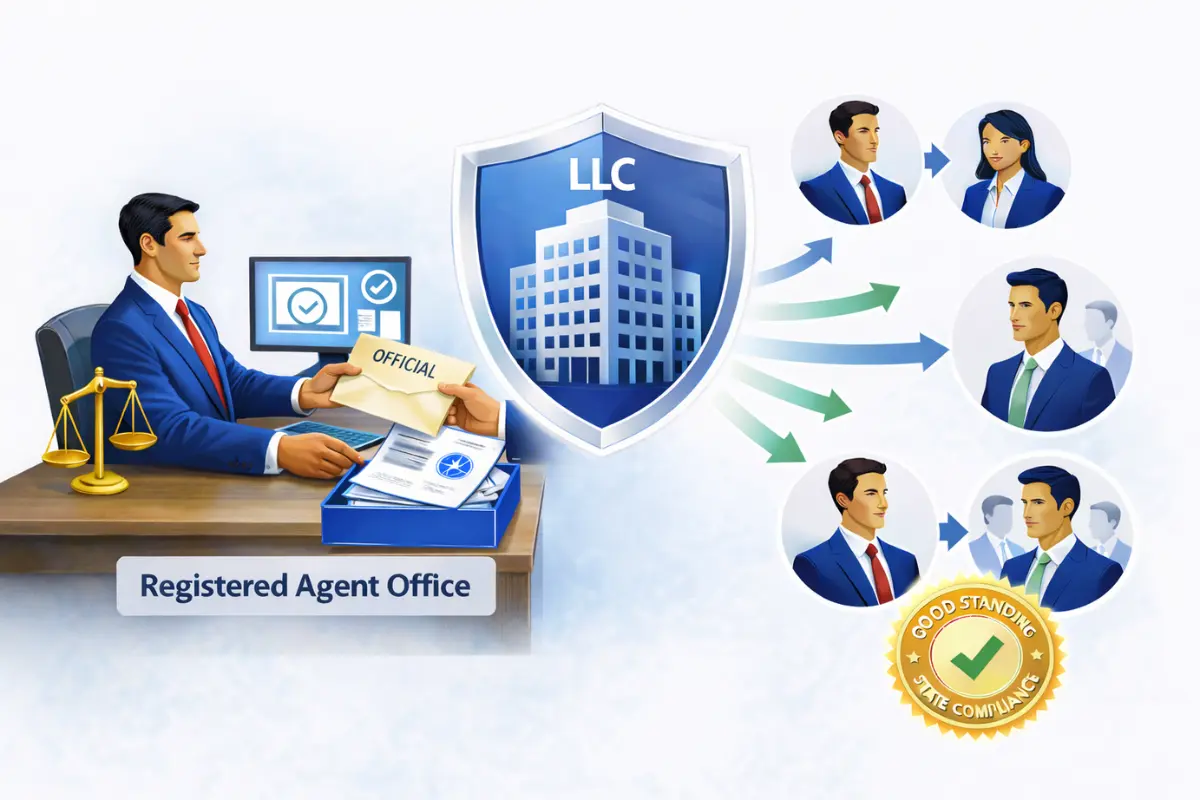
Succession plans only work if the entity remains in "Good Standing" with the state. Professional registered agent services and compliance monitoring provide the administrative backbone for smooth ownership transitions.
Seamless Registered Agent Service
Using InCorp's registered agent services ensures legal notices are handled professionally, even as internal management changes. When ownership transfers, the registered agent remains constant, receiving service of process, state notices, and compliance reminders without interruption.
Understanding registered agent responsibilities helps successors appreciate this continuity function. State notices get forwarded to designated contacts regardless of ownership changes.
Proactive Monitoring with EntityWatch®
InCorp's EntityWatch® system monitors state records in all 50 states, ensuring successors don't inherit entities with lapsed filings. The system tracks filing deadlines, compliance status, and good standing certificates across jurisdictions.
For LLCs operating in multiple states, EntityWatch® prevents scenarios in which successors discover that the company lost good standing in a forgotten state years ago. Automated alerts notify designated contacts about upcoming deadlines.
Document Vaulting for Transition
Secure digital repositories store the LLC operating agreement, Buy-Sell Agreement, valuation reports, and other critical documents for immediate access by the successor. When triggering events occur, successors need instant access to governing documents.
Understanding whether you need an operating agreement for your LLC and where to store it helps prevent confusion. Cloud-based vaulting with appropriate access controls ensures continuity.
Secure Your LLC's Future Now
Business continuity planning protects your legacy against life's uncertainties. Succession planning ensures value survives unexpected events and transfers according to your vision.
Statistics show 50% of exits are involuntary. Operating without a succession plan means gambling you'll have time when needed.
Start now by assembling your advisory team: a business attorney, an accountant, an insurance advisor, and a financial planner.
Explore InCorp's business services to build a compliant foundation for your succession plan.
InCorp is not a law firm and does not provide legal or financial advice. This information is educational. Readers should consult with qualified legal and tax professionals.
The succession plan you create now may be the most valuable gift you leave to your business, family, and legacy.
FAQ's
When should an LLC start business succession planning?
An LLC should begin succession planning as soon as it has more than one member, long-term clients, or transferable value. Waiting until a triggering event occurs often limits options and forces rushed decisions during a crisis. The ideal timeline begins 3-5 years before the anticipated transition to allow time to train successors, update operating agreements, arrange financing, and optimize tax strategies. Even single-member LLCs benefit from basic succession planning to address unexpected incapacity or death.
Does succession planning apply to single-member LLCs?
Yes. Single-member LLCs need succession plans to address incapacity or death, ensuring assets transfer smoothly without court intervention. Without planning, the member's LLC interest enters probate—a public process that can freeze business operations for months. The LLC operating agreement succession clause should specify whether the interest transfers to heirs, triggers a sale to a designated buyer, or follows another predetermined path. Single-member succession planning protects both business continuity and family financial security.
Can succession planning reduce disputes among heirs?
Yes. Clearly defined transfer rules, buyout provisions, and valuation standards prevent conflicts between heirs and surviving members. When the operating agreement specifies exactly how much heirs receive and when payment occurs, there's no ambiguity to dispute. Many family conflicts arise from perceptions of unequal treatment. If one child works in the business while others don't, the succession plan should address whether all children receive equal ownership or the active child receives preferential treatment. Documenting these decisions in advance prevents emotional arguments during grief.
Is succession planning a one-time task?
No. Succession plans should be reviewed regularly to reflect changes in valuation, ownership structure, tax laws, and successor readiness. Legal compliance in LLC transfer requirements evolves as state and federal regulations change. Business valuations change as the company grows or market conditions shift. Successors' capabilities and interest levels change over time; the child eager to join the business at age 25 may have different priorities at 35. Annual reviews with advisors ensure the plan remains aligned with the current reality and continues to protect the business effectively.
How does business succession planning differ for an LLC versus a sole proprietorship or general partnership?
An LLC can continue with an almost unlimited life if the operating agreement and buy-sell agreement specify how business interests transfer when owners die or retire, while sole proprietorships and many general partnerships often end or "die" with the owner. LLC statutes and limited liability protections give business owners more flexibility to design governance and control structures that support long-term business continuity.
Why is an operating agreement so important for business succession planning in an LLC?
The operating agreement sets out who controls business operations, how profits and losses are shared, and what happens to an owner's interest upon death, disability, or withdrawal. Without clear provisions, state default rules apply, which can create legal disputes among family members and key stakeholders and make a smooth transition much harder to achieve.
What role does a buy-sell agreement play in limiting risk and liability issues during a transition?
A buy-sell agreement defines when an owner must or may sell their interest, how the price is determined, and who can buy (remaining owners, the company, or outside parties). By pre‑agreeing on these key elements, business owners can avoid forced sales, reduce financial strain on the business, and protect both business assets and personal assets from legal challenges among heirs.
How do tax factors influence business succession planning for LLC continuity?
Tax laws governing income, capital gains, and estate taxes affect whether it is better to transfer interests during life, at death, or over a transition period. Coordinating succession planning with estate planning can help small business owners manage tax liabilities while preserving value for family members, but it requires careful consideration and guidance from qualified tax and legal professionals.
When should small business owners begin succession planning for an LLC?
Succession planning should start once the LLC has meaningful business assets, key employees, or long-term client relationships—not just when an owner is nearing retirement. Even the best businesses can face unforeseen circumstances like disability or sudden death, so early planning supports business continuity, protects personal relationships, and gives time to prepare key executives or family members for future leadership.
Disclaimer: This content is intended for general educational and informational purposes only and does not constitute legal, tax, or accounting advice. Every effort is made to keep the information current and accurate; however, laws, regulations, and guidance can change, and no representation or warranty is given that the content is complete, up to date, or suitable for any particular situation. You should not rely on this material as a substitute for advice from a qualified professional who can consider your specific facts and objectives before you make decisions or take action.