

A graphic designer launched her online store after months of preparation, only to lose her first bulk order because she lacked proper business registration and an EIN. Understanding how to start an e-commerce business requires legal compliance alongside creative execution.
E-commerce is the buying and selling of goods or services over the internet, encompassing both physical products and digital services. In 2026, the barriers to entry are lower than ever due to advancements in AI-driven marketing and no-code platforms. Global ecommerce sales are forecast to total about $6.42 trillion worldwide in 2025 and reach roughly $6.88 trillion in 2026, according to industry estimates summarized by Shopify, reflecting continued year-on-year growth. Understanding how to start an e-commerce business requires a professional roadmap from initial product validation to scaling a legally compliant brand.
This guide provides actionable steps for entrepreneurs ready to start an online store and launch a successful online store. Global ecommerce revenue is widely expected to be in the mid–six-trillion-dollar range by 2026, with online sales continuing to gain share of total retail spending worldwide.
Phase 1: Market Research and Product Selection
The process of identifying a niche begins with analyzing market trends, consumer pain points, and gaps in competitors. Niche selection determines whether businesses compete in crowded markets or find underserved opportunities where customer needs exceed available solutions.
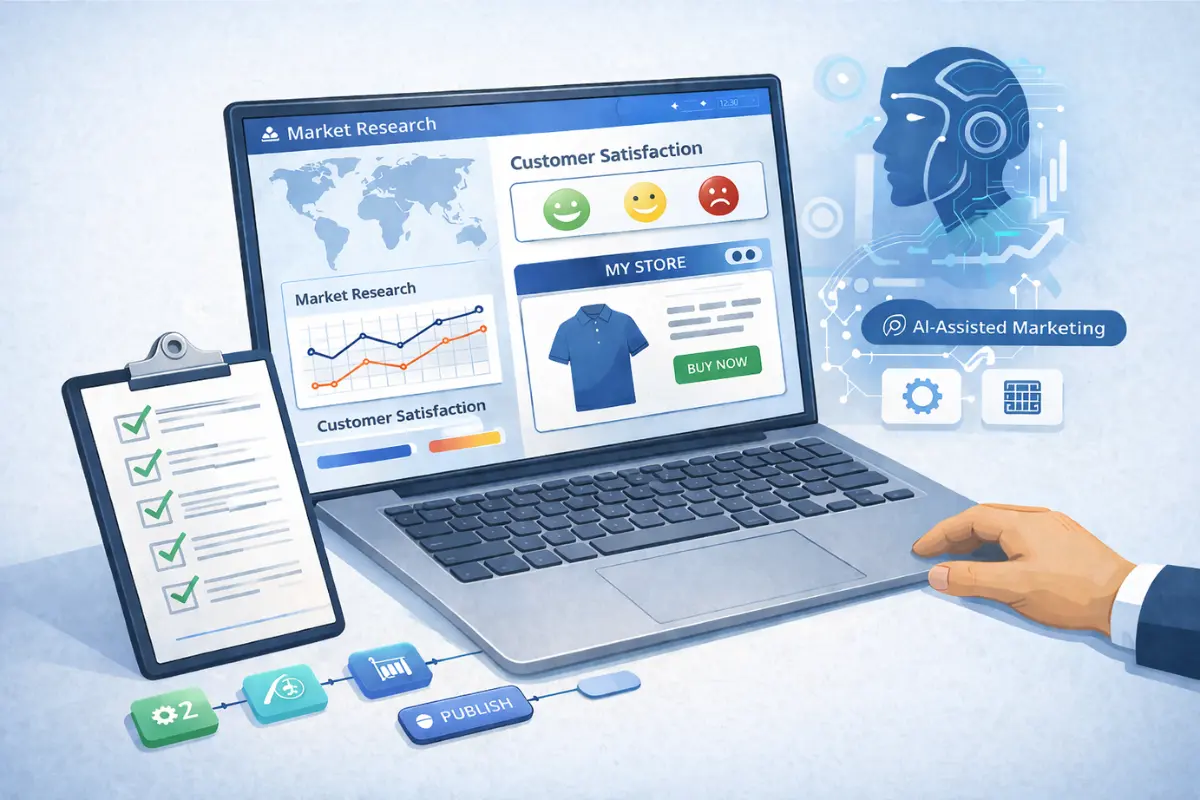
Developing an e-commerce business plan with validated product selection requires research before investing capital. Entrepreneurs examine trending products on platforms like Amazon, analyze search volume data for product categories, and review customer complaints and competitor reviews to identify opportunities for improvement. The goal is to find products that customers actively search for, but competitors fail to serve adequately.
Key Takeaways
-
A successful e‑commerce launch starts with validated demand: researching a niche, testing product interest with simple landing pages or ads, and analyzing search volume before investing heavily.
-
Choosing the right legal structure (often an LLC), obtaining an EIN, opening a business bank account, and securing required licenses are essential to protect personal assets and stay compliant from day one.
-
Platform selection (Shopify, WooCommerce, BigCommerce, or others) should align with your technical comfort, budget, and growth plans, because switching platforms later can be costly.
-
High-converting stores prioritize mobile-first design, fast checkout, clear product pages, and ongoing conversion rate optimization rather than treating design as a one-time task.
-
Scalable operations depend on reliable payment gateways, a clear fulfillment strategy (in-house vs. 3PL), and transparent shipping policies to prevent cart abandonment.
-
Sustainable growth comes from diversified marketing—SEO, paid ads, social commerce, email/SMS flows—and tracking metrics like conversion rate, CAC, and AOV to guide spend and strategy.
-
As you expand across states or borders, maintaining good standing, monitoring compliance deadlines, and understanding local laws becomes critical to avoid disruptions and penalties.
Identifying Your Business Model
The chosen ecommerce business model affects operational complexity, profit margins, and scaling potential. Different models suit different entrepreneur goals and resource availability.
B2C (Business-to-Consumer) refers to selling products directly to end users, such as individual shoppers. This model dominates online retail through stores selling everything from clothing to electronics directly to consumers. B2B (Business-to-Business) involves providing goods or services to other companies, often in bulk quantities with recurring purchase patterns.
Dropshipping offers a low-overhead model where third-party suppliers fulfill orders directly to customers. The dropshipping business model eliminates inventory storage requirements and upfront product costs, making it accessible for entrepreneurs with limited capital. However, lower barriers to entry lead to increased competition and thinner profit margins than in models involving direct inventory control.
Validating Product Demand
Creating a simple landing page or running small-scale ad tests click-through interest before committing significant resources. Entrepreneurs build basic product pages that describe their offerings and drive traffic through Facebook ads or Google search campaigns. The conversion rate from visitor to email signup or purchase intent indicates whether sufficient demand exists to justify a full business launch.
Analyzing search volume for keywords related to product categories provides quantitative validation. Tools like Google Keyword Planner reveal monthly search volumes for terms that customers use when searching for products. High search volumes with manageable competition suggest profitable opportunities where entrepreneurs can capture meaningful market share through proper execution.
Phase 2: Legal Structuring and Compliance
Choosing the right legal structure is vital for protecting personal assets and managing tax obligations. For most e-commerce businesses, an LLC provides the preferred structure due to its simplicity and liability shield. Understanding online business legal requirements and when to register an e-commerce LLC prevents costly mistakes and ensures compliant operations from day one.
Entrepreneurs must obtain an EIN from the IRS, open a business bank account to separate personal and business finances, and secure the necessary licenses or permits based on the products sold.
LLC vs. Corporation for E-commerce
An LLC offers pass-through taxation and fewer administrative formalities, making it ideal for small- to midsize startups. Most ecommerce businesses beginning operations choose the LLC structure for its balance of protection and simplicity.
A C-Corp suits businesses planning to raise venture capital or issue stock, though subject to double taxation. Corporations pay taxes on profits at the business level, then shareholders pay taxes again on dividends received. Understanding the differences between LLC, S-Corp, and C-Corp helps entrepreneurs select structures aligned with growth plans.
The Critical Role of a Registered Agent
A registered agent is a legal requirement for receiving service of process and state notices. Every LLC and corporation must designate a registered agent who maintains a physical address in the state of formation and is available during business hours.
Using a professional service like InCorp's registered agent services keeps personal addresses off public records and ensures no legal deadlines are missed.
Phase 3: Selecting Your E-commerce Platform
The choice of platform impacts store speed, SEO capabilities, and long-term scalability. Platform decisions should consider technical comfort, budget constraints, and specific feature needs. The right e-commerce website builder provides the foundation for customer experience, conversion rate optimization, and business growth. Poor platform choices create technical limitations, forcing expensive migrations later.
Comparing Top Platforms
Shopify is a fully hosted, user-friendly SaaS platform best suited for beginners and rapid launches. Shopify's shopping cart software streamlines checkout processes and seamlessly integrates with major payment gateways.
WooCommerce is an open-source WordPress plugin that offers unlimited customization and superior SEO control. The platform provides excellent SEO for e-commerce through WordPress's robust content management capabilities.
BigCommerce is built for scale with advanced native features ideal for businesses with complex catalogs. BigCommerce offers strong inventory management capabilities and multi-channel selling integration.
Phase 4: Branding and Store Design
Building a cohesive brand identity requires a memorable name, a professional logo, and a consistent color palette. Brand identity extends beyond visual elements to encompass brand voice, values, and promises regarding the customer experience. Store design must prioritize user experience to convert visitors into customers. Every design decision should support the goal of making purchasing easy and appealing.
Designing for Conversions
Mobile-first design is essential, as the majority of e-commerce traffic comes from mobile devices. Responsive designs adapt seamlessly to different screen sizes.
High-quality product imagery and clear, benefit-driven product descriptions communicate value effectively. Conversion rate optimization involves continuous testing of product pages, checkout flows, and calls to action to identify improvements that increase sales.
Phase 5: Logistics, Payments, and Fulfillment
The operational backbone of e-commerce businesses includes payment processing and order fulfillment strategies. Transparent shipping costs and secure payment processing reduce cart abandonment rates. Customers expect clear information about shipping timelines and costs before reaching checkout. Hidden fees or unexpected charges at checkout represent the primary reason customers abandon carts before completing purchases.
Payment Gateways
Integrating reliable payment gateways supporting multiple currencies and local payment methods expands market reach.
Fulfillment Strategies
In-house fulfillment involves manually managing inventory and shipping, and works best for low initial volumes. This approach provides complete control over the customer experience and allows for personal touches, such as handwritten notes. The approach suits businesses in the early stages before scaling operations.
3PL (Third-Party Logistics) providers offer outsourced warehousing and shipping as businesses grow. Understanding how to create a fulfillment strategy that delights customers helps businesses select appropriate fulfillment partners and set customer expectations properly.
Phase 6: Marketing and Customer Acquisition
Driving targeted traffic represents the primary challenge for any new e-commerce brand. A successful digital marketing strategy utilizes a mix of organic and paid channels. The most effective approaches combine multiple tactics, creating synergistic effects in which channels reinforce one another. Businesses relying exclusively on a single channel are vulnerable when algorithm changes or market shifts affect that channel's effectiveness.
2026 Marketing Strategies
AI-Search Optimization involves optimizing content for AI-driven search engines and voice search queries. As consumers increasingly use voice assistants and AI tools to find products, businesses must adapt content strategies accordingly. This includes using natural language, answering specific questions, and structuring content for featured snippets.
Social Commerce enables selling directly through Instagram, TikTok, and Facebook native shops. These platforms allow product tagging in posts and in-app checkout, reducing friction in the customer journey. Social commerce particularly suits visual products and brands with strong social media followings.
Email and SMS marketing implement automated flows for abandoned carts and post-purchase follow-ups. Email and SMS marketing integration allows coordinated campaigns across channels, improving customer acquisition cost efficiency. Automated sequences nurture leads and recover abandoned carts without manual intervention, providing strong returns on investment.
Phase 7: Analytics and Continuous Optimization
Tracking Key Performance Indicators (KPIs) measures business health and identifies opportunities for improvement. Data should drive decisions on everything from ad spend to product development. Businesses that make data-informed decisions outperform competitors who rely on intuition or guesswork. Analytics platforms like Google Analytics provide insights into customer behavior, traffic sources, and conversion patterns.
Essential Metrics to Monitor
Conversion Rate (CR) is the percentage of visitors who make a purchase. Typical ecommerce conversion rates range from 1% to 3%, with high-performing stores achieving 5% or higher. Improving conversion rates through testing and optimization increases revenue without requiring additional traffic acquisition costs.
Customer acquisition cost (CAC) measures how much businesses spend to acquire a single customer. This metric divides total marketing and sales expenses by the number of new customers acquired. Sustainable businesses maintain CAC below customer lifetime value, ensuring positive unit economics. Tracking CAC by channel identifies which marketing investments deliver the best returns.
Average Order Value (AOV) measures the average amount customers spend per transaction. Increasing AOV through upselling, cross-selling, or minimum order incentives improves profitability. Businesses can boost AOV through product bundling, volume discounts, or free shipping thresholds, encouraging larger purchases.
Scaling Your Business Operations
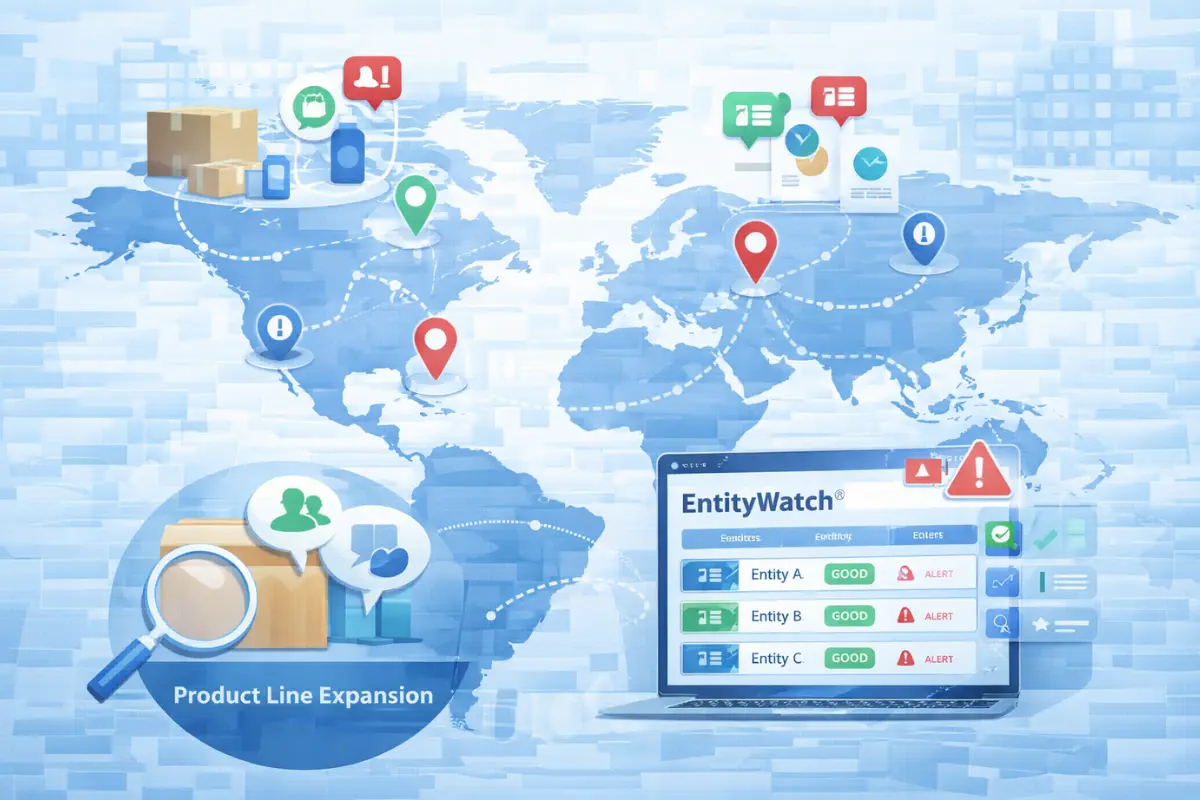
Transitioning from a startup to a growth-phase company requires a systematic approach to expansion. Businesses should expand product lines based on customer feedback and enter new geographic markets through careful planning. Maintaining entity good standing via tools like InCorp's EntityWatch® becomes even more critical as businesses scale across multiple states.
Product sourcing strategies evolve as order volumes increase. Early-stage businesses often start with small suppliers or even handmade production. As demand grows, relationships with manufacturers capable of larger production runs become necessary. Businesses must balance maintaining quality standards with achieving economies of scale through larger production quantities.
Expansion into new markets requires understanding local regulations, shipping logistics, and cultural preferences. Businesses selling internationally face additional compliance requirements, including tax registrations, customs documentation, and adherence to foreign consumer protection laws. Careful planning prevents costly mistakes when entering new territories.
Build Your E-commerce Brand on a Strong Legal Foundation
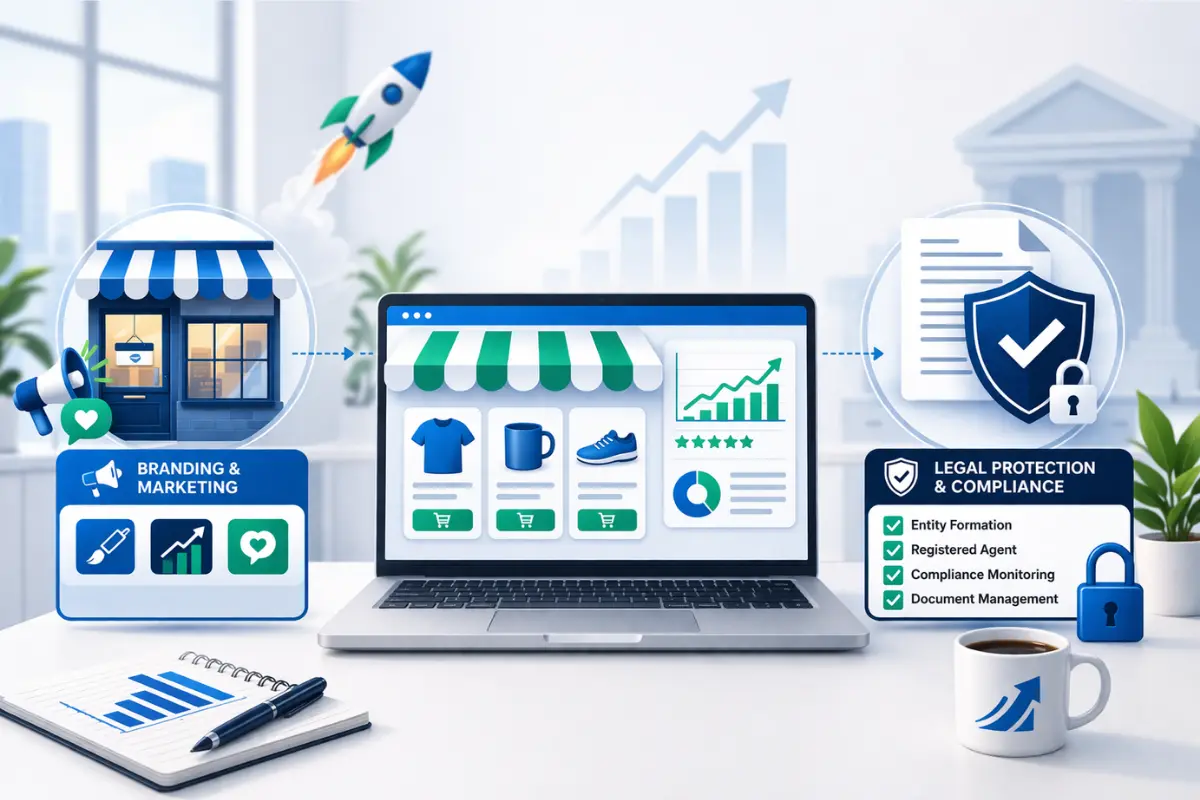
Understanding how to start an e-commerce business successfully requires balancing creative branding, strategic marketing, and strict legal compliance. Entrepreneurs who invest time in building a proper foundation create businesses capable of sustainable growth. Shortcuts in legal structuring or compliance create vulnerabilities threatening business viability when problems emerge.
Explore InCorp's LLC formation and registered agent services to launch businesses on solid legal foundations. Professional formation services ensure accurate filings, ongoing compliance support, and registered agent representation protecting privacy. The modest investment in professional services prevents expensive corrections and provides peace of mind, allowing focus on business building.
The EntityWatch® system monitors filing deadlines and maintains compliance necessary for sustainable growth. Automated compliance tracking prevents missed deadlines and penalties that disrupt operations. As businesses expand across states, centralized compliance monitoring becomes essential for maintaining good standing everywhere the business operates.
Visit InCorp's business services to discover comprehensive solutions supporting ecommerce business formation, compliance, and growth. The right foundation today enables the scalable, profitable business that entrepreneurs envision.
FAQ's
Do I need a business license to start an e-commerce store?
In most cases, yes. License requirements depend on your state, city, and the type of products you sell, especially for regulated goods. Some product categories, such as food, cosmetics, and children's products, require special permits in addition to general business licenses. Research requirements specific to your location and products to ensure full compliance from launch.
Can I run an e-commerce business from home?
Yes. Many e-commerce businesses operate remotely, though local zoning rules or home-occupation permits may apply in some areas. Home-based businesses must comply with local ordinances regarding business activities in residential zones. Some jurisdictions restrict businesses from generating significant traffic or requiring commercial deliveries in residential areas.
How long does it typically take to launch an e-commerce store?
A basic store can be launched in a few weeks, but building a competitive and compliant brand usually takes several months of planning and testing. Rushing launches without proper market research, legal structuring, or product validation increases the risk of failure. Successful launches balance speed with thoroughness, ensuring all critical elements function properly before aggressive marketing begins.
Is it possible to sell internationally from day one?
It is possible, but international selling often requires additional tax registrations, customs considerations, and compliance with foreign consumer laws. Businesses should understand international shipping costs, customs duties, and return policies before offering global sales. Starting domestically and expanding internationally after establishing successful operations often proves more manageable for new businesses.
How do I choose the right e-commerce business model for my products?
Your business model should reflect what you sell and how customers prefer to buy: direct to consumer (DTC) via your own online store, business to business (B2B) selling to other businesses, or customer to customer (C2C) using platforms for independent sellers. You can also consider hybrid models like private label or software as a service (SaaS) if your offer is digital, but in every case you should align the model with inventory management, shipping methods, and desired profit margins.
What legal and financial steps are essential when starting an e-commerce business?
At minimum, you should choose a legal structure (often an LLC or corporation for small business owners), obtain an Employer Identification Number (EIN), and separate business finances from personal finances with a dedicated business bank account. Depending on your location and how you operate from home, you may also need a local business license or home occupation permit, plus registrations for sales tax where you have nexus.
How can I use digital marketing to drive traffic and acquire customers for my online store?
Focus on a mix of search engine optimization (SEO) for product pages and content marketing, paid channels like Google Ads and social media marketing, and owned channels such as email marketing. Over time, you can refine your marketing strategies by tracking customer acquisition and behavior with tools like Google Analytics, then doubling down on the channels that bring more customers at a sustainable cost.
What strategies help improve customer retention and build a loyal customer base in e-commerce?
Delivering a consistently positive customer experience is crucial: clear shipping costs and delivery times, easy returns, responsive support, and accurate product descriptions all build trust. You can strengthen customer engagement and brand loyalty further with email sequences, loyalty programs, and personalized offers that encourage repeat purchases instead of relying only on new customer traffic.
Disclaimer: This content is intended for general educational and informational purposes only and does not constitute legal, tax, or accounting advice. Every effort is made to keep the information current and accurate; however, laws, regulations, and guidance can change, and no representation or warranty is given that the content is complete, up to date, or suitable for any particular situation. You should not rely on this material as a substitute for advice from a qualified professional who can consider your specific facts and objectives before you make decisions or take action.