

A marketing consultant spent two years building a six-figure consulting business through referrals. When a client sued over alleged negligent advice, she discovered her sole proprietorship offered zero liability protection. The lawsuit targeted her personal assets, creating devastating consequences that proper structuring could have prevented.
A consulting business operates as a professional service entity that provides expert advice to organizations or individuals in exchange for fees. While the barrier to entry appears low, long-term success requires a formal legal foundation to protect personal assets and maintain professional credibility. The number of consulting firms in the U.S. is significant, with approximately 950,000 management consulting businesses expected by 2025, indicating how many consultants and service providers operate in the market, according to IBISWorld. The global consulting business market is projected to grow to about $1.5 trillion by 2030, driven by demand for digital transformation and broader business strategy needs, according to Zipdo.
This guide explores essential steps for selecting a business structure and navigating compliance obligations for modern consultants. Understanding how to start a consulting business with proper legal protections helps prevent costly mistakes in this expanding market.

Key Takeaways
-
Choosing a formal business structure (typically an LLC with optional S-Corp election) helps consultants protect personal assets, improve credibility, and optimize taxes as revenue grows.
-
Compliance is ongoing, not one-time: consultants must manage EIN registration, BOI reporting, state filings, licensing where required, and annual reports to maintain good standing and preserve liability protection.
-
Professional liability (E&O) insurance and properly drafted client contracts are core safeguards against negligence claims and can be required by corporate clients before they sign engagements.
-
Maintaining the corporate veil demands strict separation of business and personal finances, accurate records, and on-time filings; otherwise, courts may allow creditors to reach personal assets despite the LLC.
-
Using a professional registered agent and compliance tools like EntityWatch® supports timely handling of legal documents, privacy for home-based consultants, and centralized monitoring of multi-state obligations as the business scales
Evaluating Legal Structures for Consulting Entities
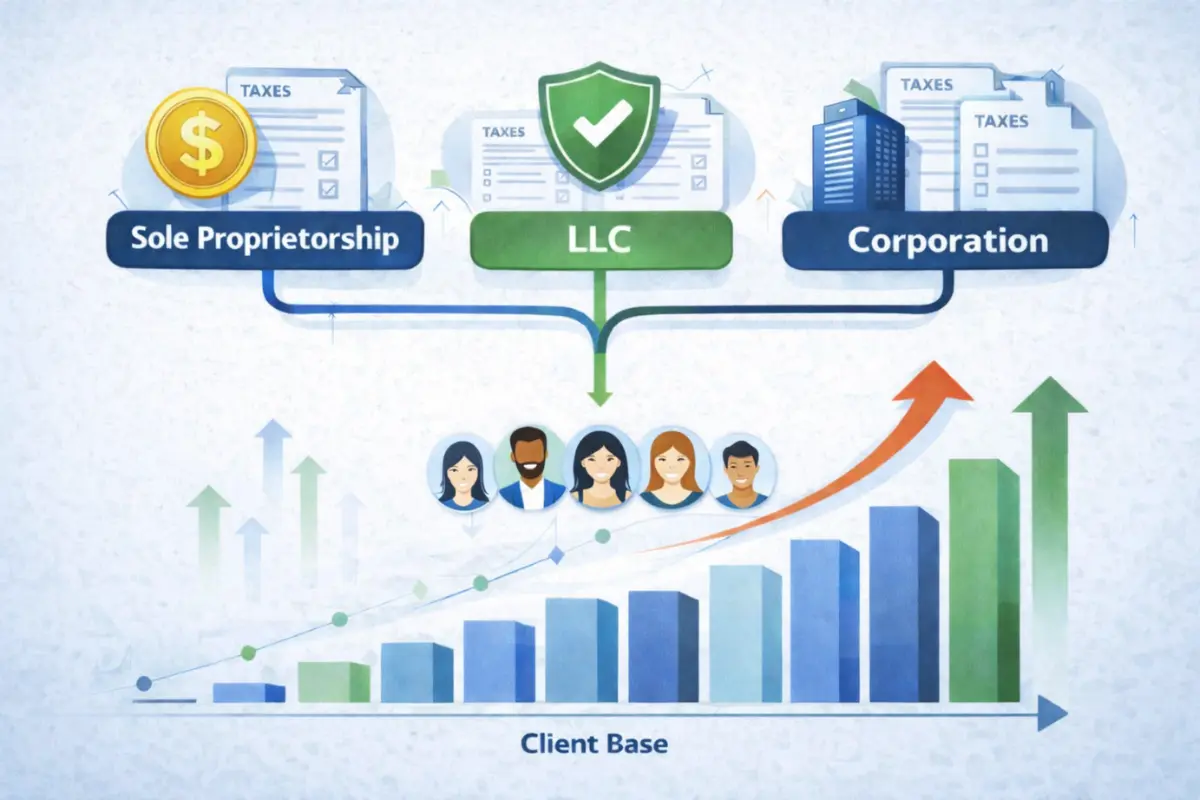
The choice of entity impacts tax treatment, liability exposure, and the ability to scale operations. Most independent consultants transition from a sole proprietorship to a more formal structure as their client base grows and revenue increases. The consulting business structure selected determines whether personal assets remain protected from business liabilities and how profits are taxed at the federal and state levels. Understanding the best business structure for consulting operations requires evaluating several entity options based on individual circumstances.
Sole Proprietorship: The Default Start
A sole proprietorship is the simplest form of business, in which the owner and the entity are legally identical. This structure requires no formal registration beyond business licenses, making it the automatic designation for consultants who begin operating without forming a separate entity. However, unlimited personal liability means that personal assets can be seized to satisfy business debts or legal judgments, making it unsuitable once consultants have established consistent client relationships.
Limited Liability Company (LLC): The Industry Standard
The LLC represents the most popular choice for consultants due to pass-through taxation and personal asset protection. Limited liability protection creates legal separation between the consultant's personal finances and business operations, preventing creditors from pursuing personal assets to satisfy business debts.
Forming an LLC requires filing Articles of Organization with the state and paying state filing fees ranging from $50 to $500. Forming an LLC for consulting provides the optimal balance of liability protection and tax flexibility for most professional service providers. The professional services LLC structure suits consultants across all specializations. Most states require LLCs to maintain an Operating Agreement that documents the ownership structure and management procedures.
S-Corporation: Tax Optimization for High Earners
The S-Corp functions as a tax designation for LLCs or corporations that can help reduce self-employment tax obligations. Consultants earning substantial income benefit from S-Corp status because it allows them to split income between salary and distributions. The salary portion remains subject to employment taxes, while distributions are exempt from these taxes, creating significant savings for high earners.
This structure requires more administrative oversight, including payroll management and stricter IRS record-keeping. The S Corp tax election involves filing Form 2553 with the IRS. Consultants should understand the differences between LLC and S-Corp taxation before making this election.
C-Corporation: Scalability and Venture Capital
A C-Corp operates as a separate legal entity owned by shareholders and taxed independently. This structure proves most effective for consulting firms looking to raise significant capital or eventually go public. C-Corporations can issue multiple classes of stock, attracting venture capital investors.
The double taxation aspect means profits are taxed at corporate and shareholder levels, though high-growth reinvestment strategies can mitigate this. Most solo consultants avoid the C-Corp structure unless planning aggressive expansion requiring substantial outside investment.
Mandatory Compliance and Regulatory Obligations
Even virtual consulting firms must adhere to specific state and federal regulations to operate legally. Compliance represents an ongoing process that begins with the initial formation filings and continues throughout the business lifecycle. Understanding the consulting business's legal requirements prevents penalties, maintains good standing with state authorities, and protects the business from involuntary dissolution or loss of liability protection.
Federal and State Tax Registrations
Obtaining an EIN (Employer Identification Number) from the IRS is necessary for most consulting businesses for banking and tax reporting. The EIN functions as a social security number for the business. Even single-member LLCs benefit from EIN registration for opening business bank accounts and protecting personal social security numbers.
State-level tax registrations vary by jurisdiction and service type. Some states impose franchise taxes on LLCs and corporations regardless of profitability. Consultants providing taxable services must register for sales tax permits, though most consulting services remain exempt in most states.
The Corporate Transparency Act (CTA) and BOI Reporting
The 2024/2025 requirement mandates that most small entities report Beneficial Ownership Information (BOI) to FinCEN under the Corporate Transparency Act. This federal regulation requires consulting businesses to disclose information about individuals who own or control the entity. Failure to file can lead to significant daily penalties.
The BOI reporting applies to most LLCs and corporations with limited exceptions. Consultants must file initial reports when forming entities and update reports when ownership changes.
Professional Licensing and Industry-Specific Credentials
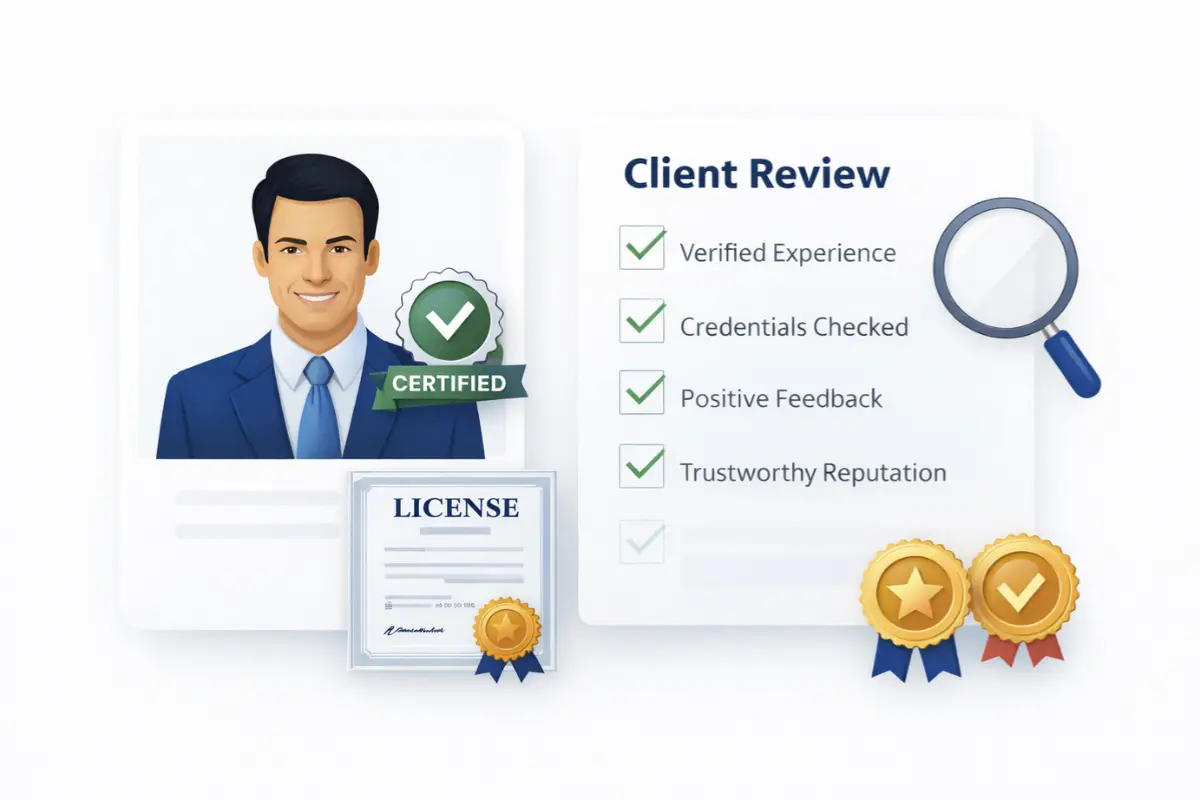
While management consulting generally remains unregulated, certain technical fields require mandatory state licenses to operate legally. Holding professional certifications acts as a compliance signal to high-value clients during the vetting process and can differentiate consultants in competitive markets. Understanding which consulting specializations require licensing versus which benefit from voluntary certifications helps consultants navigate consultant certification requirements appropriately while building credibility with potential clients.
Regulated vs. Unregulated Consulting Fields
Fields requiring mandatory licensing include legal consulting (requiring bar membership), accounting consulting (requiring CPA licensure), engineering consulting (requiring professional engineer licensure), and financial advising (requiring securities licenses). Consultants in regulated fields must maintain active licenses in states where they provide services.
Unregulated consulting fields encompass management, marketing, HR, and business strategy advisory services. These consultants face no mandatory licensing requirements, though general business licenses may apply locally.
Voluntary Certifications for Credibility
Certifications such as Certified Management Consultant (CMC) or Project Management Professional (PMP) demonstrate adherence to industry standards and professional competence. These voluntary credentials differentiate consultants in competitive markets through third-party validation. Many corporate clients prefer or require specific certifications when evaluating consultants.
Professional certifications also provide access to industry networks and continuing education resources. The investment typically returns multiples through increased credibility and higher billing rates.
Mitigating Risk with Professional Liability Insurance
Professional liability insurance, also known as Errors and Omissions (E&O) insurance, represents a core component of consulting compliance. Many corporate clients require proof of this coverage before signing consulting contracts, making insurance a practical business necessity beyond risk management considerations. Professional liability insurance protects consultants against financial losses resulting from client claims of negligent advice or professional errors.
Protecting Against Allegations of Negligence
E&O insurance covers legal defense costs if a client claims advice led to financial losses. Even when consultants provide excellent service, clients may file claims alleging recommendations caused harm. The insurance covers attorney fees, court costs, settlements, and judgments up to policy limits.
Defense costs can exceed six figures even when consultants prevail. Without coverage, these costs could force a business to close or lead to personal bankruptcy.
General Liability vs. Professional Liability
General Liability insurance covers physical accidents, such as slip-and-fall incidents, while Professional Liability covers claims related to consulting services. Consultants need both types for comprehensive protection.
Many consultants mistakenly assume that General Liability provides adequate protection, only to discover their error when filing claims. A comprehensive strategy includes both coverages, plus potentially cyber liability insurance for consultants handling sensitive data.
Maintaining the "Corporate Veil" through Administrative Discipline
Liability protection is not guaranteed simply by forming an LLC; it must be maintained through proper conduct. Piercing the corporate veil occurs when an owner fails to treat the business as a separate legal entity, allowing creditors and courts to disregard that separation and pursue personal assets. Maintaining the corporate veil requires consistent administrative discipline demonstrating that the LLC operates as a legitimate separate entity.
Strict Separation of Finances
The absolute requirement for a dedicated business bank account prohibits the use of business funds for personal expenses. Commingling personal and business finances represents the primary factor courts consider when piercing the corporate veil. Consultants must maintain completely separate bank accounts and financial records for business and personal use.
All business income must flow through business accounts, and all business expenses must be paid from business funds. Personal expenses should never be paid from business accounts, even temporarily.
Maintaining Accurate Corporate Records
Documenting major business decisions, keeping meeting minutes, and maintaining clean paper trails of client contracts protects the corporate veil. Consultants should maintain organized records of formation documents, annual reports, licenses, insurance policies, and agreements. Understanding how long to keep business records helps establish appropriate retention policies.
Annual report filing requirements vary by state. Missing these filings can result in administrative dissolution, eliminating liability protection.
The Role of a Registered Agent in Legal Compliance
Every formed entity must appoint a registered agent to receive service of process and official state notices, as required by law. For consultants working from home, a professional registered agent for consulting business operations, like InCorp, provides essential privacy protection. The registered agent maintains a physical address in the state of formation and remains available during business hours to accept legal documents.
Ensuring Timely Notice of Legal Actions
A professional agent ensures the entity receives immediate notification of lawsuits or tax notices, preventing default judgments. When consultants serve as their own agents, they risk losing critical documents while traveling. Default judgments occur when defendants fail to respond within the required timeframes, resulting in automatic adverse rulings.
Professional services provide systematic document handling and immediate notifications. This reliability ensures consultants never miss critical deadlines due to travel or relocation.
Privacy Protection for Home-Based Consultants
Using a professional service keeps home addresses off public state databases. Many consultants prefer keeping residential addresses private for security and professional appearance. State business records become public information, and using home addresses unnecessarily exposes personal information.
Professional services provide business addresses maintaining privacy while satisfying legal requirements.
Data Privacy and Cybersecurity Compliance
Consultants handling sensitive client data must comply with evolving privacy laws such as the CCPA and the GDPR. Data protection represents a standard part of professional service compliance. Understanding the impact of GDPR and CCPA helps consultants implement appropriate data handling procedures.
Client data protection includes proper procedures for collection, storage, use, and deletion. Consultants must obtain informed consent, implement security measures, and respect individual rights. Many corporate clients require security assessments or certifications before sharing sensitive information.
Leveraging Technology for Ongoing Compliance Management
Digital tools can automate the tracking of state filing deadlines, reducing administrative burden on consultants. Proactive monitoring prevents missed deadlines and the associated penalties that disrupt operations. The consulting business compliance checklist grows increasingly complex as businesses operate across multiple states, making automated compliance tracking valuable for maintaining good standing everywhere the business operates.

Using Systems like EntityWatch®
InCorp's proprietary EntityWatch® system monitors state records in real-time and provides alerts for upcoming annual report deadlines. The system tracks filing requirements across all states, centralizing compliance monitoring in a single dashboard.
The system maintains historical records of all filings, providing documentation valuable for client due diligence requests.
Automated Document Storage
A centralized, secure digital vault for storing formation documents, licenses, and insurance policies eliminates the risk of lost records. Cloud-based storage provides access from anywhere, supporting remote work. Organized digital records facilitate rapid response to client requests for insurance certificates or compliance documentation.
Start Your Consulting Practice on a Strong Legal Foundation
A well-structured consulting business is built on legal protection and disciplined compliance. Consultants who invest time in proper foundation-building create businesses capable of sustainable growth without exposing personal assets to risk.
Explore InCorp's LLC formation and registered agent services to establish consulting firms professionally. Professional formation services ensure accurate filings and ongoing compliance support.
The EntityWatch® system monitors filing deadlines and maintains compliance necessary for growth. As businesses expand across states, centralized monitoring becomes essential for maintaining good standing.
Visit InCorp's business services to discover comprehensive solutions supporting consulting business formation, compliance, and growth.
FAQ's
Can a consulting business operate across multiple states without forming new entities?
Yes. However, if your consulting activities create a business nexus in another state, you may be required to register there as a foreign entity. Nexus typically occurs when consultants maintain offices, employ staff, or generate substantial revenue beyond their home state.
How long does it typically take to legally set up a consulting business?
In most states, basic formation can be completed within a few business days, though tax registrations and licenses may extend the timeline. Expedited filing services can reduce formation time to 24-48 hours, while standard processing takes one to two weeks.
Do consultants need written client contracts to stay compliant?
While not always legally required, written agreements help clarify scope, fees, and liability limits, reducing legal and financial risk. Well-drafted agreements protect both consultants and clients by documenting mutual understanding.
Is a virtual office address acceptable for a consulting firm?
Yes. Many consultants use virtual addresses for mailing and public records, provided state rules are met, and a registered agent is properly appointed. Virtual offices provide professional business addresses without traditional office costs.
What is the best legal structure for long-term growth in a consulting business?
For most consulting businesses, a limited liability company (LLC) strikes the best balance of liability protection, tax flexibility, and administrative simplicity. It separates business assets and operations from your personal assets while still allowing pass-through taxation, which helps independent professionals align legal protection with long-term business growth goals.
How does an LLC protect my personal assets as a consultant?
An LLC is a separate legal entity, so business debts and many legal claims are generally limited to business assets rather than your personal finances. As long as you maintain proper legal separation—separate bank accounts, an operating agreement, and required annual reports—courts are less likely to hold you personally liable for consulting business obligations.
Can a sole proprietorship be risky for a consulting practice?
Yes. As a sole proprietor, there is no legal separation between you and the business, so personal assets can be exposed to business debts and legal battles arising from consulting work. This may be acceptable at the very beginning, but most consulting businesses outgrow that structure quickly as income, client exposure, and legal complexities increase.
How do S-Corp and LLC structures affect self-employment taxes for consultants?
A standard LLC with pass-through taxation treats all net consulting income as subject to self-employment taxes, while an LLC taxed as an S-Corp can split income between a reasonable salary and distributions. The salary is subject to employment taxes, but distributions usually are not, which can create tax savings for consultants once business income reaches a certain level.
Why is legal guidance important when structuring a consulting business?
Choosing the right business structure involves legal requirements, tax implications, and long-term growth considerations that can be difficult to evaluate alone. Working with business law and tax professionals helps new business owners avoid costly mistakes, protect intellectual property, maintain compliance with state fees and annual reports, and build a consulting practice that is both legally protected and positioned for sustainable growth.
Disclaimer: This content is intended for general educational and informational purposes only and does not constitute legal, tax, or accounting advice. Every effort is made to keep the information current and accurate; however, laws, regulations, and guidance can change, and no representation or warranty is given that the content is complete, up to date, or suitable for any particular situation. You should not rely on this material as a substitute for advice from a qualified professional who can consider your specific facts and objectives before you make decisions or take action.