

For the better part of a century, the word "private" acted as a strong shield for small businesses and privately held companies. That shield has not disappeared, but it is under sustained pressure.
The compliance conversation around beneficial ownership reporting has been loud, but it has not always been accurate. Understanding what the law actually requires right now ensures that business owners can make sound decisions going forward.
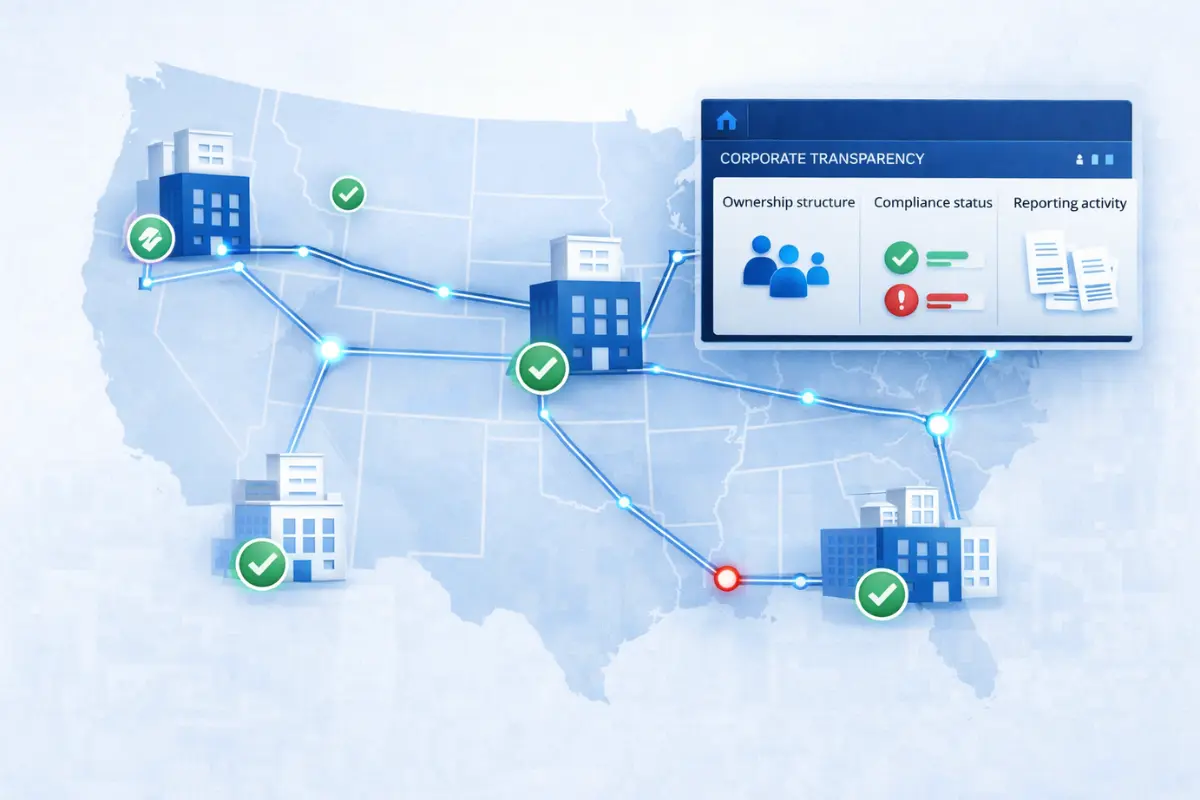
What has changed heading into 2026?
The most important development for American business owners to understand is that FinCEN issued an interim final rule in March 2025 that removed federal beneficial ownership information reporting requirements for domestic U.S. companies and U.S. persons.
That rule is still in effect today, and it limits federal BOI obligations to a narrow category of foreign reporting companies: those formed under foreign law and registered to do business in the United States.
For the vast majority of American businesses, including domestic LLCs, S-Corps, and closely held corporations, no federal BOI filing requirement currently applies.
This is not a grace period or a temporary suspension of a looming deadline. It is the operative legal standard under the current rule, and business owners should anchor their compliance decisions to that reality rather than to outdated information about what the law was originally designed to require.
That said, the regulatory infrastructure supporting transparency continues to develop. Regulators are building systems to cross-reference entity data with tax and banking records, and the direction of that investment is not ambiguous.
Business owners who treat the current exemption as a reason to stop paying attention are misreading what this moment actually calls for.
Why are expectations around compliance and reporting increasing?
The momentum behind corporate transparency did not originate with a single piece of legislation, and it will not be slowed by a single regulatory adjustment.
Governments and financial institutions worldwide have been responding to decades of evidence showing how opaque corporate structures enable money laundering, tax evasion, and illicit finance. That response has produced sustained, coordinated investment in oversight at a scale that is only growing.
The global anti-money laundering market was valued at $1.73 billion in 2024 and is projected to reach $4.24 billion by 2030, according to Grand View Research, which reflects the level of institutional commitment behind this shift.
Through the Corporate Transparency Act and its federal beneficial ownership database, the United States has been moving toward the standards championed by the Financial Action Task Force, the international body responsible for setting anti-money-laundering benchmarks across its member countries.
Investor expectations for accountability have been rising alongside regulatory pressure, and ownership transparency is now treated as a baseline corporate governance standard rather than a differentiator.
Financial institutions have been raising their own due diligence requirements independently of federal filing rules, which means businesses that fall short on ownership documentation may run into friction with lenders and banking partners regardless of federal compliance requirements.
How are small and mid-sized businesses being affected?
The Corporate Transparency Act was never aimed at large, publicly traded companies. The law's exemptions were written specifically for entities that are already subject to significant regulatory oversight, those with more than 20 full-time employees, over $5 million in gross receipts, and a physical U.S. office.
That threshold leaves roughly 32 million entities within the law's original scope, according to the U.S. Chamber of Commerce, and most of them are small LLCs, S-Corps, and closely held businesses without dedicated legal or compliance teams.
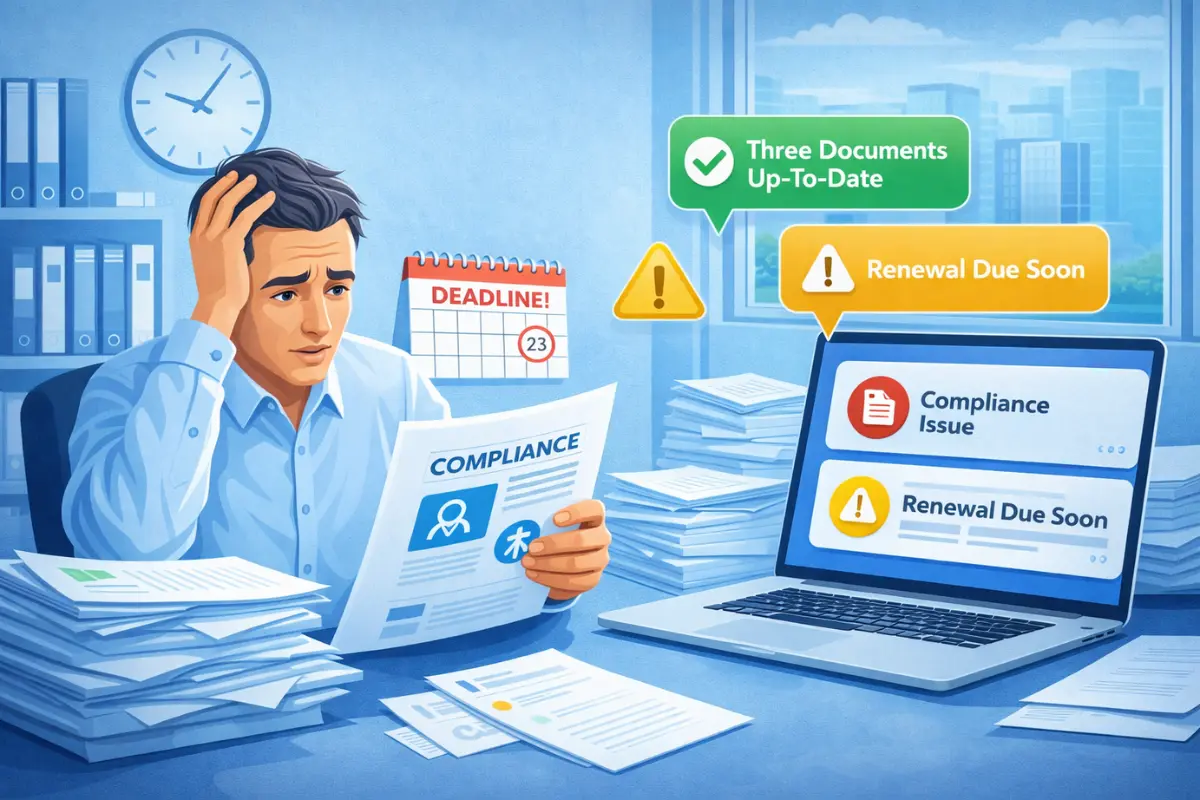
Under the March 2025 interim rule, those domestic entities are currently exempt from federal BOI filing obligations, which is a meaningful development for owners who had been anticipating a new compliance requirement.
What that federal exemption does not address, however, are the state-level transparency laws that have been advancing on their own separate timelines.
New York's LLC Transparency Act is the clearest example of this distinction. The law took full effect in January 2026 and requires LLCs formed or authorized to do business in New York to publicly disclose beneficial ownership information under its own obligations, timelines, and enforcement structure that exist entirely apart from the federal CTA framework.
Businesses with operations in New York, or in other states considering similar legislation, need to evaluate those state obligations on their own terms, because federal and state disclosure laws are independent frameworks.
What risks arise from falling behind?
The penalty structure written into the Corporate Transparency Act has not been repealed, and it is worth understanding clearly. Willful violations carry civil penalties of up to $591 per day, criminal fines of up to $10,000, and potential imprisonment.
Under the current interim rule, those penalties are not being enforced against domestic entities, but they remain fully applicable to foreign reporting companies that are still subject to active federal BOI requirements.
Beyond federal enforcement, weak corporate governance documentation carries real costs in the current environment.
Lenders and financial institutions that have updated their due diligence standards will flag ownership inconsistencies, and that kind of friction can delay financing, disrupt banking relationships, or stall transactions when timing matters most.
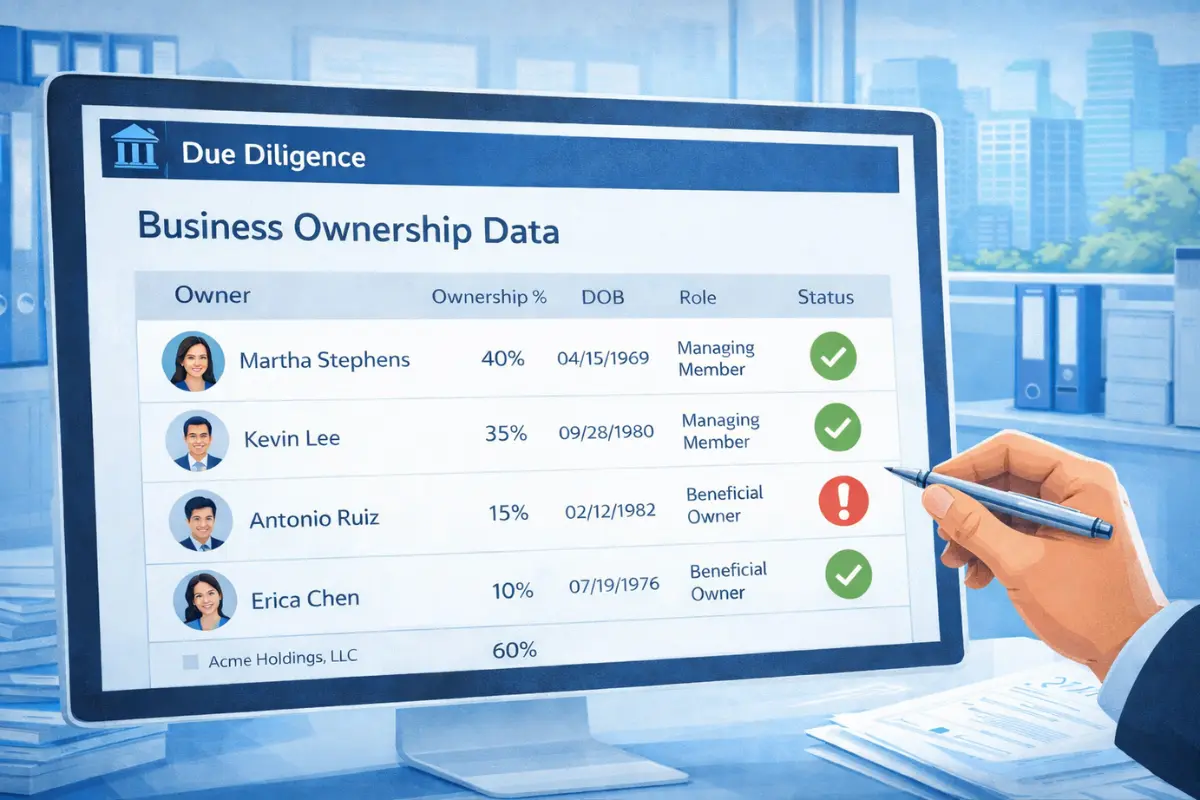
Investors and prospective partners apply similar scrutiny, treating murky ownership structures as a governance concern that raises questions well beyond the immediate deal.
For businesses already subject to active state transparency requirements, the federal ruling does not exempt them from their state’s reporting obligations.
What should business owners be doing differently now?
The right response to the current federal exemption is not to disengage from compliance planning. As always, it’s wise to assess and affirm that their governance documentation is in order, understand ownership structures clearly, and build the internal practices that regulators, lenders, and partners will expect as the transparency landscape continues to develop.
The starting point is confirming whether an entity qualifies as a domestic or foreign reporting company under the current FinCEN interim rule, since that determination is what establishes immediate federal exposure.
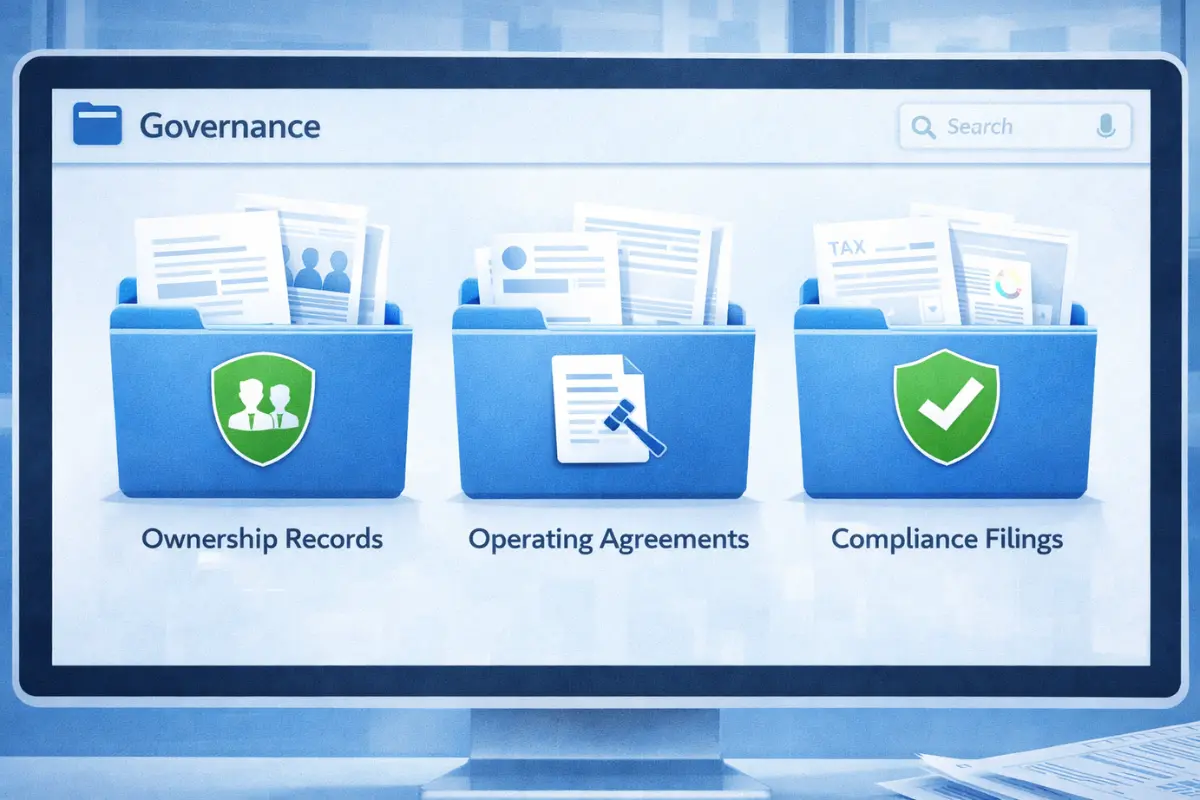
State-level obligations should then be assessed separately and seriously, with particular attention to states like New York, where active disclosure requirements are already in force and carry their own consequences.
“The biggest mistake businesses can make right now is assuming that the current federal exemption means ownership transparency is no longer relevant,” said Yuliya Pearson, Director of Product at InCorp Services Inc., a nationwide provider of registered agent, business formation, and corporate compliance services that help companies maintain good standing across all 50 states.
“In reality, the regulatory environment is becoming more fragmented, not less. While federal BOI reporting requirements currently apply only to certain foreign entities, state-level transparency laws, banking due diligence requirements, and investor expectations are all moving in the direction of greater disclosure. Businesses that maintain clear ownership records and proactive compliance practices today will be in a much stronger position if reporting requirements expand again in the future.”
The legal environment surrounding the Corporate Transparency Act remains unsettled, with active litigation, a constitutionality ruling from the 11th Circuit affirming the law's legal foundation, and ongoing potential for legislative or regulatory change.
Businesses with complex ownership structures or multi-state operations are especially exposed to shifts in this environment, and working with counsel familiar with both the federal CTA framework and applicable state statutes is a sound investment at this stage.
The New Era of Corporate Transparency
The deeper question emerging in 2026 is whether corporate transparency is becoming the new baseline expectation for all businesses, not just publicly traded ones. The evidence increasingly points toward yes.
Private companies are increasingly being held to closer scrutiny, and that shift reflects something more durable than a passing regulatory phase. It reflects a cultural demand for accountability that is reshaping how investors, financial institutions, and the public relate to corporate ownership.
Therefore, 2026 may mark the tipping point when more companies begin to view transparency as a part of their strategic infrastructure, not merely as red tape.
Disclaimer: This content is intended for general educational and informational purposes only and does not constitute legal, tax, or accounting advice. Every effort is made to keep the information current and accurate; however, laws, regulations, and guidance can change, and no representation or warranty is given that the content is complete, up to date, or suitable for any particular situation. You should not rely on this material as a substitute for advice from a qualified professional who can consider your specific facts and objectives before you make decisions or take action.