

A software developer saw an advertisement promising "$0 LLC formation" and signed up to launch her consulting business. Three months later, she had paid over $400 in unexpected fees for an EIN, operating agreement, expedited processing, and registered agent renewal.
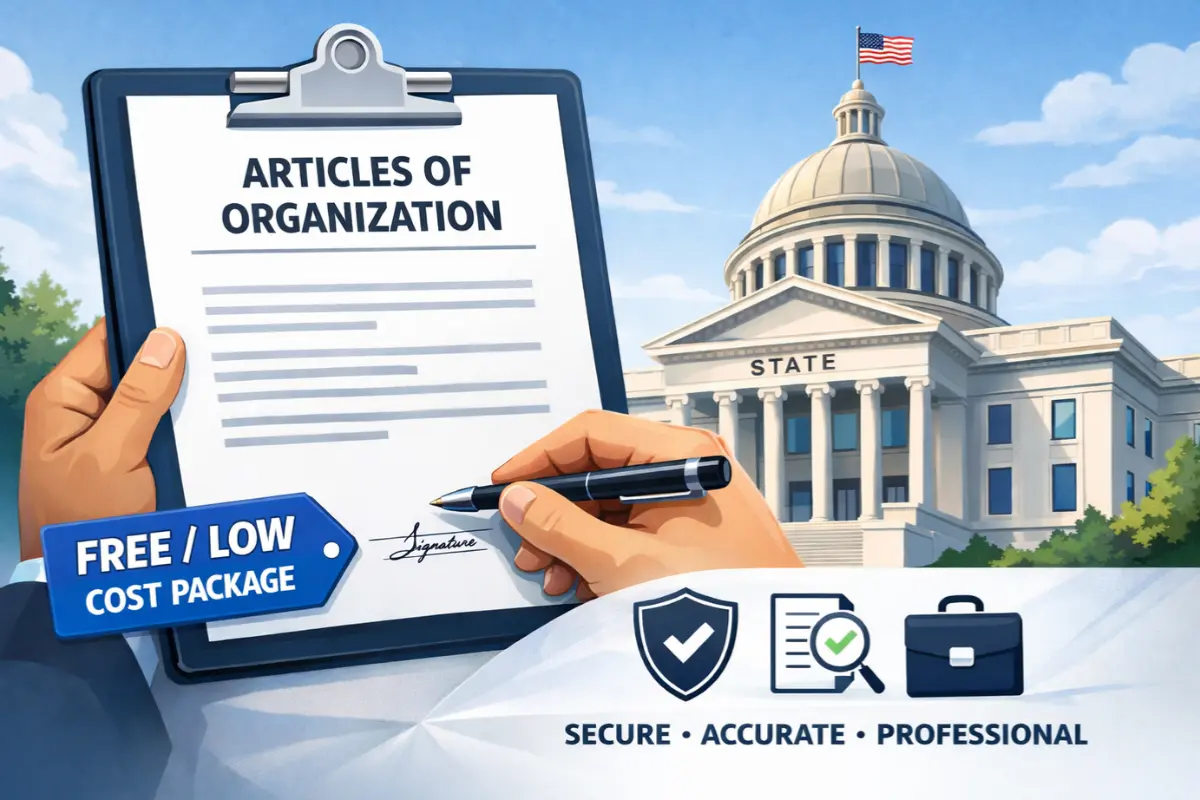
LLC formation represents the formal process of filing Articles of Organization with a state to establish a separate legal entity. The appeal of free or low-cost formation packages attracts new entrepreneurs, with approximately 4.3 million new LLC formation services applications filed in 2025, according to the U.S. Census Bureau's Business Formation Statistics. While the initial price may appear low, the long-term value of LLC Formation Services depends on the accuracy, security, and ongoing support the service provides.
Understanding the true cost structure helps business owners make informed decisions about starting an LLC and avoiding hidden expenses. In 2025, there are approximately 21.6 million active LLCs nationwide, according to SmallBizStatistics. The difference between advertised prices and actual costs often determines whether entrepreneurs experience smooth compliance or costly administrative problems.
Key Takeaways
-
“$0 LLC formation” offers are never truly free; you must still pay state filing fees, and many budget services recoup costs through paid add‑ons for EINs, operating agreements, expedited filing, and registered agent renewals.
-
Hidden ongoing costs like annual report fees, franchise taxes, and high registered agent renewals can quickly exceed the upfront savings from low advertised formation prices.
-
Errors in cheap, high‑volume filings can trigger state rejections or amendments, which mean extra filing fees, delays, and potential gaps in liability protection if compliance lapses.
-
Generic, auto‑generated operating agreements and weak data‑security practices at low‑cost providers can create legal, banking, and privacy problems later when you need financing, partners, or clean records.
-
Professional, transparent providers that bundle formation, registered agent service, and compliance monitoring often cost slightly more upfront but reduce hidden fees, correction work, and administrative headaches over the life of the LLC.
Hidden Fees and Upselling Tactics
Many low-cost providers offer a $0 base fee but recoup costs through mandatory add-ons and aggressive upselling. Entrepreneurs seeking affordable LLC formation discover that budget services quickly accumulate hidden fees in LLC services, as basic formation excludes essential documents.
Services that seem cheap charge extra for essential items like an EIN, Operating Agreement, or document delivery. The IRS provides Employer Identification Numbers free, yet formation services charge $99 to $159. Operating agreements cost nothing using free templates, but services charge $40 to $99. Expedited processing adds $50 to $100.
These costs often exceed the prices of transparent, all-inclusive professional services. An entrepreneur paying $0 plus add-ons totals $423. Professional packages typically cost $250 to $400 with everything included. The psychology of upselling relies on customers committing before they discover the true costs.
Upsell charges become problematic when services employ aggressive sales tactics. The service tiers offered by budget providers unbundle essential features, forcing customers to piece together complete packages through multiple purchases.
Reliability Risks and Processing Delays
High-volume, low-cost services may lack the staff or technology to process filings with the necessary attention to detail. Budget services operate on thin margins, limiting investment in quality control and experienced personnel and prioritizing volume over accuracy. Understanding the LLC formation cost breakdown helps businesses evaluate whether the best LLC formation service for their needs prioritizes accuracy over low prices.
An error in the formation paperwork can lead to state rejections, requiring new state filing fees and restarting the processing timeline. States charge non-refundable fees ranging from $35 in Montana to $500 in Massachusetts, and LLC filing fees by state vary significantly, meaning rejected applications waste both money and time. Corrections typically require amendment filings after approval, adding $25 to $100 in fees plus delays.
A lack of personalized support makes it difficult to resolve administrative issues. Budget services typically offer email-only support with 24 to 48-hour response times. Phone support routes through call centers with representatives reading scripts rather than providing experienced advice.
Short-Term Savings vs. Long-Term Compliance Costs
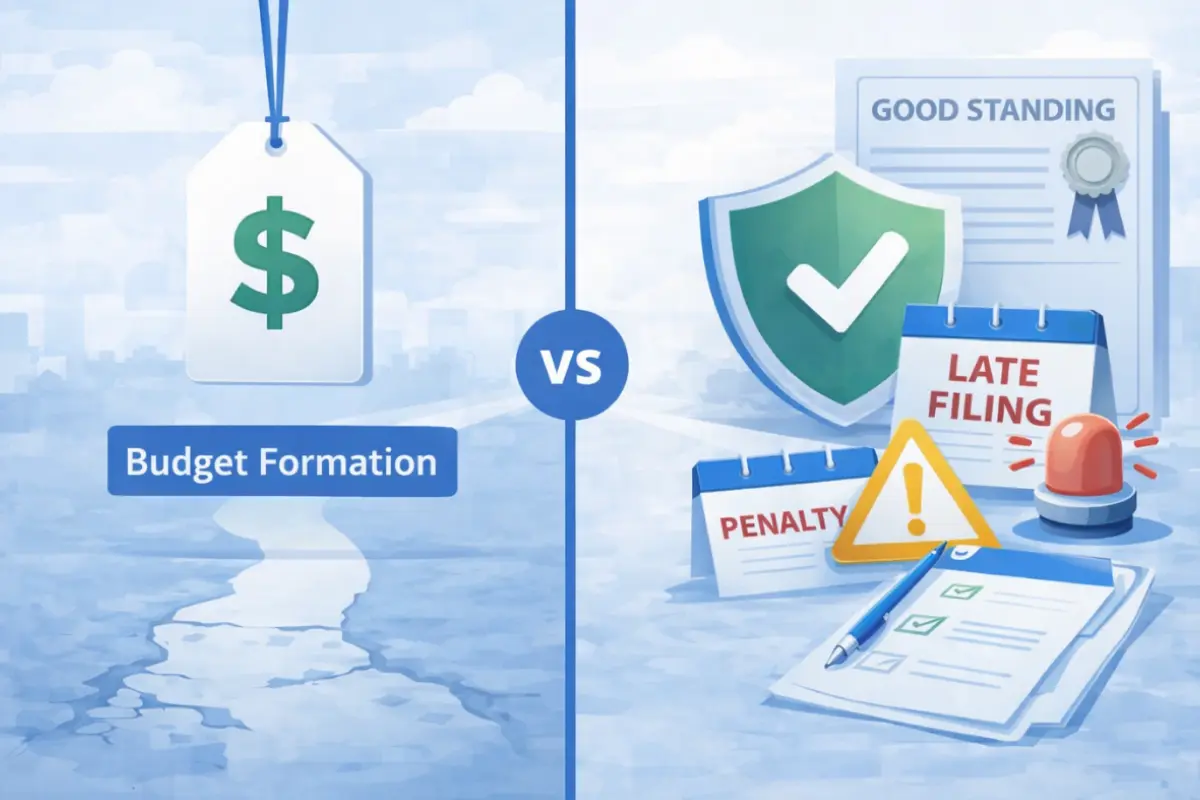
The immediate saving of a few dollars contrasts with the cost of fixing an improperly formed entity later. Entrepreneurs who choose the cheapest option may discover errors in their Articles of Organization months after approval, necessitating amendment filings and additional fees.
Budget services may not provide guidance on ongoing state requirements, such as annual reports or franchise tax deadlines. LLC compliance services involve the systematic tracking of recurring obligations that vary by state. Annual reports cost $0 to $800, depending on the jurisdiction, with filing deadlines varying by state.
Missing obligations can lead to late penalties or loss of the entity's Good Standing status. States impose compliance penalties starting at around $50 to $100 for late annual reports, increasing monthly until businesses file. Loss of good standing prevents entities from conducting transactions, defending lawsuits, or maintaining licenses.
Administrative dissolution occurs when states terminate entities for failure to file reports or pay taxes. Dissolved entities lose liability protection retroactively, exposing owners personally to business debts. Reinstatement requires paying accumulated fees, filing overdue reports, and waiting weeks for processing.
The Quality of Internal Governance Documents
Generic, cookie-cutter templates for Operating Agreements provided by low-cost services create risk. Budget services generate agreements through automated systems, inserting information into standardized templates without customization.
An Operating Agreement should define the entity's management structure and reinforce its separate legal status. The document establishes whether the LLC is member-managed or manager-managed, determines voting rights, and outlines procedures for admitting new members or transferring ownership.
Insufficient internal documentation creates complications during bank applications, partnership disputes, or legal reviews. Financial institutions require operating agreements when opening accounts or reviewing loans. Generic documents missing required provisions prompt banks to request amendments, delaying account openings. Understanding the difference between annual reports and operating agreements helps business owners recognize which documents serve compliance versus governance functions.
Privacy and Data Security Concerns
Some low-cost providers may monetize user data or share information with third-party marketers to keep prices low. Budget services generate revenue by selling customer contact information to business service providers, insurance companies, and marketing firms. Entrepreneurs providing personal information during signup receive aggressive solicitations.
A professional formation service prioritizes secure handling of sensitive legal and personal information. Business formation requires collecting Social Security numbers, home addresses, and banking information. Professional services implement encryption, secure data centers, employee training, and privacy policies prohibiting unauthorized disclosure. The data security practices necessary to protect business information require infrastructure investments that budget providers often overlook.
Choosing providers based solely on price may lead to unsolicited mail and administrative junk. Business owners report receiving dozens of mailings each week, with correspondence designed to appear as official government notices.
Lack of Integrated Professional Support
Cheap services often act as filing mills without a full suite of professional administrative tools. Budget providers focus exclusively on preparing Articles of Organization, treating service as a one-time transaction rather than an ongoing relationship.
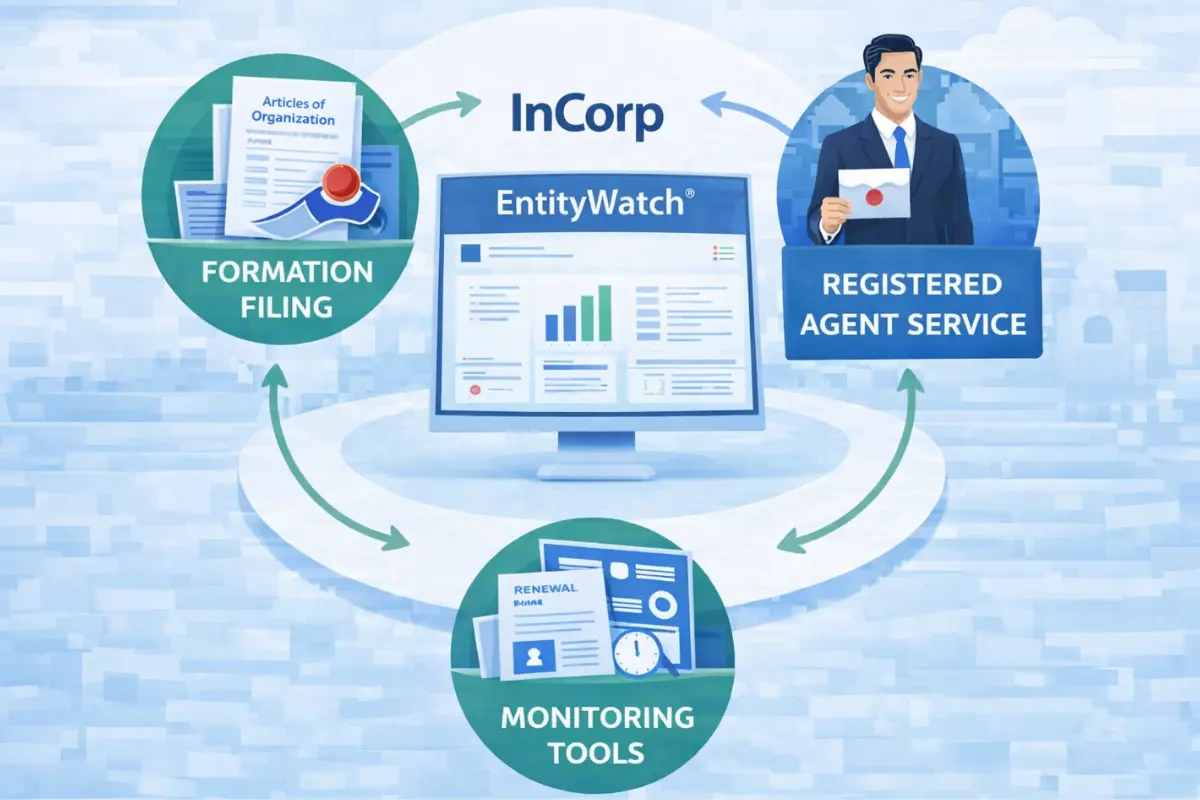
A comprehensive provider like InCorp integrates formation with expert registered agent services and the EntityWatch® monitoring system. Professional LLC compliance services provide automated compliance alerts for annual reports, franchise tax deadlines, and license renewals. The EntityWatch® system tracks entity status across all jurisdictions and sends proactive notifications before deadlines.
This integrated approach helps entities manage their entire lifecycle rather than just initial setup. Entity management encompasses formation, ongoing compliance, document organization, and the coordination of changes such as amendments or dissolutions.
Inconsistent Registered Agent Representation
Many free formation offers only include a short trial of registered agent services, with high renewal fees thereafter. These registered agent upsells create a bait-and-switch scenario where businesses face significantly higher ongoing expenses.
Switching agents shortly after formation creates extra paperwork and additional state amendment fees. Businesses must file registered agent change forms and pay amendment fees, typically $25 to $100. The process requires careful timing to ensure continuous representation without gaps.
Selecting a stable, national provider from the start ensures continuity and avoids bait-and-switch scenarios. The registered agent's annual cost for professional services remains consistent over time, with transparent pricing and no cancellation fees when business needs change. National providers maintain physical offices in all 50 states, supporting businesses as they expand. Automatic renewals at consistent rates eliminate administrative burden and prevent coverage gaps.
Navigating Complex Multi-State Requirements
Low-cost services may struggle with the nuances of foreign qualification when entities expand into other states. Budget providers handle basic domestic formation but lack infrastructure and expertise for multi-state registration.
A professional national provider has brick-and-mortar infrastructure supporting entities in all 50 states. Physical office presence enables registered agent service in every state, eliminating the need for multiple provider coordination. National providers maintain relationships with all state filing offices and understand processing timelines.
Localized expertise ensures that entities meet the specific statutory requirements of each jurisdiction. States impose different requirements for Articles of Organization, publication obligations, and registered agent qualifications.
The Administrative Burden of Do-It-Yourself Corrections
The time and effort required to fix mistakes made by automated, low-cost filing systems create significant opportunity costs. Entrepreneurs who saved $100 on formation fees may spend dozens of hours researching correction procedures and communicating with state offices. The value of that time often exceeds initial savings.
A professional service provides oversight that catches errors before they become part of the public record. Experienced specialists review documents for accuracy and compliance with state requirements before submission, preventing rejected applications.
The value of professional support lies in the time saved and the reduced operational risk. Business owners who use professional services avoid navigating government bureaucracy, allowing them to focus on core business activities such as product development and customer acquisition.

Impact on Professional Credibility
An entity's public records should reflect professional accuracy and organization. Information filed with state offices becomes publicly accessible through the Secretary of State databases. Records containing errors or compliance failures signal disorganization to anyone conducting due diligence.
Lenders, investors, and partners review an entity's formation history during due diligence. Commercial banks examine formation documents when evaluating loan applications. Investors conduct thorough reviews before committing capital, with formation errors raising concerns about management competence.
Investing in professional-grade formation services establishes a solid foundation supporting long-term reputation. Professional formation demonstrates commitment to doing things correctly from the beginning.
Build Your LLC on a Foundation That Supports Long-Term Success
While low-cost formation services may seem attractive, the true cost of a business entity is measured by its long-term stability and compliance. Initial savings from budget providers often evaporate through upselling charges, compliance failures, and administrative corrections that exceed professional service fees.
InCorp offers transparently priced formation and registered agent services as a professional solution. The comprehensive approach eliminates hidden fees, prevents compliance failures through automated monitoring, and provides expert guidance throughout the entity's lifecycle.
The EntityWatch® system monitors filing deadlines and maintains entity standing across all jurisdictions. This systematic approach transforms compliance from reactive crisis management into an organized administrative routine.
Explore InCorp's business services to discover comprehensive solutions supporting business formation, compliance, and growth. The right formation decision today prevents costly compliance mistakes that disrupt business operations tomorrow.
FAQ's
Can I switch LLC formation services after my business is formed?
Yes, but doing so may require additional state filings, updated authorizations, and administrative time that could have been avoided with the right provider from the start. Businesses can change registered agents by filing amendment forms with the state, paying filing fees of typically $25 to $100, and coordinating timing to ensure continuous representation.
Does the state care which formation service I use?
No. States only review the accuracy and completeness of filed documents, not the service provider behind them. Secretary of State offices process Articles of Organization regardless of whether businesses filed directly, used budget services, or employed professional providers.
Are online LLC formation services legally reliable?
They are legally valid if filings are completed correctly, but reliability depends on the provider's accuracy, support access, and compliance follow-through. Online formation services operate legally and create valid business entities when they submit the required documents. The distinction lies in error rates, customer support quality, and ongoing compliance assistance.
Do formation services provide legal advice?
Most do not. They facilitate filings and documentation, but cannot replace legal counsel for entity-specific legal decisions. LLC formation services prepare and submit paperwork on behalf of clients but operate as administrative assistants rather than legal advisors.
How do mandatory state filing fees affect the true cost of starting an LLC?
Every LLC must pay state filing fees for Articles of Organization, and these are non‑refundable whether you file yourself or use an online LLC formation service. Even if a provider advertises "$0 formation," state fees, possible name reservation fees, and any expedited service charges still apply and are often the largest part of the upfront cost to start an LLC.
What ongoing state costs should LLC owners budget for after formation?
Beyond the initial filing fee, most states require annual or biennial reports and sometimes a franchise tax, each with its own annual fees. Missing these recurring obligations can lead to late penalties, administrative dissolution, and loss of good standing, so small business owners should treat annual report fees and franchise taxes as fixed yearly LLC costs.
Why are registered agent fees an important part of LLC formation services?
An LLC must maintain a registered agent with a physical address in the state to receive legal documents and official notices during regular business hours. Professional registered agent services charge an annual recurring fee but provide reliability, privacy, and support across moves or multi‑state operations, which is crucial for maintaining good standing and liability protection.
Do I really need a customized operating agreement, or is a template enough?
For a single member LLC, a well‑drafted template can work if it clearly documents ownership, management, and how business finances are handled, but it should still be reviewed carefully. Multi member LLCs often benefit from more tailored operating agreement drafting, because profit splits, voting rights, and exit terms can create disputes if they're not clearly spelled out in the legal documents.
How do banking and licensing requirements impact the total cost of forming an LLC?
Opening a business bank account may require a minimum balance or monthly fees, and many industries also need business licenses or permits with initial and renewal fees. These business operations costs are separate from LLC formation service prices and state filing fees, but they are part of the true total cost of forming an LLC and protecting your personal assets.
Disclaimer: This content is intended for general educational and informational purposes only and does not constitute legal, tax, or accounting advice. Every effort is made to keep the information current and accurate; however, laws, regulations, and guidance can change, and no representation or warranty is given that the content is complete, up to date, or suitable for any particular situation. You should not rely on this material as a substitute for advice from a qualified professional who can consider your specific facts and objectives before you make decisions or take action.