

A landlord in Phoenix owned three rental properties in her personal name. When a tenant suffered a serious fall on one property, the resulting lawsuit exceeded her insurance coverage by $180,000. The judgment exposed her personal savings, primary residence, and equity in her other two rentals—everything she'd built over ten years became vulnerable because she lacked the legal barrier a rental property LLC provides.
Real estate investors face unique liability risks when holding rental properties in their personal name. According to the U.S. Census Bureau's 2021 Rental Housing Finance Survey, LLCs, LLPs, and LPs own 40.4% of all U.S. rental units, demonstrating how widely real estate investors rely on entity structures for asset protection.
This guide covers why investors use LLCs for rental property, how to form one, transfer strategies, structuring for multiple properties, and tax and insurance considerations.
Key Takeaways
-
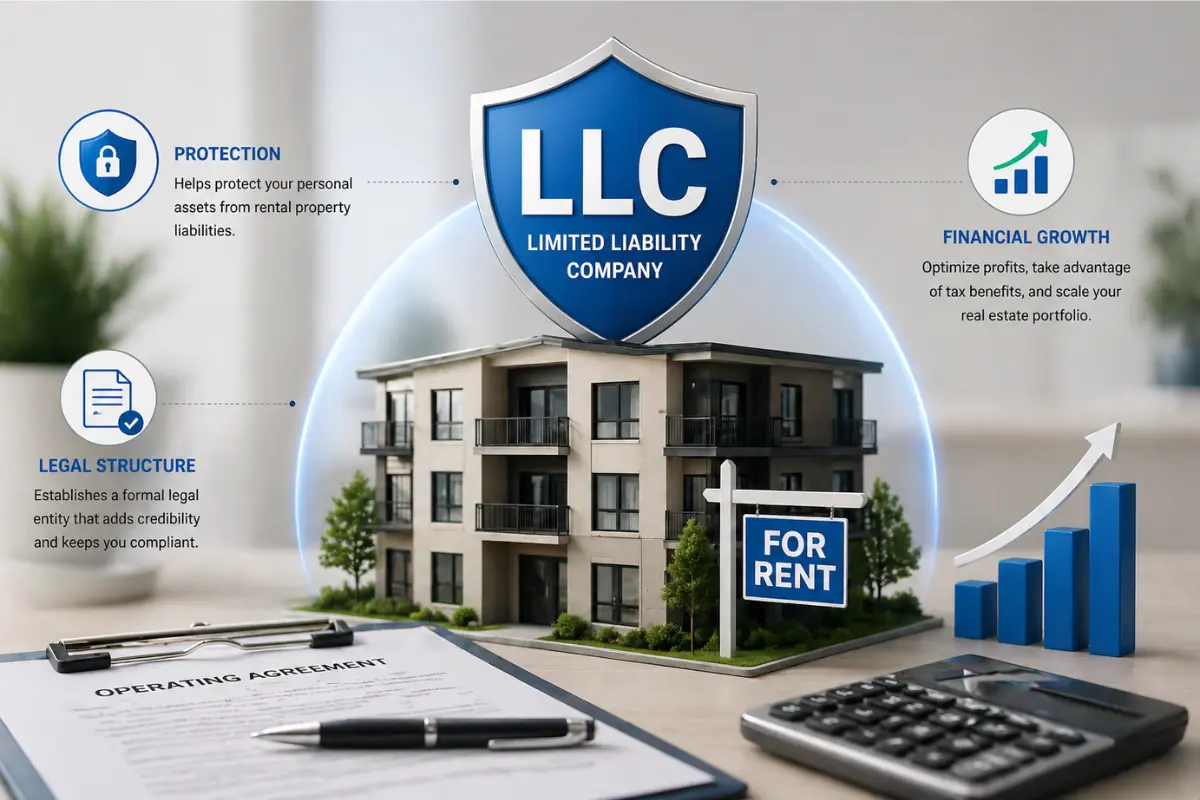
Holding rentals in an LLC helps separate personal assets from property‑related liabilities, but that protection depends on proper formation, separate banking, and ongoing compliance.
-
Real estate investors of all sizes use LLCs widely—entity structures own a large share of U.S. rental units—because they make it easier to add partners, manage succession, and treat the portfolio as a business.
-
Forming a rental property LLC generally involves creating the LLC in the property’s state, appointing a registered agent, drafting an operating agreement, obtaining an EIN, and running all rental income and expenses through a dedicated business account.
-
Investors with multiple properties can use one LLC, separate LLCs, series LLCs, or holding‑company structures, trading off simplicity and cost against the level of asset isolation they want.
-
LLCs work best as part of a layered risk‑management strategy that also includes appropriate landlord insurance, umbrella coverage, and tax planning to maximize pass‑through deductions and avoid surprises.
Why Real Estate Investors Use LLCs for Rental Properties
Forming an LLC for rental property represents one of the most common strategies among real estate investors. Real estate investors accounted for up to 33% of U.S. home purchases by Q2 2025, with small investors (fewer than 5 properties) owning 87% of all investor-owned residential properties. This demonstrates that rental property LLC formation benefits individual investors with modest portfolios, not just large commercial operators.
Understanding rental property LLC benefits helps investors make informed decisions about entity structure and asset protection strategies.
Personal Asset Protection
An LLC creates legal separation between the investor's personal assets and the rental property business. If a tenant files a lawsuit, only the assets held within the LLC are typically at risk rather than the investor's personal savings, home, or other investments.
This liability protection shields personal assets from landlord liability claims when properly maintained. Protection depends on keeping finances separate, following state compliance, and avoiding commingling business and personal funds. Understanding how to protect personal assets through proper business structuring helps investors implement comprehensive strategies.
Privacy Benefits
In states including Wyoming, New Mexico, Nevada, and Delaware, LLCs offer ownership privacy. Property ownership records show the LLC name rather than the individual investor's name, reducing the likelihood of being personally targeted in lawsuits.
Professional Credibility
Operating under an LLC name signals professionalism to tenants, property management companies, vendors, and lenders. It positions the investor as a business owner rather than an individual landlord.
Flexible Ownership Structure
An LLC makes it straightforward to bring in partners, transfer ownership interests, and plan for succession without changing property title. The operating agreement defines profit distributions and management responsibilities.
This flexibility proves valuable for family investment properties or partnerships where one party contributes capital while another handles property management. Understanding the process of forming an LLC for rental property provides additional context.
How to Form an LLC for Rental Property
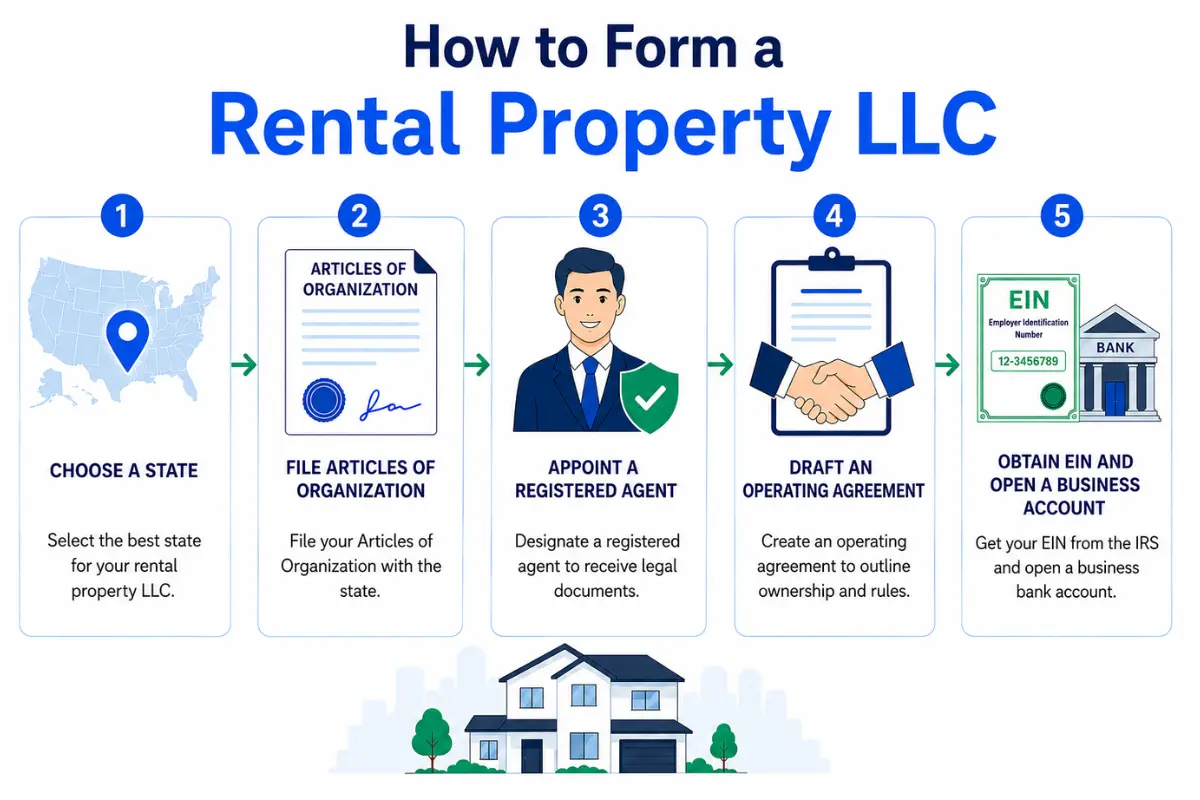
The process of how to create an LLC for rental property follows consistent steps across states, though specific requirements vary. LLCs represent 85% of all new business entity formations in the U.S. as of 2025, with approximately 21.6 million active LLCs operating nationwide.
Step 1: Choose the State of Formation
Real estate investors typically form an LLC in the state where the rental property is located. Forming in a different state requires foreign LLC registration in the property's state, adding cost and complexity.
State filing fees range from approximately $35 to over $500. When comparing rental property LLC vs personal name ownership, investors should factor in ongoing annual fees that vary by state. Learning how to form an LLC through InCorp ensures compliance with state requirements.
Step 2: File Articles of Organization
The Articles of Organization are filed with the state's Secretary of State office to legally create the LLC. InCorp can assist with preparation and filing to ensure accuracy and compliance. Start your LLC formation with InCorp's streamlined process designed for real estate investors.
Step 3: Appoint a Registered Agent
Every LLC must designate a registered agent with a physical address in the state. The registered agent receives legal documents and official correspondence, including service of process, annual report notices, and tax documents.
A professional registered agent service like InCorp provides reliable availability, ensures critical deadlines aren't missed, and maintains privacy. Missing service of process can result in default judgments. Explore InCorp's registered agent services for coverage across all states.
Step 4: Draft an Operating Agreement
An operating agreement defines the LLC's financial and operational rules, including profit distribution, management responsibilities, and procedures for adding or removing members. This document is particularly important for rental property LLCs with multiple investors or family members as co-owners.
While not all states require a written operating agreement, it remains critical for maintaining liability protection. Understanding whether you need an operating agreement for your LLC helps prevent conflicts.
Step 5: Obtain an EIN and Open a Business Bank Account
Obtaining a Federal Employer Identification Number (EIN) from the IRS is required for tax reporting and opening a business bank account. The EIN application through the IRS website takes minutes.
Maintaining a separate business bank account is essential for asset protection. Commingling personal and business funds is a common reason courts "pierce the corporate veil" and hold investors personally liable. Every rental income deposit and expense should flow through the LLC's dedicated account.
How to Transfer Existing Property into an LLC
Many investors want to transfer a rental property to an LLC for protection. The typical process involves executing a deed transferring the property from the individual to the LLC, recording the deed with the county, updating insurance policies, and notifying tenants that rental income payments should go to the LLC.
The transfer is generally not a taxable event if the LLC is a single-member LLC or if the owner retains the same ownership interest in a multi-member LLC. However, some jurisdictions impose transfer taxes or reassess property values.
Understanding the Due-on-Sale Clause
Most mortgages include a due-on-sale clause, which allows the lender to demand full repayment when property ownership is transferred. While lenders rarely enforce this for transfers to an investor-controlled LLC, the contractual right exists.
Mitigation strategies include requesting written lender permission, refinancing under the LLC's name, or using a land trust. Fannie Mae guidelines generally allow transfers to borrower-controlled LLCs on loans securitized after June 2016 without triggering the due-on-sale clause. Understanding how to transfer a rental property to an LLC provides detailed guidance.
LLC Structuring Strategies for Multiple Properties
Investors with multiple properties face decisions about a separate LLC for each rental property versus consolidated structures.
One LLC for All Properties: Simplest and least expensive, but all properties share liability protection boundaries. A lawsuit against one property could affect all properties held in the same LLC.
Separate LLC for Each Property: Provides maximum asset isolation. A separate LLC for each rental property ensures claims against one property cannot reach others. More expensive, requiring separate accounts, tax filings, and annual fees for each entity.
Series LLC: A series LLC allows individual "series" under one parent LLC, each with separate liability protection. Available in approximately 20 states, including Texas, Delaware, Illinois, and Nevada. Understanding the pros and cons of forming a series LLC helps evaluate this structure.
Holding Company Structure: A parent LLC owns multiple child LLCs, each holding a single property. Provides maximum protection with centralized management, most common for portfolios of 10+ properties.
Tax Considerations for Rental Property LLCs
Understanding rental property LLC tax deductions helps investors maximize benefits while maintaining compliance.
A single-member LLC is treated as a disregarded entity—rental income and expenses are reported on Schedule E of the owner's personal return. Multi-member LLC structures file Form 1065 with each member receiving a K-1. This pass-through taxation avoids double taxation.
Common Deductions
Real estate investors can deduct mortgage interest, property depreciation (27.5 years for residential property), repairs and maintenance, property taxes, insurance premiums, property management fees, professional services, and utilities. Investors may qualify for the 20% Qualified Business Income deduction under Section 199A, subject to income thresholds.
State Tax Considerations
Some states impose annual LLC fees regardless of income. California charges $800 annually, while states like Wyoming have minimal fees. Reviewing LLC annual fees by state helps understand ongoing costs.
Insurance and Additional Protections
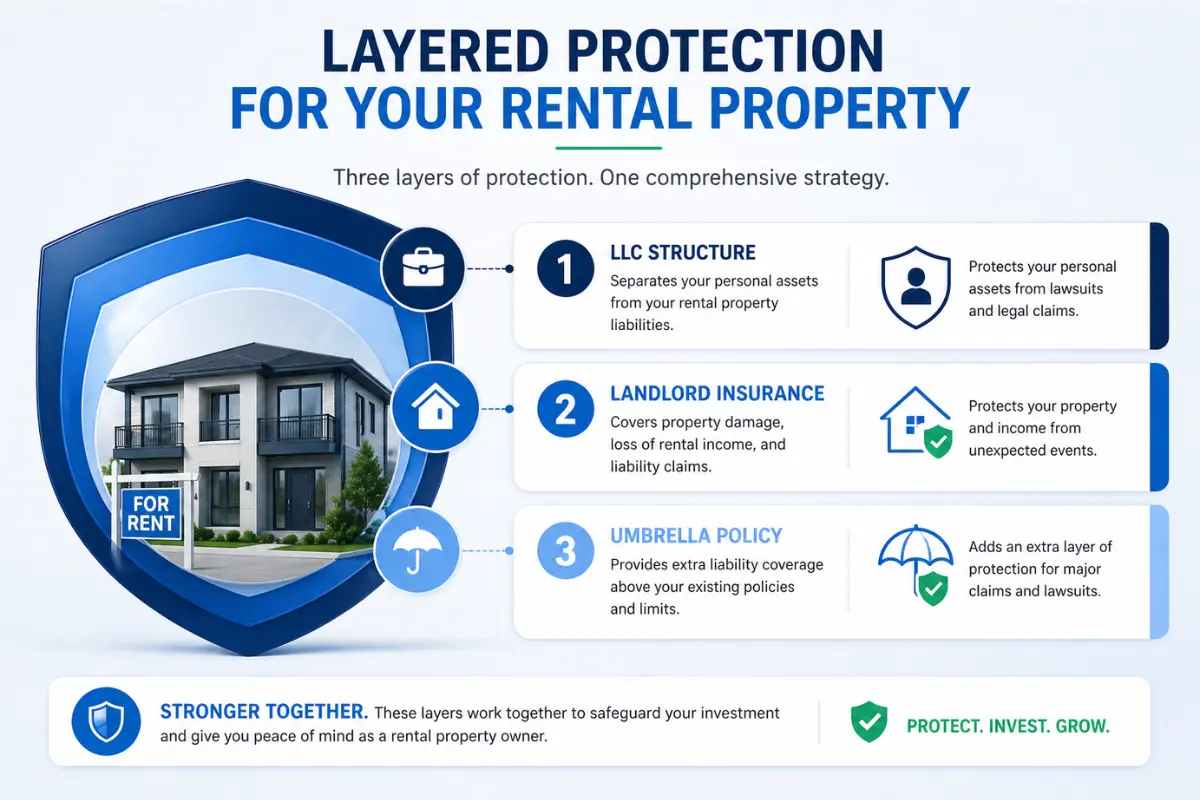
An LLC provides one layer of asset protection—not a complete solution. Combining an LLC with insurance creates comprehensive liability protection.
Landlord Insurance: Provides essential coverage for each property, typically offering $300,000 to $500,000 in landlord liability protection plus property damage coverage. Standard policies cover building structure, rental income loss during repairs, and landlord liability for property injuries.
Umbrella Insurance: An umbrella insurance policy provides additional liability protection above underlying policies, typically starting at $1 million. If properties are held in an LLC, commercial umbrella insurance may be required instead of personal coverage.
The Combined Approach: LLC structure, landlord insurance, and umbrella insurance together provide comprehensive protection. Understanding the benefits of forming an LLC helps investors integrate LLC formation with broader risk management.
Protect Your Rental Property Investment with InCorp
Forming an LLC for rental property represents a widely used strategy among real estate investors to help protect personal assets, gain tax flexibility through pass-through taxation, and build a professional business structure. The Census Bureau data showing that LLCs and similar entities own over 40% of all rental units demonstrates mainstream acceptance of this approach among individual investors and institutional owners alike.
However, forming the entity represents only the first step in effective asset protection. Maintaining liability protection requires ongoing compliance with state requirements, including annual report filings, maintaining registered agent service, proper financial record keeping with separate business accounts, and adherence to operating agreement provisions. Missing annual reports or commingling funds can result in administrative dissolution or piercing of the corporate veil, losing the asset protection the LLC structure provides.
InCorp helps ensure formation documents are prepared accurately according to state-specific requirements, registered agent requirements are met in every state where you hold property, and compliance deadlines are tracked through our EntityWatch® system that monitors all 50 states. Whether you're forming your first single-member LLC for a duplex or structuring a series LLC for a growing multi-property portfolio, InCorp provides the professional support real estate investors need to establish and maintain effective asset protection structures that preserve wealth while enabling portfolio growth.
Start your LLC formation with InCorp today and build the legal foundation your rental property investment deserves.
FAQ's
Should I put my rental property in an LLC?
Many real estate investors choose to hold rental property in an LLC to create legal separation between their personal assets and their rental business. An LLC can help protect personal savings, a home, and other investments from landlord liability claims related to the rental property. Weighing the pros and cons of an LLC for rental property depends on individual circumstances, including the number of properties owned, the amount of equity at risk, property location, and the investor's overall financial situation. Investors with substantial equity exposure, multiple properties, or properties in litigious jurisdictions often benefit most from LLC formation. Consulting with a real estate attorney or tax professional can help determine whether this structure is appropriate given your specific risk profile and investment goals.
Do I need a separate LLC for each rental property?
The answer depends on risk tolerance and portfolio size. A single LLC is the simplest and least expensive option, but it means all properties share liability protection boundaries, potentially exposing multiple properties to claims arising from any one property. A separate LLC for each rental property provides maximum asset isolation, ensuring that a lawsuit related to one property cannot reach equity held in other properties. A series LLC, available in approximately 20 states, offers a middle ground by allowing separate liability protection for each property under one parent entity with reduced administrative costs. Investors with larger portfolios may consider a holding company structure where a parent LLC owns multiple subsidiary LLCs. The optimal structure balances asset protection needs against formation costs, annual fees, tax preparation expenses, and administrative complexity.
Will transferring my property to an LLC trigger the due-on-sale clause?
Most mortgages include a due-on-sale clause that technically allows the lender to demand full repayment upon transfer of ownership. In practice, lenders rarely enforce this clause when the borrower transfers property to an LLC they control, particularly for single-member LLC structures where beneficial ownership hasn't changed. However, the contractual right exists, creating theoretical risk. Mitigation strategies include requesting written lender permission before transferring, refinancing the property under the LLC's name, or using a land trust structure with the LLC as beneficiary. Fannie Mae guidelines generally permit transfers to borrower-controlled LLCs on qualifying loans originated after June 2016, though lender interpretation varies. Investors should review their specific mortgage documents and consult with their lender before executing transfers to understand whether the due-on-sale clause presents practical concerns in their situation.
What are the tax benefits of a rental property LLC?
A rental property LLC is typically treated as a pass-through entity for federal tax purposes, meaning the LLC itself does not pay income tax. Rental income and deductible expenses flow through to the owner's personal tax return. Common rental property LLC tax deductions include mortgage interest, property depreciation, repairs and maintenance, property taxes, insurance premiums, property management fees, professional services, and utilities. Investors may also qualify for the 20% Qualified Business Income deduction under Section 199A, subject to income thresholds and activity requirements. Tax treatment can vary based on whether the LLC is a single-member LLC or multi-member LLC, any elections made for corporate taxation, and state-specific tax rules. The LLC structure doesn't create new deductions but affects how and where they're reported. Consulting with a tax professional familiar with real estate taxation ensures investors maximize available deductions while maintaining proper compliance.
How much does it cost to form an LLC for rental property?
State filing fees for LLC formation range from approximately $35 in Montana to over $500 in Massachusetts, with most states charging between $50 and $200. Additional formation costs may include registered agent service (typically $100-300 annually), an operating agreement prepared by an attorney ($500-1,500 if professionally drafted, or free using templates), and any applicable annual state fees or franchise taxes that vary widely by jurisdiction. California imposes an $800 annual minimum franchise tax, while states like Wyoming charge only modest annual report fees. InCorp offers LLC formation starting at $99 plus state fees, with registered agent service available starting at $129 per year. Ongoing costs include annual report fees, registered agent renewal, tax preparation for multi-member LLC structures, and compliance monitoring. Total first-year costs typically range from $300-1,000 depending on state and service selections, with annual ongoing costs of $200-900 for most single-member LLC rental properties.
How does an LLC help protect my personal assets as a rental property owner?
An LLC can help separate your rental business from your personal finances so that, if a tenant or visitor brings a liability claim, they generally sue the company rather than you individually. As long as you maintain liability protection by keeping a dedicated business bank account, not paying personal expenses from LLC funds, and following state filing and record‑keeping requirements, only the LLC's assets are typically at risk instead of your home, savings, or other personal property.
What tax advantages can a rental property LLC offer real estate investors?
For federal tax purposes, most rental property LLCs are treated as pass‑through entities, meaning rental income and deductible business expenses flow through to the owners' personal returns rather than being taxed at the entity level. Owners can usually deduct mortgage interest, property taxes, insurance, repairs, management fees, and other operating expenses, and in some cases may qualify for the Qualified Business Income deduction, so long as they meet the applicable IRS requirements and work with a tax advisor to confirm eligibility.
Do I need a separate LLC and bank account for each rental property I own?
You are not required to have a separate LLC for each property, but many investors choose separate LLCs or series structures when they want stronger asset protection between properties. At a minimum, it is important that each LLC used for rentals has its own business bank account so rental income, operating expenses, and debt service are handled separately from your personal accounts, which helps preserve liability protection and simplifies tax reporting.
How does using an LLC affect rental property management and cash flow operations?
Using an LLC typically means running all rent collection, security deposits, and operating expenses through the company's bank account and signing rental leases in the LLC's name. Many landlords pair an LLC with property management software or a professional property manager to track maintenance, rent payments, and operating expenses, which helps monitor cash flow, document business expenses, and support accurate tax reporting.
What ongoing compliance obligations come with a rental property LLC?
Most states require LLCs to file annual or periodic reports with a state office, pay related annual fees, and maintain a registered agent to receive legal and tax notices. To keep liability protection intact, rental property owners should also keep an updated operating agreement (especially with multiple owners), maintain proper records, and stay in compliance with local landlord‑tenant laws and regulations; failing to do so can weaken the LLC's protection and make it easier for someone to argue that you are personally liable.
Disclaimer: This content is intended for general educational and informational purposes only and does not constitute legal, tax, or accounting advice. Every effort is made to keep the information current and accurate; however, laws, regulations, and guidance can change, and no representation or warranty is given that the content is complete, up to date, or suitable for any particular situation. You should not rely on this material as a substitute for advice from a qualified professional who can consider your specific facts and objectives before you make decisions or take action.