
LLC to Inc. Conversion: A Step-by-Step Guide for Business Owners


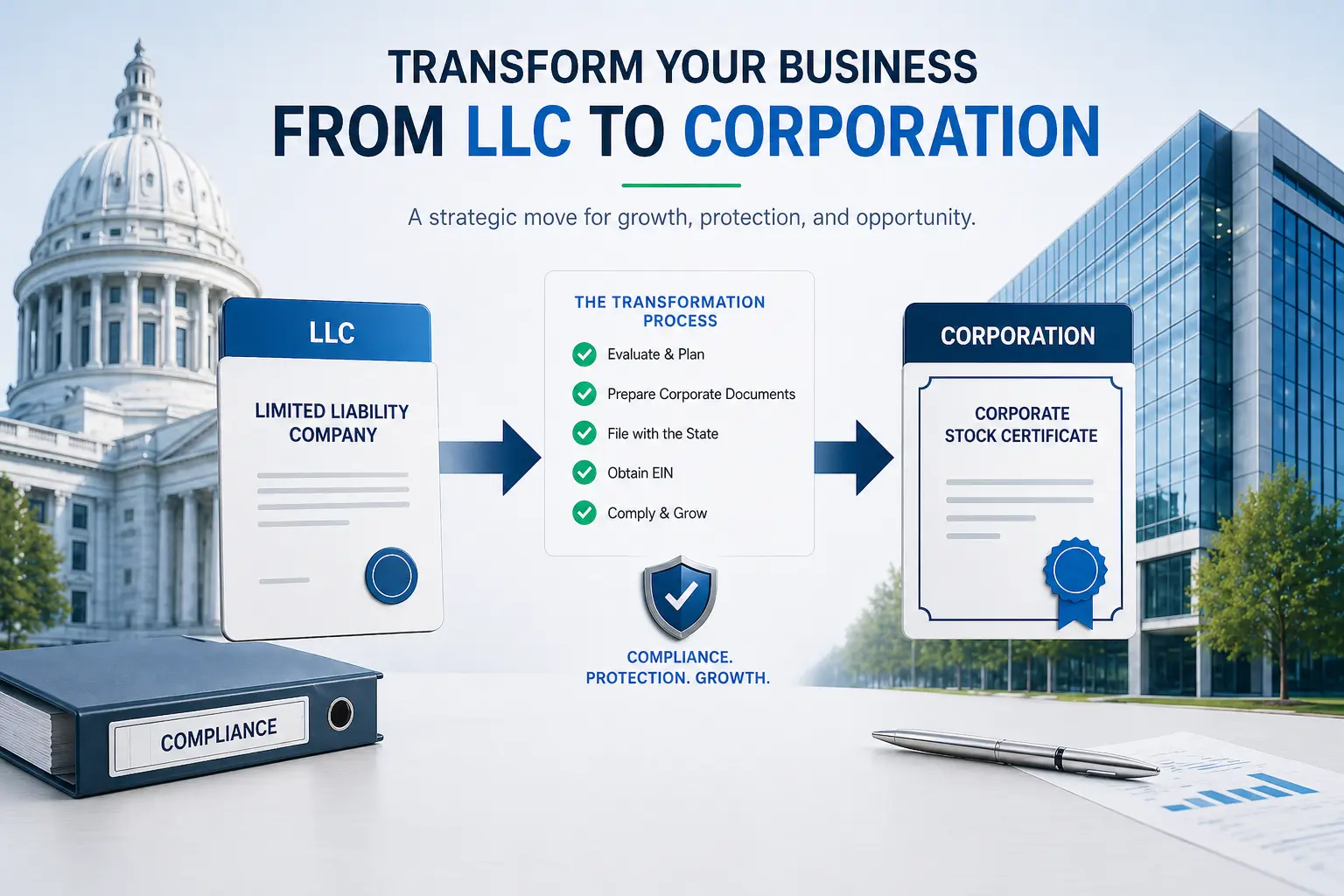
Many founders start with an LLC because the formation is simple, the paperwork is minimal, and the pass-through taxation fits early-stage businesses well. Once a term sheet appears, equity questions arise, or an IPO becomes a realistic topic of conversation, the calculus changes. Venture investors, stock-option grants, and public markets all expect a corporation rather than an LLC, and an LLC to Inc conversion is what turns the structure that worked for years into the structure that fits the next chapter.
Approximately 23% of small businesses change their legal structure within their first five years, and an LLC to Inc conversion is among the most common of those moves. The method available depends on state law; the timing of the filings affects how the IRS views the transaction, and a missed step can leave the corporation on shaky compliance ground from day one. For founders working through the move, an administrative partner like InCorp can handle the conversion filings, articles of incorporation, registered agent designation, and EntityWatch® compliance tracking across all 50 states, so the team's attention stays on the business decisions that sit atop the paperwork.
From here, the guide covers why owners convert, the three primary conversion methods, the step-by-step process, the tax implications, and the compliance obligations that begin once the corporation is live.
Key Takeaways
-
Converting an LLC to a corporation is usually driven by investor expectations, equity compensation needs, and long‑term plans like an eventual acquisition or IPO.
-
Most states support LLC‑to‑Inc conversions through one of three methods—statutory conversion, statutory merger, or non‑statutory asset transfer—with statutory conversion generally being the simplest where available.
-
A solid conversion plan includes member approval, a documented plan of conversion, state filings for the certificate of conversion and articles of incorporation, and adoption of corporate bylaws and a board.
-
Tax outcomes depend on structure: many conversions qualify for tax‑free treatment under Section 351, but moving into C‑corporation status introduces potential double taxation unless an S‑corp election or other planning is used.
-
After conversion, corporations face stricter ongoing compliance—annual reports, board and shareholder meetings, minutes, and registered agent requirements in each state where they do business—so building a formal compliance rhythm is essential.
Why Business Owners Convert an LLC to a Corporation
An LLC to Inc conversion is a strategic decision rather than a routine filing. Four reasons account for most of the conversions seen in practice.
Attracting Investors and Venture Capital
Venture capital firms and most institutional investors invest only in corporations. The reasons are mechanical: preferred stock, convertible notes, and SAFE agreements all assume corporate-style capital structures that LLCs cannot replicate cleanly. Startups raising Series A or later rounds typically have to convert before the round closes, which puts the conversion on a deal-driven clock rather than a thoughtful one.
Issuing Stock and Equity Compensation
Corporations can issue stock options, restricted stock units, and employee stock purchase plans, each with a well-understood tax treatment and a long history in employment offers. LLCs can grant membership interest units in a similar spirit, but the structure is less familiar to employees and harder to administer in a competitive hiring market.
Qualified Small Business Stock (QSBS) Tax Benefits
C corporation shareholders may qualify for the QSBS exclusion under Section 1202 of the Internal Revenue Code, which can exclude up to 100% of capital gains (capped at the greater of $10 million or 10 times the adjusted basis) on the sale of qualifying stock held at least five years. The benefit is conditional on eligibility tests covering the corporation's assets, activities, and shareholder type. IRS Publication 542 outlines the corporate tax framework surrounding the analysis.
Business Credibility and Growth Planning
Incorporating signal stability to vendors, lenders, and acquirers in a way that an LLC sometimes does not. The corporate form also keeps the liability protection members had under the LLC, while adding the governance overlay that institutional counterparties expect. Major transactions later (an acquisition or a public offering) tend to assume a corporate structure, so converting now removes a step from a future deal timeline. The InCorp overview of LLC and corporation differences covers the broader trade-offs.
Three Methods for LLC to Inc. Conversion
The available conversion method depends on the state in which the LLC was formed. Three options cover essentially every situation, and the right one is usually the simplest the state permits.
Statutory Conversion
Statutory conversion is the streamlined path, available in Delaware, Texas, California, Florida, and most other states. The LLC files a certificate of conversion, along with its articles of incorporation, with the Secretary of State, and the entity's assets, liabilities, contracts, and legal standing automatically transfer to the new corporation by operation of law. The LLC does not have to dissolve, and the corporation does not have to be formed separately first. Where statutory conversion is available, it is usually the fastest and cheapest path.
Statutory Merger
When statutory conversion is not on the table, statutory merger is the standard alternative. The owner forms a new corporation and then merges the existing LLC into it. The LLC ceases to exist after the merger, and the corporation absorbs all of its assets and liabilities. The method requires two state filings (a certificate of incorporation for the new entity and a certificate of merger), which adds time and cost compared to a single-filing statutory conversion.
Non-Statutory Asset Transfer
The non-statutory asset transfer is the manual path used when neither of the other options is available. The owner forms a new corporation, transfers each asset and liability individually, converts membership interests into shares of stock through a separate agreement, and then dissolves the LLC. Every contract, title, lease, and license has to be reassigned by hand, and several of those transfers can have their own tax consequences. The SBA guide to choosing a business structure provides useful context on the entity choice that sits behind the conversion question.
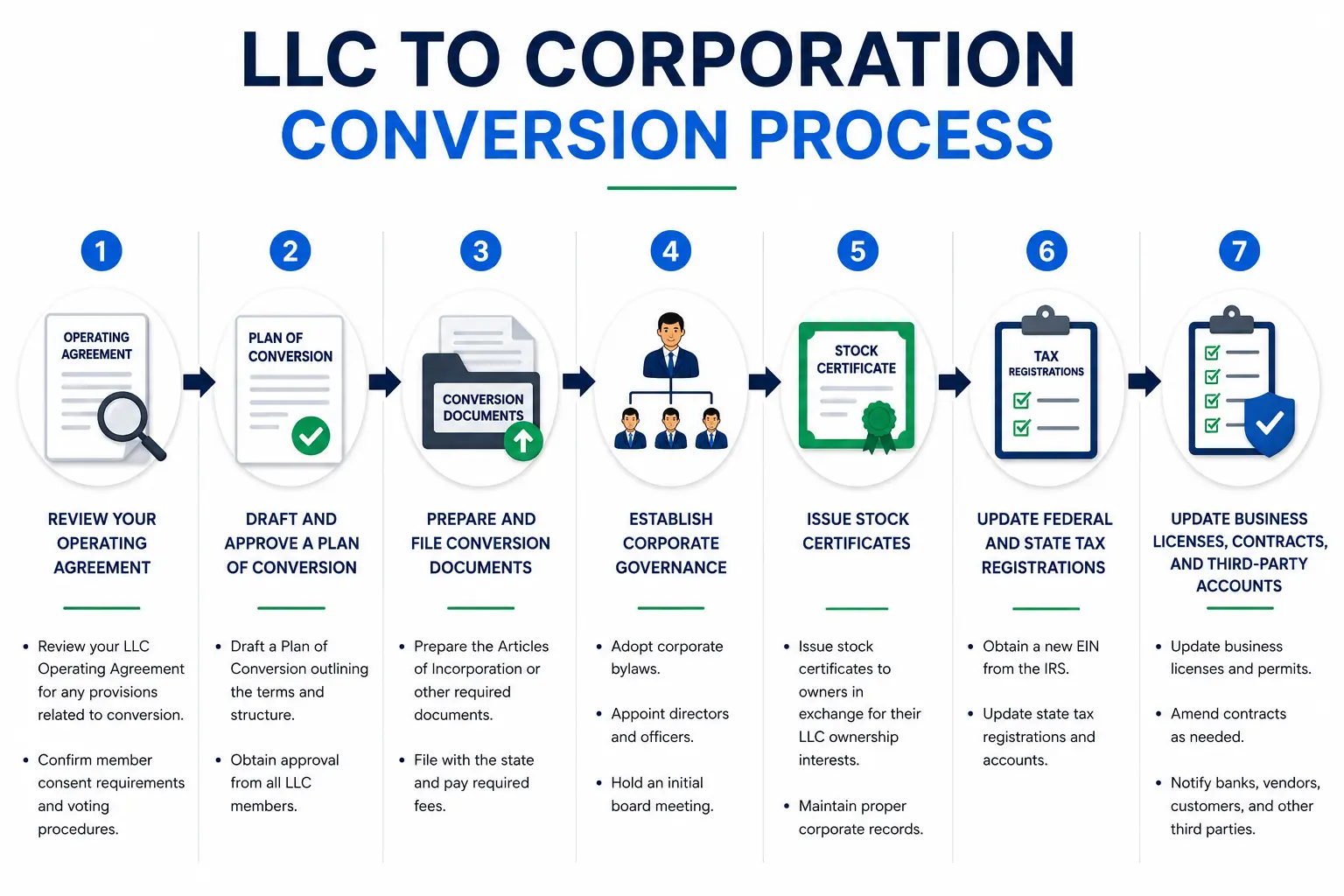
Step-by-Step LLC to Inc. Conversion Process
The steps below describe a statutory conversion, which is the most common path. Statutory merger and non-statutory asset transfer follow similar logic but add filings and a more involved asset-transfer step.
Step 1: Review Your Operating Agreement
The operating agreement usually controls the conversion process inside the LLC, including the voting threshold needed for member approval. If the operating agreement is silent on conversions, state default rules fill the gap: some states require unanimous consent, others a simple or supermajority vote. A contested vote at this stage is meaningfully easier to address than a contested filing later.
Step 2: Draft and Approve a Plan of Conversion
The plan of conversion records the terms of the change, including how each member's interest will translate into shares of stock in the new corporation. Member approval of the plan follows the threshold identified in Step 1. The plan should also describe how the corporation will be capitalized, who the initial directors and officers are, and how outstanding obligations move with the entity.
Step 3: Prepare and File Conversion Documents
The certificate of conversion and articles of incorporation are filed with the Secretary of State in the LLC's state of formation. State filing fees typically range from $50 to $500 or more, and processing time runs from a few days to several weeks. This is one of the steps where outsourcing earns its keep. The InCorp entity formation team prepares and files conversion documents in all 50 states and uses the EntityWatch® compliance system to keep the post-filing deadlines visible.
Step 4: Establish Corporate Governance
Corporations need a governance layer that LLCs typically skip. The owner adopts corporate bylaws, appoints an initial board of directors, holds an organizational meeting, and records the initial corporate resolutions. Corporate bylaws set out the meeting schedule, voting rules, and officers' authority under which the new entity will operate. These formalities support the corporation's liability protection and represent the biggest day-to-day administrative change from operating as an LLC. The InCorp comparison of entity types covers the governance differences in more depth.
Step 5: Issue Stock Certificates
Former LLC members receive shares of stock in the new corporation in the allocation described in the plan of conversion. Stock certificates document those holdings, whether issued in paper form or recorded in a digital register. The corporation should maintain a stock ledger from day one, and the issuance must comply with federal and state securities laws.
Step 6: Update Federal and State Tax Registrations
The conversion may or may not require a new employer identification number from the IRS, depending on the method used. The corporation also needs to decide whether to remain a C corporation (the default) or elect S corporation status by filing IRS Form 2553. The IRS guidance on LLC filing as a corporation or partnership covers the federal-side mechanics.
Step 7: Update Business Licenses, Contracts, and Third-Party Accounts
Every business license, permit, vendor agreement, insurance policy, lender note, and material customer contract should be updated to reflect the new corporate entity. Bank and landlord agreements often contain consent-required provisions for structural changes, so it's worth surfacing these before the conversion closes rather than after. The corporation also needs to update its registered agent designation for the new entity.
Tax Implications of Converting an LLC to a Corporation
The tax mechanics of an LLC to Inc. conversion are where careful planning pays for itself. Three frameworks usually drive the analysis.
Section 351 Tax-Free Treatment
Under Section 351 of the Internal Revenue Code, a conversion can generally proceed tax-free if the former LLC members control the corporation immediately after the transaction (defined as owning at least 80% of the stock). When an LLC taxed as a partnership elects corporate treatment by filing Form 8832, the IRS treats the event as a deemed contribution of assets in exchange for stock, which usually falls under the Section 351 tax-free umbrella.
C Corporation Double Taxation
A C corporation pays federal income tax on its profits at the current 21% corporate rate, and shareholders then pay personal income tax on dividends they receive. The result is double taxation: the same dollar of profit gets taxed once at the corporate level and again when distributed, which is a notable change from the pass-through taxation the LLC operated under. Founders sometimes manage the impact by distributing earnings as reasonable salaries (deductible by the corporation) or by electing S corporation treatment. The double taxation question is often the biggest tax consideration in the conversion decision.
S Corporation Election
The corporation can elect S corporation status by filing IRS Form 2553 within 75 days of formation, or by March 15 of the tax year the election is to take effect. S corporation status provides pass-through taxation similar to an LLC, but it comes with restrictions: a maximum of 100 shareholders, only one class of stock, and shareholders must be U.S. citizens or residents. The Wolters Kluwer expert insights on converting an LLC to an S Corp walk through the typical scenarios.
Post-Conversion Compliance Requirements
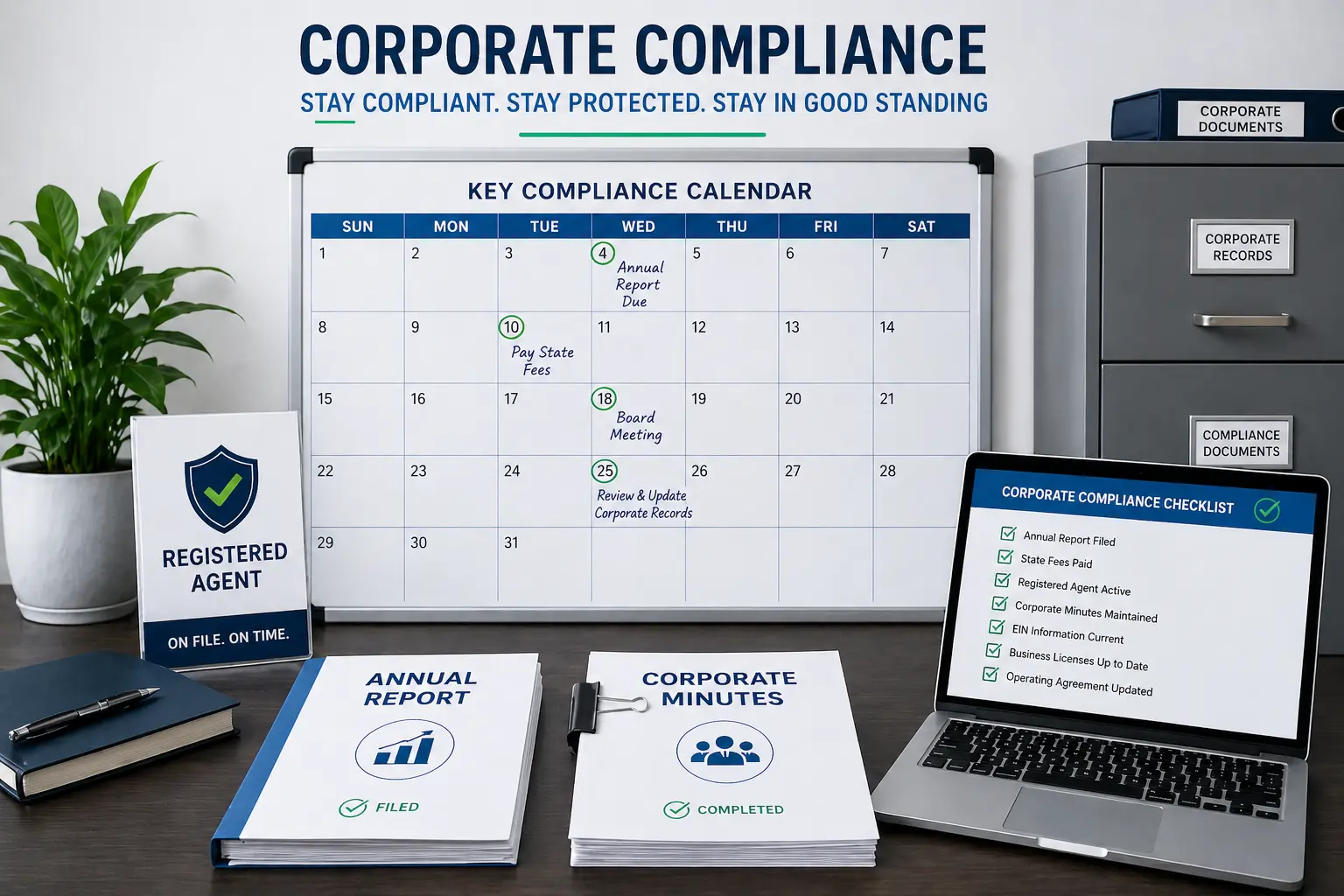
Corporations carry heavier ongoing compliance obligations than LLCs, and several of those obligations have hard deadlines that, once missed, the corporation cannot easily catch up on.
Annual Reports and State Filings
Most states require corporations to file an annual or biennial report with the secretary of state, listing the corporation's current officers, board of directors, and registered agent. Filing fees apply each cycle, and missing a Secretary of State deadline can lead to penalties, loss of good standing, or administrative dissolution.
Corporate Formalities
Corporate formalities are the calendar-driven obligations: annual shareholder and board of directors meetings, recorded minutes, board resolutions for major decisions, and accurate financial records. These typically do not apply to LLCs, so the conversion almost always means adding formalities to the company's operating rhythm. The corporate bylaws adopted at formation will typically define the cadence. The formalities also support the corporation's liability protection, since courts consider the formalities observed when deciding whether to respect the corporate shield in a dispute.
Registered Agent Requirements
Every corporation has to maintain a registered agent in its state of incorporation and in any other state where it is qualified to do business. The agent receives service of process and official state correspondence, which makes timely receipt of legal and compliance notices a practical concern. The InCorp guide to changing a business structure covers the post-conversion details.
Start Your LLC to Inc. Conversion with InCorp
Converting an LLC to a corporation involves member votes, multi-state filings, governance setup, tax elections, and contract updates. The right method depends on state law, and a tax adviser is generally worth the cost before the corporate structure is locked in.
The InCorp entity formation service prepares and files conversion documents in all 50 states, manages the registered agent designation for the new corporation, and uses the EntityWatch® compliance system to keep annual report and state filing deadlines on schedule. The InCorp overview of types of business entities is a useful place to confirm the entity choice before starting the filings.
FAQ's
Can you convert an LLC to a corporation?
Yes, most states allow an LLC to convert to a corporation through one of three methods: statutory conversion, statutory merger, or non-statutory asset transfer. Statutory conversion is the most streamlined option where available and lets the LLC become a corporation through a single state filing.
How much does it cost to convert an LLC to a corporation?
State filing fees for the certificate of conversion and articles of incorporation typically range from $50 to $500 or more. Additional costs may include legal review, plan of conversion drafting, and corporate governance documents such as bylaws and stock issuance paperwork.
Is converting an LLC to a C corporation a taxable event?
Often no. Section 351 of the Internal Revenue Code generally allows the conversion to proceed tax-free if the former LLC members control the new corporation by owning at least 80% of the stock. Appreciated assets can complicate the analysis, so a tax adviser should confirm the treatment before filing.
Do I need a new EIN when converting an LLC to a corporation?
It depends on the method. A statutory conversion in some states allows the new corporation to keep the LLC's existing employer identification number, while a statutory merger or non-statutory asset transfer that creates a new entity typically requires a new EIN from the IRS.
What is the difference between a statutory conversion and a statutory merger?
A statutory conversion is a single-filing process where the LLC becomes a corporation automatically by operation of law. A statutory merger requires forming a new corporation and then merging the existing LLC into it, which involves two filings and a longer timeline. Statutory conversion is generally faster where the state allows it.
How does converting an LLC to a C corporation affect limited liability protection for the owners?
Both a limited liability company and a C corporation offer limited liability protection, meaning owners are generally not personally responsible for business debts and liabilities beyond their investment. As long as the new corporate entity follows corporate formalities—maintaining corporate records, separate bank accounts, and proper governance—former LLC members who become shareholders keep a similar level of protection for their personal assets.
What happens to LLC membership interests when an LLC converts to a C corporation?
In a typical statutory conversion or statutory merger, LLC membership interests are exchanged for shares of stock in the new corporation according to the conversion plan approved by the members. The plan should specify how each member's percentage interest in the LLC translates into a number or class of shares, and those holdings are then documented through a stock ledger and, where used, stock certificates.
Do I always need a new Employer Identification Number (EIN) after an LLC to C corporation conversion?
Whether you need a new EIN depends on how the conversion is structured and how the IRS views the transaction for tax purposes. Some statutory conversions allow the new corporation to keep the existing LLC's EIN, while other structures—especially those involving a newly formed corporation and an asset transfer—require obtaining a new EIN; a tax professional can confirm which treatment applies in a specific situation.
What are the main tax consequences of converting from pass-through LLC taxation to a C corporation tax structure?
An LLC taxed as a partnership or disregarded entity uses pass‑through taxation, where business income is reported on owners' personal returns, while a C corporation pays corporate income tax on its taxable income and shareholders pay taxes again on dividends, creating potential double taxation. In many cases, the initial conversion can qualify as a tax‑free event under Internal Revenue Code Section 351 if certain control requirements are met, but the ongoing corporation tax status changes how future profits and distributions are taxed.
Can an LLC to C corporation conversion help a business qualify for Qualified Small Business Stock (QSBS) benefits?
Converting to a C corporation can be a step toward qualifying for QSBS treatment, which may offer significant capital gains tax benefits on the sale of qualifying stock held for at least five years, but the rules are strict. The new C corporation must meet QSBS requirements related to asset levels, business activities, and shareholder types, and only stock issued after the corporation becomes a qualifying entity counts toward QSBS, so owners should work with tax advisors to evaluate potential tax advantages and timing.
Disclaimer: This content is intended for general educational and informational purposes only and does not constitute legal, tax, or accounting advice. Every effort is made to keep the information current and accurate; however, laws, regulations, and guidance can change, and no representation or warranty is given that the content is complete, up to date, or suitable for any particular situation. You should not rely on this material as a substitute for advice from a qualified professional who can consider your specific facts and objectives before you make decisions or take action.
Share This Article:
Stay in the know!
Join our newsletter for special offers.