
Steps to Correct Errors on Previously Filed Business Documents


What if, in the wrong circumstances, even a simple typo on a state form could contribute to a contract dispute, delay a loan, or put your business’s legal status at risk? Discovering an error in your officially filed business documents can be an unsettling experience for any business owner. Whether it is a misspelled name in your Articles of Organization or an outdated address on your annual report, such mistakes can impact your company's legal standing and compliance. A recent analysis highlighted that in the first 10 months of 2024 alone, 140 U.S. publicly traded companies had to reissue financial statements due to errors, underscoring that filing mistakes are a common business challenge. The good news is that, in most cases, business filing errors are correctable through well‑established processes when you take a clear, methodical approach.
This guide provides a definitive roadmap to correct business filing errors efficiently. Companies like InCorp provide expert assistance in preparing and filing the necessary amendments, helping you resolve these issues and maintain your company's good standing.

Key Takeaways
-
Errors in filed business documents are common and usually fixable, but they can affect good standing, contract enforceability, and access to financing if not corrected promptly.
-
Many states provide formal mechanisms—such as certificates or statements of correction, amendments, or complete re‑filings—to remedy inaccurate or defective records, with specific eligibility rules for each method.
-
Administrative consequences (like late fees, loss of good standing, or even administrative dissolution) generally arise from prolonged non‑compliance, such as failing to maintain a registered agent or file required reports, not from a single harmless typo.
-
A structured approach—identifying the error, choosing the correct correction mechanism, filing with clear explanations, and confirming acceptance—aligns with how government agencies typically handle corrections of business and tax records.
-
Strong internal controls (checklists, second‑review policies, centralized records) and, when appropriate, professional filing and compliance services can significantly reduce the risk of errors, though they do not replace jurisdiction‑specific legal advice.
Why Accuracy in Business Filings Matters
The accuracy of your state filings forms the legal foundation of your business. Errors in these critical business documents can have consequences that extend beyond simple administrative headaches.
-
Legal Status and Good Standing: Incorrect information can lead the state to mark your business as "non-compliant," which may affect your ability to enforce contracts, secure financing, or legally operate. In more serious cases, prolonged non‑compliance can trigger administrative dissolution and force you into a reinstatement process to restore your company's active status.
-
Tax and Financial Complications: Discrepancies between your state filings and records with the IRS or other tax authorities can trigger audits, penalties, and complications with your financial documents. Consistent tax compliance across all platforms is essential.
-
Operational Delays: A filing rejected due to an error can halt time-sensitive business activities, such as closing a funding round or finalizing a partnership. These delays can have direct financial consequences.
-
Loss of Credibility: Consistent filing errors can damage your company's reputation with banks, partners, and vendors who check your public standing. It can signal a lack of attention to detail that may concern potential partners.
Using a professional filing service like InCorp helps minimize these risks through rigorous accuracy and compliance checks before submission. Their expertise acts as a crucial layer of quality control.
Common Filing Errors That Require Correction
Business owners frequently encounter a few specific types of mistakes when submitting official documents. Recognizing these common errors is the first step to fixing LLC filing mistakes and preventing them in the future.
Incorrect Business Name or Address
Typos in the legal business name or listing an old principal office address are common oversights. These errors can cause your filing to be rejected, misdirect critical state correspondence, or, if left unresolved, jeopardize your company’s good standing. This mistake often occurs during the initial excitement of forming a business or during the rush to meet an annual report deadline. For instance, a single transposed number in a street address can lead to a returned annual report and subsequent late fees. Correcting it typically requires filing an amendment or a Certificate of Correction to ensure your public records are accurate. This is why careful planning and choosing the right formation service is crucial from the start.
Wrong Registered Agent Information
The registered agent is your business's official point of contact for legal and state documents. Listing an agent who has resigned, an incorrect address, or a commercial mail receiving agency that does not qualify can result in missed service of process and potential administrative dissolution. In some situations, this can also contribute to default judgments if lawsuits are not received and answered in time. This creates an immediate and direct risk to your legal standing. Ensuring this information is always up to date is a fundamental compliance requirement. If your registered agent changes, filing a change of agent form should be an immediate priority to maintain a reliable chain of communication with the state.
Misreported Ownership or Management Information
Errors in listing members, managers, officers, or ownership percentages can lead to internal disputes and inaccurate tax reporting. These mistakes may also call into question an individual's apparent authority to act on behalf of the company when third parties rely on state records. For instance, a managing member who has left but remains on state records could create unexpected legal liabilities. Verifying your operating agreement before each filing prevents these governance and tax return complications. This need for precision is universal, as seen in the U.S. Patent and Trademark Office (USPTO) guidelines for correcting ownership in patent and trademark filings.
Filing the Wrong Form or Version
States periodically update their forms and filing requirements. Using an outdated form or submitting an "Articles of Incorporation" form for an LLC will lead to immediate rejection. This highlights the importance of verifying you have the current, correct form for your specific entity type and filing purpose. A robust file-naming convention and organized storage solutions for both digital and physical files can help you quickly access the correct versions. Consulting with InCorp’s filing experts can ensure you always use the correct, up-to-date documents, avoiding unnecessary delays.
The Real-World Cost of Document Errors
The impact of filing errors isn't just theoretical. Studies on document management reveal tangible costs: approximately 7.5% of all physical documents are lost, and 3% of the remainder are misfiled. This inefficiency in basic document management translates directly to the business filing realm. A business that lacks a solid file system for its official records is more likely to submit documents with outdated information, leading to rejections, penalties, and hours of lost productivity correcting preventable mistakes. Investing in modern practice‑management or entity‑management software, or a dedicated cloud storage service, from the start can significantly mitigate these risks.
How to Correct Errors on Filed Documents
The state filing correction process for a business document amendment varies depending on the nature of the error and the specific state rules. Following a structured approach ensures the correction is accepted and your compliance is restored efficiently.

Step 1 – Identify the Error and Verify Its Impact
Begin by reviewing the filed document to pinpoint the exact mistake. Then, assess its potential impact. Does it affect your legal name? Could it lead to missed tax notices? Check your status on the Secretary of State's website to see if the error has already affected your good standing or triggered any notices. This initial assessment will guide your correction strategy. For complex errors, it may be prudent to consult with a professional to fully understand the legal and financial ramifications before proceeding.
Step 2 – Determine the Correction Method
States generally offer several paths for correction. The right choice depends on the error's severity and the state's procedures.
-
Certificate of Correction: Used for minor, clerical errors, like a typo in a name or address. This is often the simplest and fastest fix. Many states limit these documents to correcting drafting or transcription errors in a filing that was otherwise valid at the time, not to make new substantive changes.
-
Articles of Amendment: Required for substantive changes, such as altering the business purpose, changing the number of authorized shares, or updating the ownership structure outlined in the original formation documents. Filing an amendment is the formal process to amend business documents for substantive changes.
-
Re-filing or Corrective Filing: In some cases, if the original document is fundamentally flawed, the state may require you to withdraw the initial filing and submit a new, correct one. This is the most time-consuming and costly option.
Consulting your state's business services division or a service provider like InCorp can help you determine the most efficient method. For example, New York City's Department of Buildings outlines a straightforward process for filing a Certificate of Correction for property-related documents, illustrating the standard approach many government agencies take. Errors are corrected through specific, documented procedures rather than informal fixes.
Step 3 – Prepare and File the Corrected Document
Once you know the required form, complete it accurately. You will typically need to reference the original filing number and date. Clearly state what the error was and provide the correct information. Pay close attention to the state's specific instructions for amendments; some require the form to be notarized or signed by specific company officers. Submit the form along with any required state fees. It is critical to keep digital copies of all submitted correction documents as part of your permanent records. As the IRS guidelines for amending reports demonstrate, providing a clear explanation of the change is a universal best practice for government filings.
Step 4 – Confirm Acceptance and Update Records
After submission, monitor the state's online database to confirm they have processed and accepted your correction. Do not assume your filing was successful until you see the updated information reflected in the public record. Once confirmed, this is the critical moment for internal hygiene: update all your internal records, and inform relevant third parties such as your bank, the IRS (for your EIN), and key vendors. InCorp’s entity management tools can simplify this tracking and record-keeping process, ensuring all your business documents remain synchronized and providing a clear audit trail for your compliance history.
State-Specific Rules for Filing Corrections
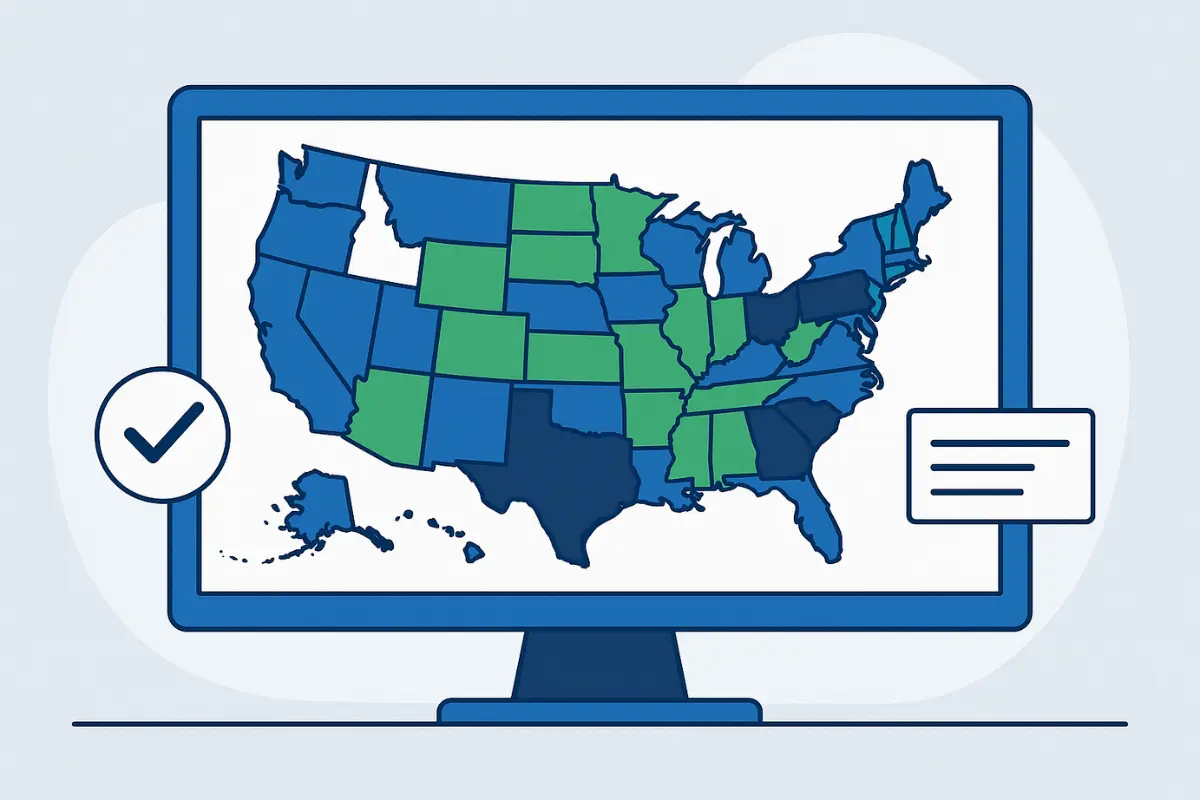
Procedures for correcting business filings are not uniform across the United States. The names of the forms (Certificate of Correction vs. Statement of Correction), the scope of what may be corrected this way, associated fees, and processing times can vary significantly from one state to another. For instance, the fee for a simple amendment can range from $50 to over $200, depending on the state and entity type. Some states allow for online amendments, while others require notarized paper forms. This variability is why a one-size-fits-all approach fails. Always check your specific Secretary of State’s website or work with a nationwide expert like InCorp to ensure you are following the correct, state-compliant process for your regulatory filings.
How to Prevent Future Filing Errors
A proactive approach to compliance is far more efficient than correcting mistakes. Implementing a few key practices can significantly reduce your risk of future errors and support sound legal document management practices.
Double-Check Information Before Submission
Create a pre-filing checklist that includes verifying all names, addresses, and identification numbers, such as your EIN. Having a second person review the documents before they are submitted can catch typos and inconsistencies that you might have overlooked. This simple "four-eyes" principle is one of the most effective and low-cost methods for improving accuracy in all your business documents.
Keep a Centralized Record of Official Filings
Maintaining a well-organized file system for all your official business documents is essential. This includes formation documents, annual reports, amendments, and state correspondence. A centralized digital repository, such as a secure cloud storage service or a dedicated legal practice management software, ensures you can quickly access accurate information for any filing. This prevents the common pitfall of searching through disorganized storage solutions when a deadline looms. InCorp’s Entity Management System provides a dashboard specifically designed for this purpose, serving as a single source of truth for your entity's compliance data.
Use Professional Filing Services
Engaging a professional service is one of the most effective ways to prevent errors. These services, like those offered by InCorp, are familiar with the latest state-specific forms and requirements. They help ensure accuracy, avoid rejected documents, and save your business valuable time on compliance management. This is especially crucial for businesses operating in multiple states, where tracking varying annual report deadlines and state filing requirements can be complex. This level of complex legal practice management is a core function of professional compliance services. Leveraging expert business compliance management allows the internal team to focus on core business operations.
When to Seek Professional Help
While you can handle minor corrections independently, certain situations warrant professional assistance. Seek expert help for complex amendments involving ownership restructuring, repeated state rejections you cannot resolve, or if the error has already impacted your company's good standing or liability protection. If you are managing a multi-state expansion and need to ensure compliance with foreign qualification requirements, the complexity increases significantly. If you are unsure about the correct procedure or lack the time to manage the process, partnering with a compliance expert can provide peace of mind and ensure a swift, accurate resolution. InCorp’s correction and compliance management services are designed for these exact scenarios, offering a strategic partnership for your entity's legal health.
Maintaining Accurate Business Records
Maintaining accurate business documents is an ongoing responsibility critical to your company's health. A single filing error rarely becomes catastrophic if you act quickly and follow the proper correction channels. The key is to prioritize accuracy in all filings, address errors promptly through the appropriate state channels, and consider leveraging professional services to manage ongoing compliance. Implementing strong organizational practices, from file naming to using legal practice management tools, can prevent the most common errors. InCorp provides reliable support for filing corrections and maintaining proper documentation, helping you preserve your company's good standing and operational integrity.
Take the guesswork out of compliance. Connect with InCorp’s business services to keep your entity records accurate, current, and fully compliant in every state you operate.
FAQs
What should I do if I notice an error after filing my business documents?
If you spot an error on a previously filed business document, start by identifying exactly what is wrong and how it may affect your business's legal standing or financial reporting. Gather the original filing, the correct information, and any supporting financial records so you can compare dates, amounts, and account details side by side. In many states, your next step is to file a specific correction document—such as a Certificate or Statement of Correction—or an amendment, following the state's steps to correct errors on previously filed business documents so the record is corrected promptly in the public database.
Can I correct a filing error online?
Yes, many states allow correcting errors and filing amendments through their online business filing portals, which can speed up processing and reduce data entry mistakes. These systems typically let you upload a new form, correct a typographical error, or submit updated information for items like your address or registered agent. However, more complex corrections, especially those that affect ownership, financial statements, or that require member or shareholder votes, may still require signed and sometimes notarized paper forms or a new journal entry and amended filing.
How long does it take to fix a filing mistake?
Processing times for correcting errors vary by state, filing method, and the nature of the correction. Online corrections and simple amendments may be processed in a few business days, while paper filings or corrections tied to more complex accounting records or ownership changes can take several weeks. If the mistake affects time‑sensitive transactions or financial reporting, many jurisdictions offer expedited service for an additional fee so the error is corrected promptly and has less chance to affect business decisions.
Will I be fined for submitting incorrect business documents?
Many states do not impose separate penalties for an honest, promptly corrected error, beyond the standard fee for the correction or amendment form. However, if an incorrect entry leads to a period of non‑compliance—for example, if the wrong registered agent or address causes you to miss a lawsuit or an annual report notice—the consequences can escalate into late fees, default judgments, or even administrative dissolution. When accounting errors or inaccurate financial data are involved, regulators or tax authorities may also assess penalties or require amended financial statements if the error is significant and left unchecked.
How can InCorp help with correcting or preventing filing errors?
InCorp can help you fix errors on previously filed business documents by preparing and submitting the correct form—such as amendments or Certificates of Correction—and tracking acceptance with the state. Its compliance tools and accounting‑adjacent workflows are designed to help prevent common accounting errors and data entry mistakes from flowing into official filings, by standardizing information, double‑checking details, and keeping your accounting data and entity records synchronized. This end‑to‑end support helps small businesses and multi‑state entities maintain accurate filings, protect their business's financial health, and reduce the risk that unintentional mistakes will have significant consequences.
What kinds of errors on filed business documents are the most serious?
Errors that affect your legal identity or public record—such as the wrong business name, the wrong type of entity on the form, an incorrect registered agent, or a materially wrong date—tend to carry the most significant consequences. These issues can affect service of process, bank account openings, contracts, and state good‑standing status, so they should be corrected promptly using the correct form and procedure.
How do I know whether I should file a correction, an amendment, or a new form?
In many states, a correction filing is used to fix typographical errors or clerical mistakes in a document that was otherwise valid when originally filed. An amendment is usually required when you change substantive information, such as your business name, purpose, or management structure, while a new form or re‑filing may be necessary if the original filing used the wrong type of document or contained fundamental errors. When in doubt, reviewing the state's instructions or consulting a professional can help you choose the correct path so the error is fully resolved.
Can a simple typographical error really affect my business?
Yes, even unintentional mistakes like transposition errors in an address or an incorrect date can cause returned mail, missed notices, or confusion about which entity a document relates to. While many typographical errors can be fixed with a straightforward correcting entry or correction filing, leaving them unaddressed increases the risk that important notices, bank documents, or contracts will not match your official records.
How can I reduce the chance of making filing errors in the first place?
You can prevent many filing mistakes by standardizing your internal processes: double‑check names, dates, and addresses; use a pre‑filing checklist; and ensure that information matches your existing records and any prior filings. Having at least one other person review key documents before submission, maintaining organized digital records of all filings, and using reputable software or professional services to manage deadlines and document versions all help catch potential errors before they are sent to the state.
What should I keep in my records after correcting a filing error?
After you correct an error, keep copies of the original entry or document, the correcting form, and the state's confirmation or stamped copy together in your permanent records. It is also helpful to retain internal notes or correspondence that explain why the correction was necessary, as this provides a clear audit trail if questions arise later from partners, regulators, lenders, or tax professionals.
Share This Article:
Stay in the know!
Join our newsletter for special offers.