
The LLC Generation: How Modern Entrepreneurs Are Rewriting the Rules of Business Formation


One in four Americans ages 18 to 24 now runs a business, according to the Global Entrepreneurship Monitor. That marks a historic shift in who starts companies and when. For over two decades, entrepreneurial activity peaked among people in their thirties and forties. Today, it’s the youngest adults leading the charge.
And they’re moving faster than any generation before them. Instead of treating formation as a distant milestone or waiting on investor rounds and MBA credentials, Gen Z founders are forming LLCs before earning their first dollar.
This isn’t just paperwork. It signals a cultural redefinition of business ownership. Side hustles that once stayed informal are becoming incorporated ventures, and content creators are stepping into CEO roles before turning 25.
Together, these shifts are blurring the boundaries between gig work, small business ownership, and startup culture.
We call it The LLC Generation: a movement where young entrepreneurs view business formation as the first real step toward financial independence. And their approach to risk, legitimacy, and long-term planning is reshaping entrepreneurship from the ground up.
Why are Gen Z and Millennials forming LLCs earlier than previous generations?
The answer starts with access. Digital platforms have removed traditional barriers that once kept entrepreneurship out of reach for young adults.
Today, a 21-year-old can launch an e-commerce brand from a laptop, build a six-figure content business through TikTok, or offer freelance services on Fiverr without corporate backing or inherited capital.
According to Grand View Research, the creator economy reached $205 billion in 2024 and is projected to surpass $1.3 trillion by 2033.
Business formation, tax strategy, and legal structuring now live on YouTube and social media, not just in law offices. That democratization of knowledge has made LLC registration feel less like an advanced business move and more like a logical first step.
It has also made financial boundaries non-negotiable. Nearly 70% of Gen Z workers are either freelancing or planning to, according to a Fiverr and Censuswide study.
For those juggling multiple clients and income streams, separating personal assets from business liability is not a future consideration. It is an immediate priority. "I talk to people my age every day who are already thinking three steps ahead," says Xochitl Gutierrez, an Orders Team Lead at InCorp. "They're not calling because someone told them to. They've done the research, watched the YouTube breakdowns, and now they want to make sure they're doing it right. There's this real sense of 'I'm building something, and I want it to last.'"
And that knowledge has made younger founders more aware of what can go wrong. They have watched influencer collapses, failed ventures, and legal disputes unfold publicly across social media. And those cautionary tales have made one thing clear: informal arrangements offer no shield when disputes arise.
How has the perception of risk changed for younger entrepreneurs?
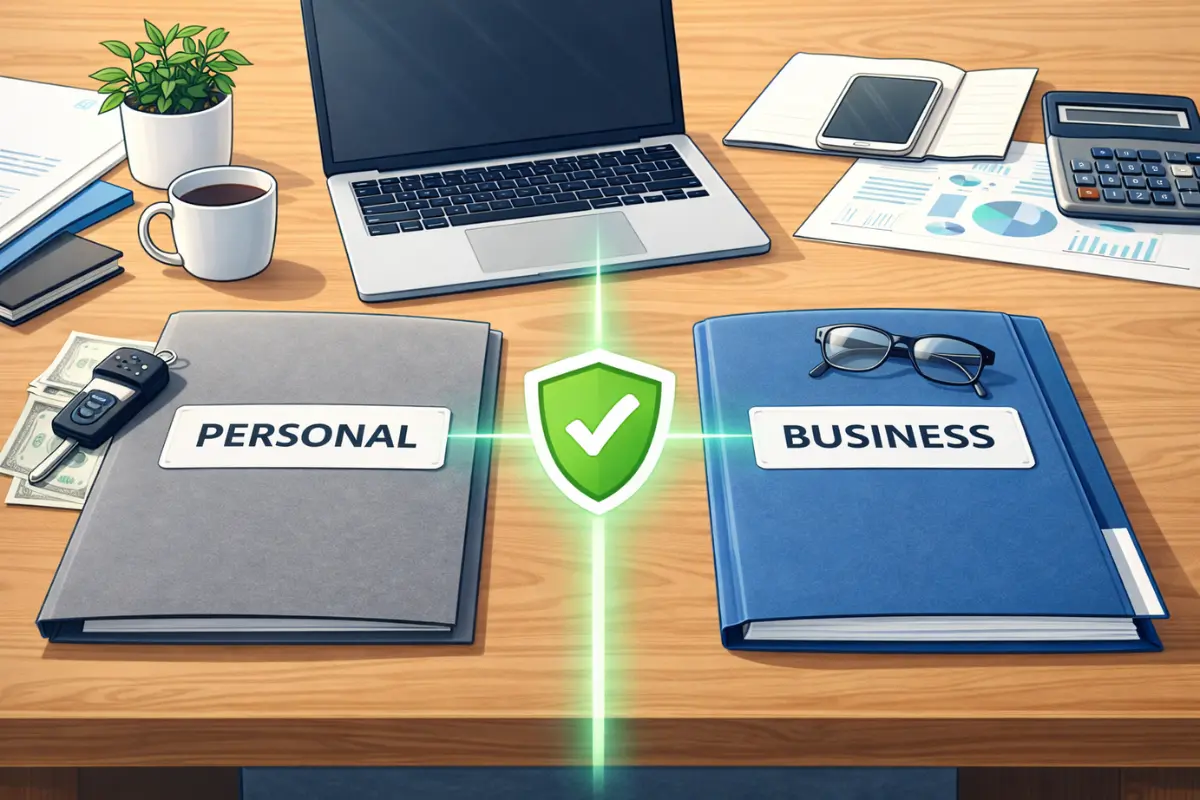
Formalizing a business is only part of the equation. Understanding what can go wrong is just as critical, and younger founders are paying closer attention than any generation before them.
They are not reckless. They are calculated. Many came of age during the 2008 financial crisis and the COVID-19 pandemic, experiences that taught them volatility is not an exception but a constant. That awareness now shapes how they structure their businesses from day one.
Personal liability sits at the center of that calculus. Young entrepreneurs running online stores, accepting brand sponsorships, or signing digital contracts understand that a single dispute can expose everything they own.
An LLC creates a legal barrier between business obligations and personal assets like savings accounts, vehicles, or future property. Without that separation, one bad deal can unravel years of financial progress.
And financial clarity matters just as much. Mixing personal and business funds creates problems during tax season and makes audits far more complicated.
The Harris Poll found that 41% of Millennial and Gen Z entrepreneurs cite constantly changing tax codes as a significant barrier. Keeping finances separated from day one reduces that burden and builds credibility with banks, investors, and clients.
The consequences of getting this wrong are not hypothetical. Forbes documented the unraveling of Bolt founder Ryan Breslow, whose $30 million personal loan default triggered investor lawsuits, board disputes, and a 97% collapse in company valuation. His story became a cautionary tale for young founders watching from the sidelines.
Risk is no longer abstract. It is personal, financial, and reputational. And for the LLC Generation, managing it early is not optional. "What surprises people is how specific the questions are," Gutierrez says. "They're not just asking 'should I form an LLC?' They want to know about operating agreements, registered agents, how to keep their home address off public records. They've seen what happens when things go sideways online, and they're not interested in learning that lesson the hard way."
What role has the creator economy played in this shift?

Managing risk requires structure, and the creator economy has made that requirement unavoidable. Statista reports that more than 200 million creators now operate globally, with many of them generating revenue long before they ever planned to start a business.
According to Inc., young developers on platforms like Roblox are earning six-, seven-, and even eight-figure incomes. Influencers across YouTube, Twitch, and TikTok are monetizing through ad revenue, merchandise, and long-term brand partnerships. What begins as content often turns into commerce, fast.
And that shift brings new obligations. Securing sponsorships typically involves formal contracts, FTC disclosure compliance, and submission of business documentation like an Employer Identification Number. As Fast Company noted, “Creators are not actors. They are businesses.”
And monetization platforms reinforce the same standard. Ad networks, subscription services, and merch providers often require business bank accounts and legal entity status to process payouts, driving creators toward LLC registration earlier than traditional freelancers.
Meanwhile, financial literacy has become part of creator culture. Across social platforms, creators now exchange tax tips, expense strategies, and LLC setup guides. And that visibility has reframed business formation, not as a milestone for later, but as a starting point for anyone serious about long-term success in the creator economy.
"The variety is honestly wild," Gutierrez adds. "One call it's a Twitch streamer setting up merch sales, the next it's someone selling digital planners on Etsy, then a TikTok creator launching a skincare line. They're all coming from different places, but they all hit the same wall: brands want contracts, platforms want tax info, and none of that works without a real business behind it."
How are modern business formation choices influencing the broader entrepreneurial landscape?
This shift is reshaping more than creator culture; it’s redefining how Americans approach entrepreneurship.
According to industry data, 44 percent of new small businesses in 2023 began as side hustles, up from just 27 percent the year prior. Globally, the gig economy is projected to reach $2.15 trillion by 2033.
Those numbers reflect a structural shift. Side hustles that would have stayed informal a decade ago are now being built for growth.
That growth demands operational rigor: registered entities, business bank accounts, and long-term financial planning. The difference today is how quickly that foundation can be established.
Jonah Stillman, cofounder of Gen Z research firm GenGuru, told Square that aspiring entrepreneurs can "build a website, register an LLC, open an online store, or join an online marketplace in a matter of hours, often at little or no cost." That accessibility has collapsed the gap between casual experimentation and legitimate business ownership.
And the impact is accelerating. Forbes reports that 62 percent of Gen Z plans to start a business. By professionalizing earlier, these founders are setting the foundation for sustainability, not just survival. For this generation, the side hustle isn’t a phase. It’s the foundation.
Why does entity protection matter more than ever?
That foundation of earlier formation has raised a sharper question for young founders: how well are they protected once money starts moving and contracts get signed?
At its core, entity protection creates a legal wall between a business's obligations and a person's personal assets. LLCs are treated as separate legal entities, which means business debts and lawsuits generally attach to company property, not an owner’s savings or home.
That separation is now tied to credibility. The U.S. Small Business Administration notes that LLC status signals a more formal, credible operation to clients, suppliers, and lenders, which makes banks and partners more willing to extend credit or sign larger agreements.
And contract-heavy models such as e-commerce, consulting, and creator work add another layer. When disputes surface over sponsorship terms, refunds, or intellectual property, having contracts and payment flows routed through an entity focuses legal action on the company, not the individual behind it.
Regulation has pushed this even further. New transparency rules, such as beneficial ownership reporting under the Corporate Transparency Act, alongside tighter tax and data requirements, are bringing small online ventures under closer federal and state scrutiny.
For the LLC Generation, that environment makes entity protection less of an upgrade and more of a starting requirement for serious entrepreneurship.
Looking Ahead: What This Means for the Future of Entrepreneurship

The LLC Generation is done waiting for permission. They’re treating structure not as a hurdle, but as a launchpad. By prioritizing financial clarity, legal protection, and long-term viability from day one, they’re proving that entrepreneurship can be both bold and disciplined.
This isn’t improvisation. It’s intentional. It’s resilient. It’s a strategy rooted in permanence, not a phase fueled by impulse. And it’s reshaping how business begins in America.
If the systems meant to support this new wave want to stay relevant, they’ll need to move just as fast, think just as long-term, and meet entrepreneurs where they’re already building.
Share This Article:
Stay in the know!
Join our newsletter for special offers.