

A startup founder creates a distinctive logo. An entrepreneur develops a unique slogan. A manufacturer designs recognizable packaging. Each scenario requires understanding the types of trademarks and which protections best serve their brand identity needs. Understanding the different types of trademarks for businesses helps entrepreneurs protect brand identity and prevent unauthorized use. Trademarks encompass various forms of intellectual property protection, from words and symbols to colors and sounds. This guide provides an overview of trademark categories and filing considerations, helping business owners understand trademark types explained.
InCorp is not a law firm and does not provide legal or financial advice. This information is educational. Readers should consult with qualified legal professionals.
Key Takeaways
-
Trademarks protect brand identifiers like words, logos, designs, and other distinctive elements that help consumers recognize your business and distinguish it from competitors in the marketplace.
-
Federal registration offers significant advantages including nationwide protection, legal presumption of ownership, the right to use the ® symbol, and stronger enforcement options against potential infringers.
-
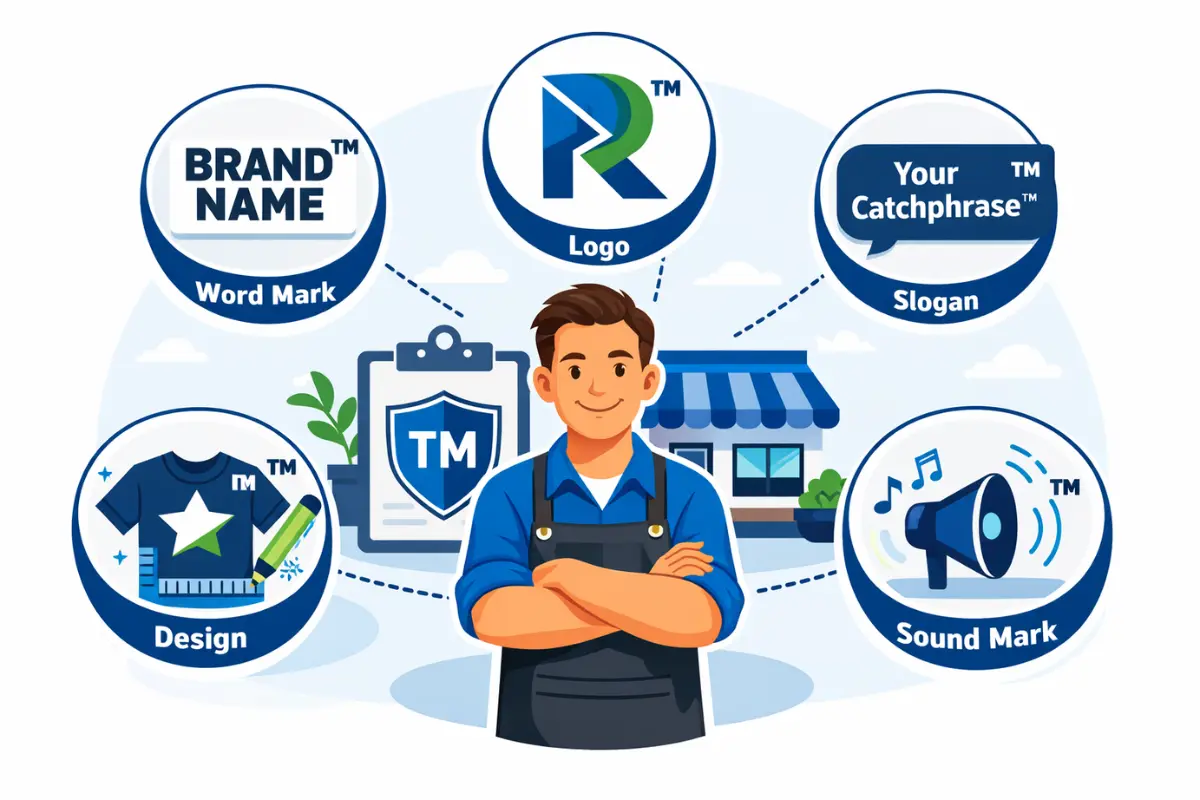
Different trademark types serve different purposes: word marks protect text regardless of styling, design marks protect visual elements, combined marks protect text and design together, and service marks identify services rather than products.
-
Strong marks receive better protection than weak ones—fanciful, arbitrary, and suggestive marks are easier to protect than descriptive marks, while generic terms cannot be trademarked at all.
-
Conduct a comprehensive trademark search before filing to identify potential conflicts with existing marks and reduce the risk of USPTO rejection or infringement claims after you've invested in branding.
-
File in the correct trademark classes that cover your specific goods or services, as protection only extends to the classes listed in your registration—businesses with multiple product lines may need several classes.
-
Maintain consistent use of your mark across all platforms, marketing materials, and products to strengthen brand recognition and support enforcement of your trademark rights.
-
Meet maintenance deadlines by filing required documents between years 5-6 and renewing every 10 years, as the USPTO doesn't send reminders and missing deadlines results in cancellation.
-
Trademarks are valuable business assets that can appreciate over time, be licensed to others, sold, or used as collateral, representing tangible value that contributes to your company's overall worth.
-
Professional trademark services can help with searches, application preparation, USPTO office action responses, class selection, and ongoing monitoring to protect your brand investment.
What Is a Trademark?
A trademark is a recognizable sign, symbol, word, phrase, design, or combination of elements that identifies and distinguishes the goods or services of one business from others. The USPTO filing process establishes legal recognition of these distinctive marks. Trademarks serve as source identifiers, allowing consumers to recognize and associate products or services with specific companies. The registered mark symbol (®) indicates federal registration with the USPTO, while the ™ symbol can be used with unregistered marks to indicate a claim of trademark rights.
Unlike copyright vs trademark distinctions, where copyright protects original works of authorship, trademarks specifically protect brand identifiers used in commerce. A federal trademark registered with the United States Patent and Trademark Office provides nationwide protection and legal advantages in enforcement actions against infringers. Business name trademark protection extends beyond simple business names to encompass any distinctive element that consumers associate with a particular source. The protection applies across specified trademark classes, which categorize different types of goods and services within a comprehensive classification system.
Key Benefits of Registering a Trademark
Registering a trademark provides several practical advantages for businesses seeking to establish and protect their market position.

Legal Protection and Exclusive Rights
Federal registration creates a legal presumption of ownership and exclusive rights to use the mark nationwide for the goods or services specified in the registration. This legal recognition provides a foundation for preventing others from using confusingly similar marks that could create consumer confusion.
The registration creates public notice of the claim of ownership, which can deter potential infringers and simplify enforcement when trademark infringement occurs. However, registration does not guarantee automatic resolution of all disputes, and enforcement actions may require legal proceedings.
Enhanced Brand Recognition
A registered trademark strengthens brand recognition by signaling to consumers that the business has established legal rights to the mark. The registered mark symbol (®) can only be used after federal registration and serves as a visual indicator of protected status that builds consumer confidence.
Consistent use of a registered trademark across products, services, and marketing materials reinforces brand identity and helps consumers associate quality and characteristics with the mark. This recognition develops over time through continued use and market presence.
Nationwide Priority and Enforcement Advantages
Federal trademark registration provides priority rights across the United States, superior to later users and unregistered marks. This nationwide scope exceeds the typically limited geographic protection of common law trademark rights based solely on use.
Registration creates a public record that appears in trademark search databases, making it more likely that others will discover the mark before adopting something similar. This public notice function helps prevent inadvertent conflicts and reduces the likelihood of disputes.
Business Asset and Licensing Opportunities
Trademarks represent valuable business assets that can be licensed, sold, or used as collateral for financing. Licensing agreements allow businesses to permit others to use their trademarks while maintaining ownership and control over trademark use.
The asset value of a trademark can increase significantly over time as brand recognition grows and the mark becomes more closely associated with quality, reliability, or other attributes in consumers' minds. This accumulated goodwill represents tangible business value that contributes to the overall company valuation.
Main Types of Trademarks
Trademark types explained encompass various categories based on the nature of the mark and what it represents. Understanding these distinctions helps businesses select appropriate protection for their specific brand elements and business needs.
Word Marks (Text-Based Trademarks)
Word marks consist exclusively of words, letters, numbers, or standard typographic characters without any design or stylization elements. These marks protect the text itself, regardless of the font, size, color, or visual presentation used in the actual display.
Examples of word marks include brand names such as "Nike" and slogans such as "Just Do It." The protection extends to the wording itself, allowing the owner to use the mark in any font or style while maintaining exclusive rights to the specific text for designated goods or services.
The word mark vs design mark distinction is important because word marks provide broader protection for the text, regardless of visual presentation, while design marks protect only specific visual elements and stylized presentations.
Design Marks (Logo or Symbol Trademarks)
Design marks protect visual elements such as logos, symbols, or stylized designs that create distinctive brand identities. These marks consist of graphic features, non-standard characters, or stylized presentations that consumers recognize as identifying particular sources. The Starbucks mermaid logo and the Apple symbol are design marks that consumers recognize independently of any accompanying text. Design mark protection extends to the specific visual elements registered, requiring substantial similarity for trademark infringement to occur.
Businesses often register both word marks and design marks separately to maximize protection for different aspects of their brand identity and ensure comprehensive coverage.
Combined Marks (Word + Design)
Combined marks integrate text and design elements into a single registration, protecting the specific combination as presented together. These marks combine the features of word marks and design marks in one unified trademark registration. The Adidas logo featuring the brand name in a distinctive font with three diagonal stripes, or the BMW circle emblem containing the letters "BMW," exemplify combined marks. The protection covers the particular combination of text and design elements as shown in the registration.
Changes to the text or design elements may require assessing whether the modified mark differs materially from the registered version, potentially necessitating a new registration application to protect the updated mark.
Service Marks
Service marks function identically to trademarks but specifically identify services rather than goods or products. The service mark vs product trademark distinction relates to whether the mark identifies services or products in commercial transactions. Examples include "FedEx" for shipping and delivery services or "Netflix" for streaming entertainment services. Service marks use the same registration process and receive equivalent legal protection as trademarks for goods under federal trademark law.
Some businesses offer both goods and services, requiring protection in multiple trademark classes to cover different categories of offerings and ensure comprehensive brand protection.
Certification Marks
Certification marks indicate that goods or services meet certain standards certified by the mark owner. Unlike typical trademarks, the certification mark owner does not produce the goods or services bearing the mark. The "USDA Organic" seal certifies products meet organic standards. The "UL" mark certifies products meet safety standards. Collective mark examples differ from certification marks in that collective marks indicate membership rather than compliance.
Collective Marks
Collective marks are owned by organizations and used by members to indicate membership or affiliation. Collective mark examples include the "CPA" designation or the "NBA" logo. These marks signal that the user belongs to a particular group. The collective mark owner controls who may use the mark through membership criteria.
Trade Dress
Trade dress protects the overall visual appearance of a product or packaging. Trade dress protection extends to the total image and impression created by visual features.
The Coca-Cola bottle shape and the iPhone's design aesthetic are examples of trade dress. To qualify, trade dress must be non-functional and either inherently distinctive or have acquired distinctiveness through use.
Factors to Consider Before Filing a Trademark
Several practical and strategic considerations affect trademark selection and filing decisions.

Trademark Search and Availability
Conducting comprehensive trademark search procedures helps identify potential conflicts before filing. Searches examine federal registrations, state registrations, and common law uses. A thorough search reduces the risk of USPTO filing rejection due to the likelihood of confusion. However, search results do not guarantee approval.
Distinctiveness and Strength
Marks fall on a spectrum of distinctiveness. Fanciful marks (invented words like "Kodak"), arbitrary marks (common words in unrelated contexts like "Apple" for computers), and suggestive marks (requiring imagination like "Netflix") typically receive strong protection. Descriptive marks require proof of acquired distinctiveness. Generic marks cannot receive protection. Trademark types for startups should prioritize distinctive marks that can receive strong legal protection.
Business and Branding Goals
Trademark selection should align with the long-term branding strategy. Maintaining a consistent brand identity supports trademark protection. Businesses planning international expansion must research mark availability in target markets, as rights are generally territorial.
Jurisdiction and Scope
Federal trademark registration provides nationwide protection, while state registrations offer protection only within that state. Selecting appropriate trademark classes is critical, as protection extends only to specified goods and services. The classification system includes 45 classes. Businesses offering multiple product lines may need to register in several classes.
Common Trademark Filing Mistakes to Avoid
Several frequent errors can delay registration or weaken trademark protection.
Choosing a Name That's Too Generic or Descriptive
Generic terms cannot receive trademark protection because they represent common names for goods or services. "Computer Store" as a computer retailer's name is a generic term that lacks distinctiveness. Descriptive marks require extensive proof of acquired distinctiveness through years of use and significant advertising before registration. Strong marks use arbitrary, fanciful, or suggestive terms that create distinctive identifiers.
Ignoring Existing Trademarks
Proceeding without a comprehensive trademark search creates substantial risks of USPTO filing rejection. The USPTO examines applications against registered and pending marks. Use of a mark similar to an existing mark can result in trademark infringement claims and litigation. Discovering conflicts after investing in branding creates significant disruption.
Filing in the Wrong Class or Jurisdiction
Selecting incorrect trademark classes leaves goods or services unprotected. The classification system requires careful analysis to determine which classes cover a business's offerings. Choosing state registration when federal protection is available limits protection to a single state.
Inconsistent Use Across Platforms
Using the trademark inconsistently across websites, social media, packaging, and marketing weakens distinctiveness. Variations in spelling, design, or presentation create confusion. Maintaining a consistent presentation reinforces brand recognition and strengthens the association between the mark and thesource.
Failing to Maintain or Renew
Federal trademark registrations require maintenance filings between the fifth and sixth year, and renewals every ten years. Missing these deadlines results in cancellation. The USPTO does not send reminders, making internal deadline tracking essential.
How InCorp Can Support Entrepreneurs With Trademarks
Professional services can assist businesses with trademark processes, from searches and registrations to monitoring. Trademark registration support includes conducting searches, preparing applications, responding to USPTO office actions, and managing maintenance deadlines. Services help ensure applications include appropriate trademark classes, accurate descriptions, and proper specimens. Professional assistance can increase approval likelihood. Ongoing monitoring services track new applications that might conflict with registered marks, providing early notice of potential trademark infringement issues.
For businesses seeking to expand brand protection, comprehensive services can coordinate multi-class registrations and manage portfolios of related marks.
Takeaways for Protecting Your Brand
Understanding types of trademarks enables strategic decisions about which protection best serves business needs. Different mark types—word marks, design marks, combined marks, service marks, and others—each offer distinct advantages. Conducting a thorough trademark search before filing reduces risk. Selecting distinctive marks that avoid generic or descriptive terms strengthens protection. Filing in appropriate trademark classes ensures comprehensive coverage. Maintaining consistent use reinforces brand recognition and supports enforcement.
Professional assistance with USPTO filing procedures, maintenance requirements, and monitoring can streamline the process. Intellectual property protection through trademark registration represents a valuable investment in a legal brand protection strategy.
FAQs
Do I need a trademark for my business name?
Trademark registration is optional but provides legal advantages, including nationwide priority and enhanced enforcement options. A business name trademark helps prevent others from using confusingly similar names. Registration creates legal presumptions valuable in disputes.
What is the difference between a service mark and a product trademark?
A service mark identifies services, while a product trademark identifies goods. The service mark vs product trademark distinction determines how the mark is used in commerce. Both receive equivalent legal protection and follow the same registration process.
Can trade dress be trademarked?
Yes, trade dress protection is available for the overall visual appearance of products or packaging that has become distinctive and non-functional. Trade dress must either be inherently distinctive or have acquired distinctiveness through use.
What are common mistakes to avoid when filing a trademark?
Common errors include choosing generic or descriptive terms, skipping comprehensive trademark search procedures, selecting incorrect trademark classes, using marks inconsistently, and failing to maintain registrations.
How long does a trademark registration take?
Processing times for USPTO filing typically range from several months to over a year, depending on examination workload and whether issues arise during examination.
Disclaimer: This content is intended for general educational and informational purposes only and does not constitute legal, tax, or accounting advice. Every effort is made to keep the information current and accurate; however, laws, regulations, and guidance can change, and no representation or warranty is given that the content is complete, up to date, or suitable for any particular situation. You should not rely on this material as a substitute for advice from a qualified professional who can consider your specific facts and objectives before you make decisions or take action.