

What's the real cost of your business expansion? Beyond new opportunities, moving to a new state triggers additional tax obligations. Navigating these business expansion taxes requires understanding multi-state rules for income, sales, and employment taxes to avoid unexpected costs like penalties or audits.
This guide provides a framework for determining your tax nexus, managing registrations, and maintaining compliance across state lines. For businesses navigating this complexity, partnering with a service provider like InCorp can offer valuable support in managing registrations and tracking multi-state compliance deadlines.
Understanding State Tax Laws and Requirements
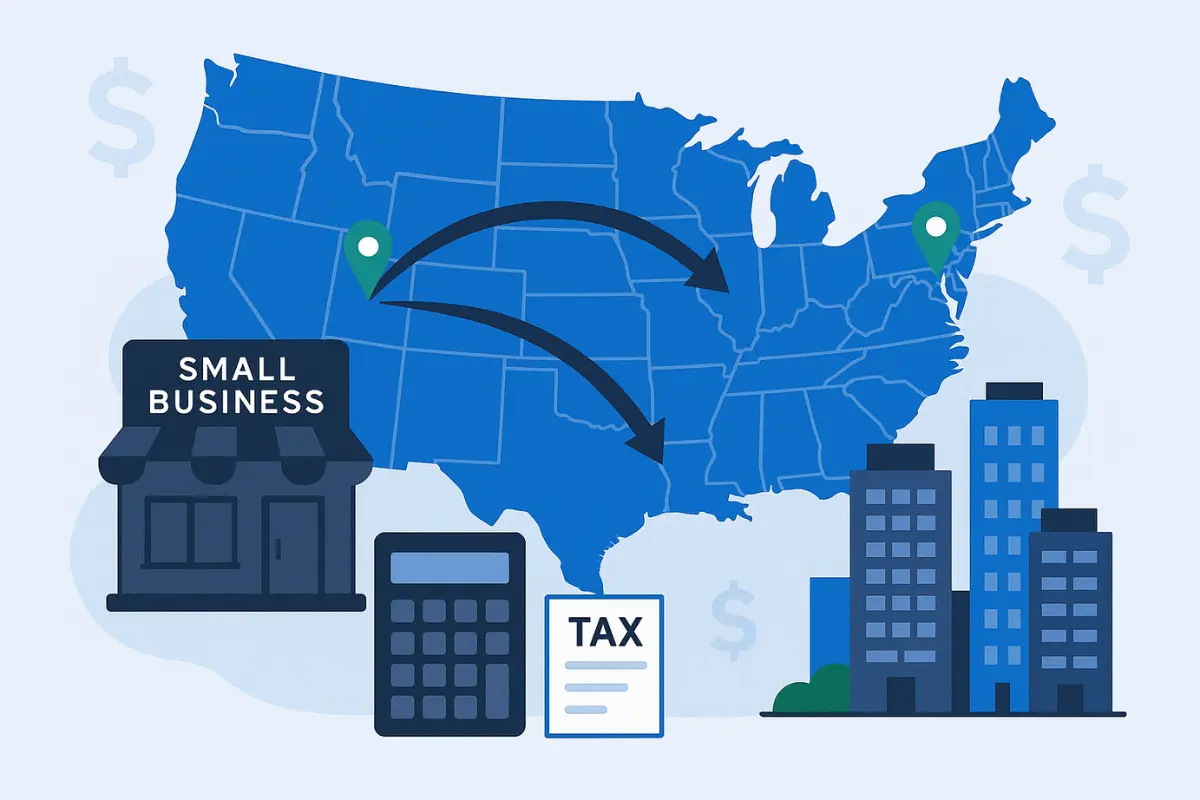
Each state sets its own tax laws, creating a complex regulatory patchwork for expanding businesses. Key taxes include state income tax, franchise tax (a fee for doing business), and sales and use tax.
Requirements vary drastically. Texas, for example, has no personal income tax but levies a franchise tax. States like California and New York have more complex, aggressive structures. Understanding these differences is the first step in planning.
Determining Nexus and Its Tax Implications
“Nexus" is the legal connection that triggers your tax obligations in a state. Establishing nexus is the key trigger for state tax compliance. It is traditionally created by a physical presence—like an office, employees, or stored inventory.
Today, most states also enforce economic nexus for sales tax. This means exceeding a state's sales volume or transaction threshold (e.g., $100,000 in sales) can trigger tax obligations, even without a physical presence there, and the specific dollar and transaction thresholds vary by state. The amount varies from state to state If your business operates in multiple states without recognizing and complying with nexus rules, you risk accruing back taxes, penalties, and interest.
Registering Your Business in Another State
Once you've determined you have nexus in a new state, formal business registration in another state is typically the next step. This process legitimizes your operations and is a prerequisite for paying taxes.
The registration process generally involves:
-
Qualifying as a Foreign Entity: If you are expanding an existing LLC or corporation, you will file for a "Certificate of Authority" or similar document to operate legally.
-
Appointing a Registered Agent: Most states require a registered agent with a physical address in the state to receive legal and tax documents. Understanding the full scope of a registered agent's duties is a key part of this step.
-
Obtaining State Tax IDs: You will need to register with your state's Department of Revenue or Taxation to get the IDs required to file income, sales, and payroll taxes.
-
Securing Business Licenses and Permits: Depending on your industry and location, you may need specific local or state business licenses to operate, including city or county-level licenses where required.
It is important to distinguish between forming a new business entity in the state and registering your existing one. Before proceeding, you should always check business name availability. The latter is usually the correct path for a multi-state expansion.
Key Takeaways
-
Expanding into new states can create additional income, sales, and employment tax obligations once you establish physical or economic nexus.
-
Formal foreign qualification, appointment of a registered agent, and obtaining state tax IDs and licenses are essential steps before or as you begin operating in another state.
-
States without a traditional personal income tax may still impose franchise, gross receipts, or other business‑level taxes, so “no income tax” does not mean “no state tax.”
-
Remote employees, home offices, and stored inventory (including in third‑party fulfillment centers) can all create nexus and trigger registration, filing, and withholding requirements.
-
Failing to comply with multi‑state tax rules can lead to penalties, interest, loss of good standing, and even personal liability for certain unpaid taxes.
-
Strategic planning around entity structure, where you place people and assets, and available state tax credits can help manage your overall tax burden.
-
Compliance technology and professional advice from a multi‑state tax specialist are critical tools for tracking obligations and reducing the risk of costly audits and surprises.
State Income Taxes and Filing Requirements
Operating in a new state creates potential state income tax obligations. How you file depends on your business structure and the apportionment rules of each state.
-
Apportionment: Most states require multi-state businesses to apportion their income, meaning they calculate what portion of their total taxable income is attributable to in-state activities. This typically uses a formula based on sales, payroll, and property within the state, often with a heavier weighting on in‑state sales.
-
Entity Type Matters: Pass-through entities like S Corporations and LLCs often have their income "pass through" to the owners' personal tax returns, which may now need to be filed in multiple states. C Corporation income is taxed at the entity level.
-
States with No Income Tax: Some states do not impose a traditional personal income tax on wages, including Alaska, Florida, Nevada, New Hampshire, South Dakota, Tennessee, Texas, Washington, and Wyoming; however, business owners should be aware that these states may still impose other business‑level taxes such as gross receipts or franchise taxes. Expanding to such states like Florida, Nevada, South Dakota, Texas (for corporations), Washington, and Wyoming can simplify your income tax filings, though other taxes like gross receipts or franchise taxes may still apply.
-
Aggressive Enforcement: It is important to understand that states actively pursue tax revenue from businesses they believe have nexus. For example, California's tax agency is particularly known for its assertive approach to assessing taxes on out-of-state businesses, a process detailed in analyses of how California collects from out-of-state businesses.
The administrative burden increases with each additional state, as you must track income, calculate apportionment, and meet various filing deadlines.
Sales and Use Tax Considerations
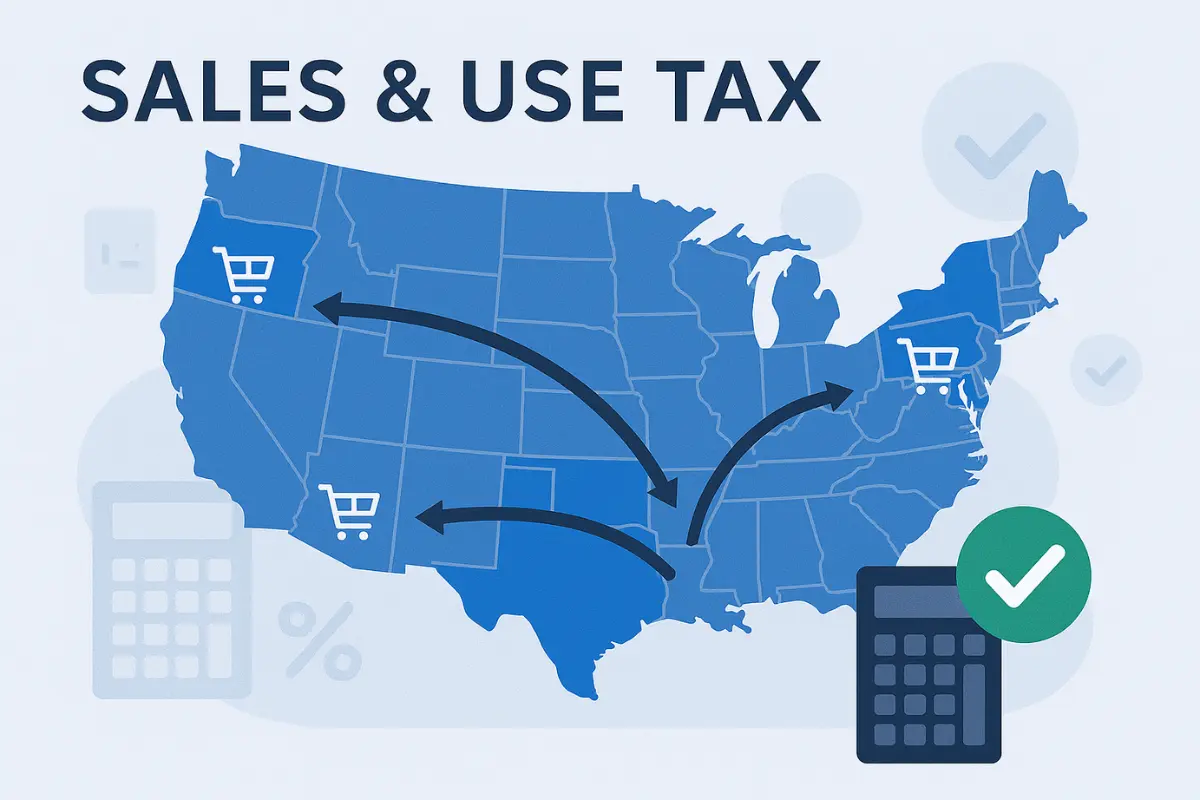
Sales tax compliance becomes significantly more complex with a multi-state presence. Each state sets its own rates, rules for what is taxable, and filing frequencies.
Key considerations include:
-
Economic Nexus: As mentioned, surpassing a state's economic nexus threshold requires you to register, collect, and remit sales tax on sales into that state.
-
Sourcing Rules: States use either "origin-based" or "destination-based" sourcing rules to determine which local rate to apply to a sale.
-
Use Tax: If you purchase goods outside of a state and bring them in for use, you may owe a "use tax," which is functionally equivalent to sales tax.
Managing this requires robust systems. Many business owners use specialized software to track nexus thresholds, calculate correct rates, and generate filings for multiple jurisdictions.
Employment Taxes and Withholding Obligations
Hiring employees in a new state creates a substantial nexus and introduces a suite of new payroll tax obligations. This is one of the most common ways businesses inadvertently establish a tax presence.
New state-level employment responsibilities include:
-
State Income Tax Withholding: You must register with the state's tax authority to withhold state income tax from employee wages.
-
State Unemployment Insurance (SUI): You will need to pay state unemployment taxes, which fund unemployment benefits.
-
Reporting and Filings: You become responsible for quarterly wage reports, annual reconciliations, and other state-specific payroll filings.
Managing multi-state payroll increases administrative complexity, as you must comply with different wage laws, minimum wages, and paid leave rules in addition to tax withholding.
Potential Penalties for Non-Compliance
The risks of getting multi-state tax wrong are substantial. States have become increasingly aggressive in identifying and penalizing non-compliant businesses.
Common penalties include:
-
Late Filing and Payment Penalties: Significant fines based on the tax due.
-
Interest Charges: Accrued on any unpaid balance from the original due date.
-
Loss of Good Standing: Failure to comply can lead to the state revoking your business's right to operate there, affecting contracts and legal protections.
-
Personal Liability: In some cases, officers or members can be held personally liable for certain unpaid taxes.
A proactive approach to state tax laws—including proper maintenance of all state-specific business documents—is the most effective way to avoid these costly and disruptive consequences. Regular reviews of your operations and records can help ensure you remain compliant as your business evolves.
Strategic Planning to Minimize Tax Burden
While compliance is mandatory, strategic planning can help manage and potentially reduce the overall burden of multi-state business taxes.
Effective strategies include:
-
Entity Structuring: Choosing the right business structure (e.g., S Corporation vs. C Corporation) and potentially creating separate legal entities for operations in high-tax states can offer planning opportunities, provided these structures have genuine business purpose and economic substance and comply with anti‑abuse rules.
-
Nexus Management: Carefully planning where to locate employees, property, and inventory can help control the creation of nexus.
-
Leveraging Tax Credits: Many states offer tax credits for job creation, research and development, or investments in certain areas. Proactively identifying and claiming these can offset tax liabilities.
-
Using Compliance Technology: Implementing compliance management tools to track filing deadlines, nexus thresholds, and document management is essential for any small business operating in multiple states. These systems provide clarity and reduce the risk of human error.
-
Maintaining Good Standing: A core part of strategic planning is ensuring your business remains in good standing in every state where it's registered. Falling out of good standing can lead to penalties, the inability to legally operate, and loss of liability protection. Understanding what triggers this status is important.
Consulting with a tax professional who specializes in multi-state taxation is highly recommended. They can provide tailored advice based on your specific business activities and goals.
Strategic Insight: Research underscores the impact of state tax policy on business decisions. A study found that for firms classified as C‑corporations operating in multiple states, a 1 percentage point increase in a state’s corporate tax rate is associated with about a 0.4–0.5% reduction in the number of business establishments in that state. This highlights the importance of factoring state tax climates into expansion planning.
Ensure Smooth Multi-State Expansion
Expanding across state lines introduces a complex web of tax obligations. Success hinges on understanding the nexus, completing registrations, and maintaining compliance with each state's unique laws.
Proactive management is the most reliable way to support growth and avoid penalties. Assessing your multi-state obligations early builds a solid foundation for expansion.
Ready to navigate the complexities of multi-state expansion with confidence? Explore InCorp's services for support with business registrations, registered agent services, and compliance management tools designed to help you stay on track.
FAQs
Do all states require businesses to register if they just make sales there?
Not necessarily. Registration is typically required only if you establish nexus. This can be through a physical presence (employees, property) or by meeting a state's economic nexus threshold based on sales volume or transaction count, and specific registration triggers can vary by state statute and guidance.
Can expanding to a new state impact my federal taxes?
Yes, but indirectly. Federal tax rates generally remain the same, but operating in multiple states can affect your overall effective tax burden, the amount of state and local taxes you pay (and may be able to deduct, subject to federal limits), and your eligibility for certain state or federal incentives. A tax professional can help you understand how your multi‑state footprint interacts with your federal tax position. Yes, while federal tax rates remain constant, operating in multiple states affects how you apportion income for federal reporting and can influence your eligibility for certain deductions and credits.
Are franchise taxes the same as state income taxes?
No. Franchise taxes are fees for the privilege of doing business in a state and are often based on revenue, capital, or net worth. State income taxes are levied directly on the taxable income earned within the state.
How does inventory stored in another state affect taxes?
Storing inventory in a state, including in a third-party fulfillment center like Amazon FBA, typically creates a physical nexus. This triggers obligations to collect and remit sales tax and may create income tax filing requirements.
Can a home office in another state create tax obligations?
Yes. Having an employee, including yourself, working from a home office in another state can establish nexus for that state, potentially creating income and sales tax obligations depending on the nature of the work and state-specific rules.
How can I avoid double taxation when expanding my business to multiple states?
Double taxation risk arises when more than one state claims the right to tax the same income under its tax system. Many states use apportionment formulas and offer credits for taxes paid to other states to reduce this risk, but the rules vary by particular state. Proactive tax planning with tax professionals can help structure your multi state tax obligations so that state income tax filings properly allocate income and avoid unexpected tax liabilities.
How do online sales and remote employees affect my sales tax and income tax nexus?
For online sales, many states apply economic nexus rules, meaning you may need to collect sales tax and remit sales tax once your sales or transaction counts cross a threshold, even without a physical location in that state. Remote employees or contractors working from a home office in a new location can create income tax nexus and payroll obligations because their physical presence is treated as conducting business there. Business owners should monitor both physical or economic presence to ensure compliance with evolving state tax laws and avoid unexpected tax liabilities.
What is the difference between franchise tax, gross receipts taxes, and income tax obligations?
Franchise tax is generally a fee for the privilege of doing business in a particular state and may be based on net worth, capital, or other state specific levies rather than net income. Gross receipts taxes are imposed on total revenue without allowing the deductions that apply under typical income tax rules, which can significantly impact your overall tax burden even in states that have no personal income tax, such as South Dakota and others. Income tax obligations are based on net taxable income apportioned across multiple jurisdictions where you establish nexus, and they are separate from franchise tax or gross receipts taxes.
How do local tax and business license requirements fit into multi state tax compliance?
In addition to state tax obligations, many cities and counties impose their own local tax, business licenses, and registration requirements when you conduct business or maintain a physical presence in that jurisdiction. These local rules vary widely and can include local sales tax rates, local gross receipts taxes, or industry-specific fees that increase your tax bill and overall tax liability. Keeping detailed records and tracking filing deadlines at both the state and local levels is essential to remain compliant as your business expanding across state lines.
Can tax incentives and credits meaningfully reduce the tax implications of expanding your business to another state?
Yes. Many states offer tax incentives and tax credits for activities like job creation, capital investment, R&D, or moving operations to a new location, which can reduce your overall tax burden and long-term tax liabilities. However, eligibility criteria, application procedures, and clawback provisions differ by state laws, so working with experienced CPA firms or professional services that understand multi state obligations is critical to ensure compliance while maximizing available benefits.
Disclaimer: This guide is for general informational purposes only and does not constitute legal or tax advice. Consult a qualified tax professional for advice tailored to your specific situation.