

What if a single missed state filing could damage your hard-earned reputation with investors and partners? Consistent entity management—the practice of maintaining accurate, compliant business records and filings—serves as both a legal safeguard and a foundation for your company's credibility. It protects your business from legal, financial, and reputational risks by ensuring you meet all state obligations. For businesses managing multiple corporate entities, this becomes a critical function. InCorp’s Entity Management System, part of its broader Business Services offerings, simplifies ongoing entity filing management and document control, providing a reliable solution for businesses of all sizes.
Key Takeaways
-
Consistent entity management protects your legal standing, limits financial and legal risk, and helps preserve limited liability protections for owners.
-
Poor entity management can lead to loss of good standing, penalties, administrative dissolution, and even personal liability when corporate formalities and records are neglected.
-
Strong entity management strengthens brand credibility by signaling reliability to investors, partners, and regulators, and supports smoother deals, financings, and due diligence.
-
Multi-state operations significantly increase compliance complexity, making centralized data, standardized processes, and automated deadline tracking essential rather than optional.
-
Modern tools like InCorp’s Entity Management System and EntityWatch centralize entity data, automate monitoring, and provide real-time status alerts, turning compliance into a strategic advantage for your brand.
What Is Entity Management?
Entity management, or business entity management, is the systematic process of organizing and maintaining all the official records, deadlines, and details for your business entities, such as LLCs and corporations. It is the ongoing work that comes after the one-time event of business formation, ensuring your company remains in good standing year after year and maintains legal standing across all jurisdictions. This involves a continuous cycle of tracking, updating, and filing to meet various legal requirements.
Think of it as the central nervous system for your company's legal and compliance health. While forming a business sets its initial structure, entity management ensures it continues to operate with a valid legal status, preserved liability protections, and the ability to conduct business without interruption. As outlined in U.S. Department of Justice training resources, effective entity management is a fundamental discipline for any organization receiving federal grants, underscoring its importance beyond corporate compliance.
Key Components of Entity Management
-
Maintaining Accurate Corporate Records: This includes keeping detailed, up-to-date records of ownership (members or shareholders), officers, directors, and governing documents such as bylaws or operating agreements. These corporate records form the official history and governance framework of the company.
-
Tracking State Filing Deadlines: This involves monitoring and meeting all recurring state obligations. Key deadlines often include annual reports, statement of information filings, and franchise tax payments. Missing these dates can lead to penalties and a loss of good standing.
-
Managing Registered Agent Information: Your registered agent is your business's official point of contact for receiving service of process (lawsuits) and state correspondence. Ensuring this agent is always appointed, their address is current, and they are reliable is a non-negotiable component of compliance.
The Expanding Scope of Multi-State Entity Management
For businesses operating beyond their home state's borders, entity management complexity increases significantly. Each new state where you qualify to do business introduces a unique set of rules, filing deadlines, and tax obligations. What is due in Delaware in March may be owing in California in May, and the required forms will differ. Managing this manually across several states can become a significant administrative burden, increasing the risk of overlooking a critical filing in one jurisdiction and potentially impacting the entire company's operations and credibility.
Legal Risks of Poor Entity Management
When ongoing compliance is ignored, businesses face significant risks. Small oversights can quickly escalate into serious legal and financial issues, creating compliance gaps that threaten the company's stability.
Loss of Good Standing
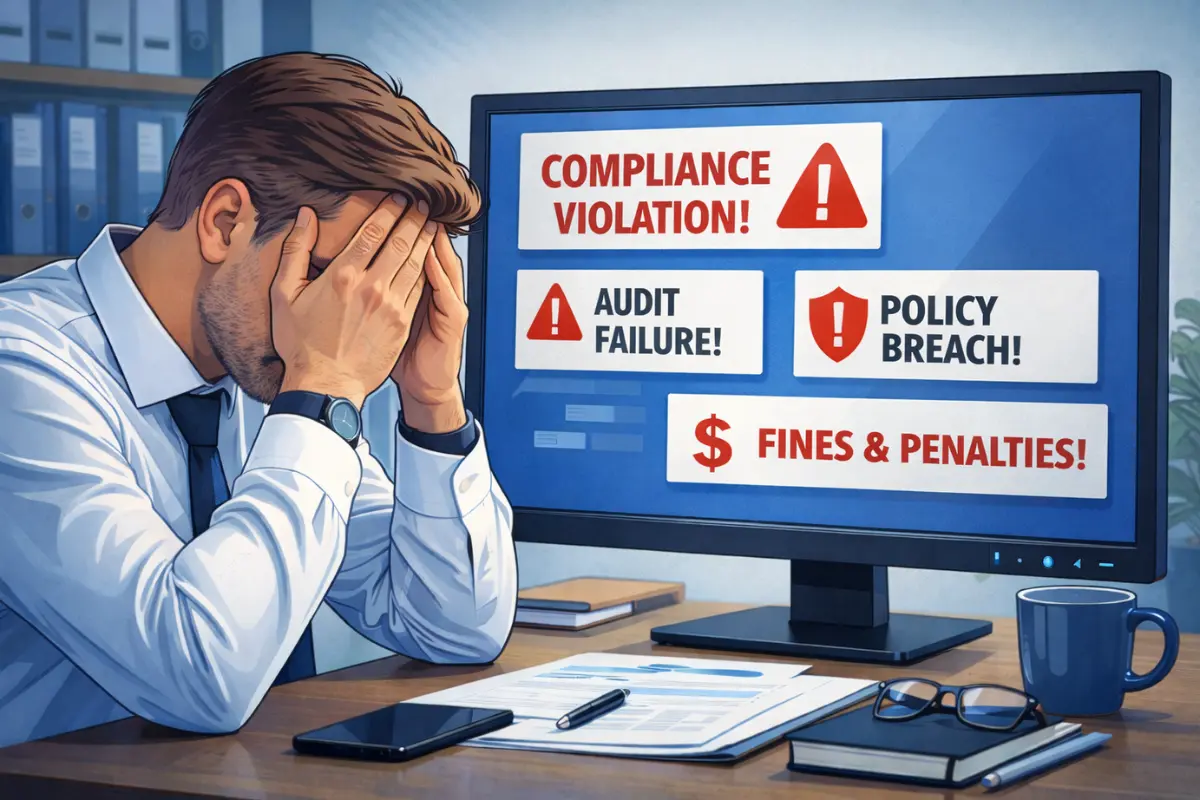
"Good standing" is a status granted by the state confirming your business is compliant with state legal requirements. Maintaining legal standing is essential for preserving your company's ability to operate without restriction. Missed filings or unpaid fees are common triggers for this damaging status change, which, as the Iowa Secretary of State explains, can affect a company's ability to enforce contracts, secure financing, and expand into new states.
For example, a company that fails to file its annual report and pay the associated fee will typically receive a notice from the state. If this notice goes unaddressed, the state will eventually change the company's status to "not in good standing" or "void." This public record is available to anyone, including potential partners conducting due diligence.
Increased Risk of Penalties or Lawsuits
Failing to maintain accurate records or missing filing deadlines can trigger a cascade of problems. States can impose late fees and penalties for each missed deadline. In severe cases, this leads to involuntary dissolution, where the state forcibly shuts down your business entity. This lack of compliance transparency also increases legal exposure, as you may miss summons for lawsuits or regulatory notices, leading to default judgments.
Consider a scenario in which a business relocates its office but fails to update its registered agent address with the state. A lawsuit summons is delivered to the old, invalid address. Because the business never receives the summons, it fails to respond. The court may then enter a default judgment against the company, which could lead to the seizure of its assets, all without the company's knowledge.
Weak Corporate Protection
"Piercing the corporate veil" is a legal doctrine under which courts hold business owners personally responsible for a company's debts and obligations. This typically happens when owners neglect corporate formalities, such as mixing personal and business funds or failing to maintain proper records and filings. Inconsistent entity management is a primary factor that increases this risk.
For instance, if a business owner uses the company bank account for personal expenses without clear documentation, or if the company fails to hold required annual meetings and keep minutes, a court may determine that the company is not a separate legal entity. This would strip away the owner's limited liability protection, exposing their personal assets—like their home and savings—to business creditors. Maintaining accurate, up-to-date corporate records is fundamental to preserving this critical protection.
How Consistent Entity Management Protects Your Brand
Beyond avoiding legal trouble, effective entity management actively builds and safeguards your brand's value. It ensures every business entity remains legally compliant and organized, with all filings, licenses, and ownership records accurate and centralized.
Enhances Credibility and Trust
Staying in good standing and maintaining accurate filings signals reliability to clients, investors, and regulators. Your good-standing status is often publicly visible. Lapses, such as missed annual reports, can make your business appear disorganized or risky, directly eroding stakeholder confidence and damaging the professional reputation you have worked to build.
A potential investor researching your company will likely check its standing with the Secretary of State. Discovering that the company is not in good standing due to a missed filing can raise red flags about the company's internal management and financial discipline, potentially derailing a funding round.
Supports Smooth Transactions and Partnerships
Up-to-date entity records are crucial for business growth. During due diligence for contracts, partnerships, or mergers, clean and organized compliance records reduce friction and prevent delays. This demonstrates that your business is well-managed, strengthening trust between parties and ensuring deals move forward smoothly without last-minute compliance-related surprises.
For example, in a merger or acquisition, the acquiring company's legal team will conduct a thorough review of the target company's corporate records. If minutes, ownership ledgers, or state filings are missing or inaccurate, it can delay the transaction, reduce the valuation, or even cause the deal to fall apart. Organized records show that the company is a reliable and professional partner.
Safeguards Brand Reputation
Compliance failures can become apparent in public records and may even lead to regulatory action. Administrative dissolution or revoked registrations can halt operations, leading to service interruptions that frustrate customers and attract negative publicity. Strong entity management prevents these public missteps, protecting your brand reputation from harm and the associated financial fallout.
A company that loses its good standing may find its business licenses are revoked. If this company is in a regulated industry, it could be forced to cease operations until compliance is restored. This sudden inability to serve customers can generate negative reviews and news coverage, causing long-term damage to the brand that far outweighs the cost of maintaining compliance.
Best Practices for Consistent Entity Management
Consistent entity management requires a proactive approach to keep every business entity legally compliant year-round. Implementing these entity governance best practices helps prevent missed filings, compliance gaps, and administrative dissolution.
Centralize Entity Data
Storing all entity information—from formation documents and amendments to officer details and licenses—in one secure, centralized system is fundamental. This reduces the risk of using outdated records or missing critical forms. Relying on scattered spreadsheets, email folders, and physical files is inefficient and error-prone. A dedicated entity management platform acts as a single source of truth, providing clear visibility across all corporate structures and states for your finance teams and legal counsel.
Automate Compliance Tracking
Manual corporate compliance tracking of deadlines across multiple entities and states is inefficient and error-prone. Entity management tools with automation capabilities can monitor due dates for annual filings, license renewals, and franchise taxes, sending timely reminders and alerts. This significantly reduces manual errors and ensures nothing is overlooked, transforming compliance tasks from a reactive scramble into a proactive, managed process. InCorp’s compliance features help businesses stay ahead of these requirements without the burden of manual effort.
Conduct Annual Compliance Audits
Businesses should review all entity records at least once per year. This audit should check filings, ownership details, registered agent information, and standing in each state. It is an opportunity to verify that all information on file with state agencies matches your internal corporate records. Annual audits help identify outdated information or compliance risks early, giving time to correct issues before they result in penalties. This proactive review is a cornerstone of annual compliance and good corporate governance.
How InCorp Simplifies Entity Management
InCorp’s Entity Management System is designed to help businesses protect their continuity and compliance effortlessly. This includes providing registered agent services, compliance monitoring, and Annual Report Services to handle specific filings. The system offers a centralized dashboard for multi-entity tracking, secure document storage, and automated reminders for critical deadlines, such as annual reports. This gives finance teams and legal professionals secure, organized access to the information they need to maintain good standing across multiple jurisdictions. By consolidating these functions into a single platform, InCorp reduces the administrative workload on internal staff and provides greater transparency into compliance, turning entity management from a source of stress into a strategic advantage.
Stay compliant and protect your brand effortlessly with InCorp’s trusted entity management tools.
FAQs
How does poor entity management affect a brand's reputation?
Missed state filings or administrative dissolution can signal disorganization and legal risk to clients, partners, and investors, significantly damaging trust and credibility. These public records can be easily discovered during basic due diligence.
How often should businesses review their entity compliance status?
At least once a year is essential for a basic check. However, quarterly reviews are recommended for fast-growing companies or those with multiple entities operating across several states to address issues proactively.
Can automation tools really help with compliance management?
Yes. Compliance automation tools effectively track deadlines, renewals, and filing requirements across multiple states, drastically reducing the risk of human error and ensuring all submissions are made on time, which helps maintain good standing.
How can InCorp help with consistent entity management?
InCorp supports consistent entity management with a full suite of services. We provide registered agent services, proactive compliance monitoring, and robust entity management tools. This integrated approach is designed to keep your business in good standing, maintain legal standing across all states, simplify complex compliance tasks, and centralize your corporate records.
How is legal entity management different from general corporate compliance?
Legal entity management focuses on the structure, registration, and governance records of each legal entity, while corporate compliance covers broader policies such as HR, financial reporting, and industry-specific regulatory requirements.
Why does consistent legal entity management protect your brand legally?
Consistent entity management keeps corporate records, ownership details, and annual reports accurate and current, reducing compliance gaps that can lead to penalties, loss of good standing, or reputational damage during audits and due diligence.
What key features should legal and compliance teams prioritize in an entity management system?
Legal and compliance teams should look for centralized dashboards, secure document storage, compliance tracking for annual reports and license renewals, and a single source of truth for legal entity data across all jurisdictions.
How do entity management platforms simplify oversight for legal, tax, and finance teams?
Modern entity management software centralizes corporate data, automates routine tasks and reporting requirements, and provides real-time visibility into regulatory standing, enabling faster strategic decision-making and improved operational efficiency.
What are the risks of a disconnected approach to entity data and corporate records?
Fragmented legal entity data and scattered corporate records increase the risk of missed deadlines, unfiled paperwork, and inconsistent information across multiple jurisdictions, which can trigger penalties, weaken governance, and undermine strategic growth plans.
Disclaimer: This content is intended for general educational and informational purposes only and does not constitute legal, tax, or accounting advice. Every effort is made to keep the information current and accurate; however, laws, regulations, and guidance can change, and no representation or warranty is given that the content is complete, up to date, or suitable for any particular situation. You should not rely on this material as a substitute for advice from a qualified professional who can consider your specific facts and objectives before you make decisions or take action.