
How to File a DBA Name for Your Business: Step-by-Step Guide


A sole proprietor wants to operate under the name "Precision Auto Repair" rather than her personal name. A corporation needs a brand name distinct from its construction business. An LLC discovers its legal name is too long. Each scenario involves filing a DBA. Understanding "How to File a DBA" helps business owners navigate the registration process. A DBA, or Doing Business As name, allows a business to conduct business under a name different from its legal name. This registration does not create a new entity or change the business's structure. This guide provides an overview of the DBA filing process, including eligibility, procedures, costs, and common errors.
InCorp is not a law firm and does not provide legal or financial advice. This information is educational. Readers should consult qualified legal professionals.
Key Takeaways
-
A DBA lets you operate under a brand name different from your legal business name, but it does not create a new entity, change your tax status, or provide liability protection.
-
Filing requirements for a DBA vary by state and locality, so you must identify the correct state, county, or municipal office and follow their specific forms, fees, and publication rules.
-
The basic DBA process usually involves checking name availability, completing an application with your legal business details, paying filing fees, and, in some areas, publishing a notice in a local newspaper.
-
A DBA does not replace your legal business name on tax returns or regulatory filings, and it does not provide trademark rights—federal trademark registration is needed for broader name protection.
-
Missing jurisdiction-specific steps or renewal deadlines can cause your DBA to lapse or be rejected, so using organized compliance practices or professional filing services helps keep your registration accurate and active.
What "Doing Business As" Means in Practice
A Doing Business As name, also called a trade name, assumed name, or Fictitious Business Name, is an alternate name under which a business operates. The DBA name appears on marketing materials and websites, while the legal business name remains on official documents and tax filings. Doing Business As registrations serve as public notice that an entity operates under a name different from its legal name.
The DBA filing does not change the business's legal structure or tax classification. The Legal business name vs DBA distinction is critical: the legal name defines the entity for legal and tax purposes, while the DBA provides an alternate operating name.
Common Reasons Businesses File a DBA
Businesses file DBAs for various operational and marketing purposes. Sole proprietors and partnerships commonly file DBAs to operate under names distinct from the owners' personal names. Rather than "Michael Chen," a sole proprietor might register a dba name as "Chen Accounting Services."
Entities with lengthy legal names sometimes use DBAs for simplified branding. "Advanced Technology Solutions, LLC" might operate as "Tech Solutions." Businesses expanding into new product lines may use DBAs for distinct brands without forming separate entities. Some banks require DBA certificates before opening business accounts under names other than the owner's personal name.
Which Types of Businesses Can File a DBA?
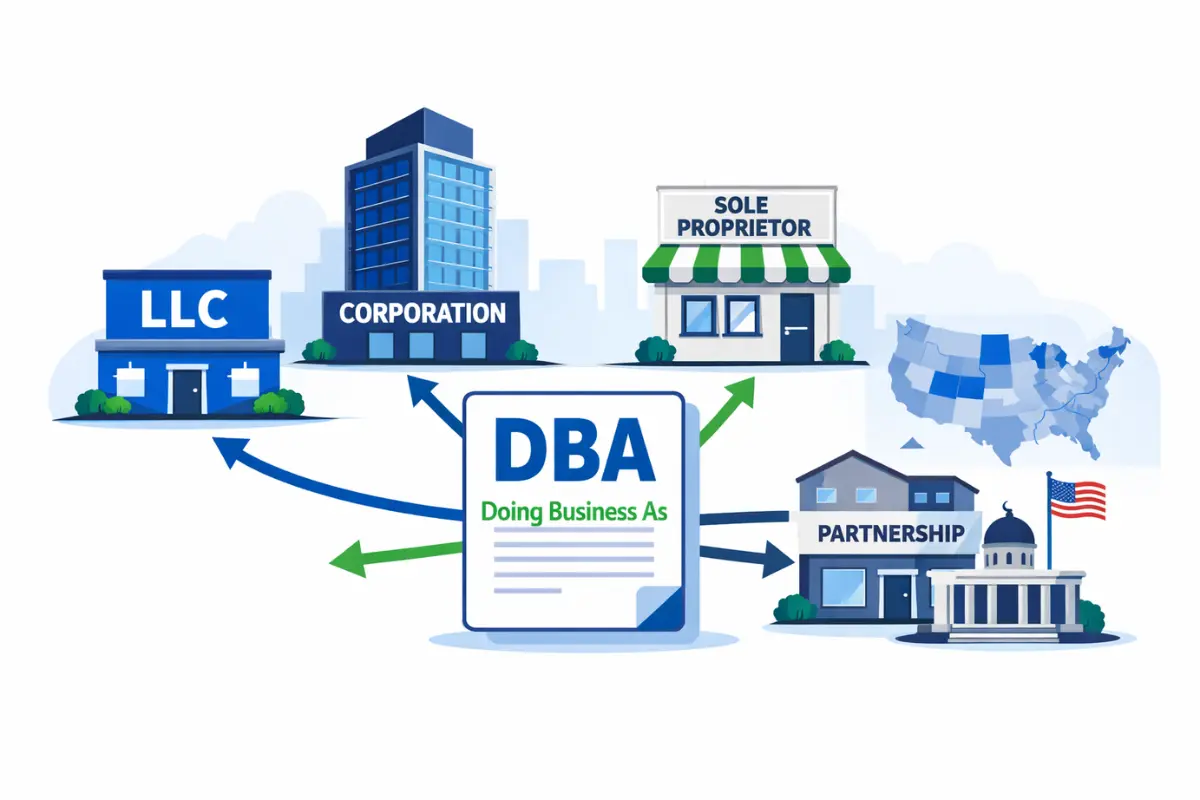
Business entity types generally permitted to register a DBA name include LLCs, corporations, sole proprietorships, and general partnerships, though specific eligibility varies by jurisdiction.
LLCs and Corporations
LLCs and corporations maintain legal names recorded on their formation documents. These entities may register DBAs to operate under alternate names while retaining their legal entity status. State DBA registration procedures require LLCs and corporations that use trade names to continue meeting all compliance obligations. The DBA registration does not change annual reporting requirements or require registered agent services.
Sole Proprietorships and General Partnerships
Sole proprietorships operate under the owner's legal name by default. General partnerships use the partners' surnames as the default business name. Both entity types commonly file DBAs to conduct business under names distinct from the owners' personal names. A sole proprietor named "Elizabeth Martinez" would conduct business as "Elizabeth Martinez" unless a DBA is filed for "Martinez Photography Studio."
Where Is a DBA Filed?
DBA filing requirements vary significantly by jurisdiction. Some states require filing with a central state agency, while others mandate county or local registration.
State-Level DBA Filings
Certain states require filing a DBA with the state through the Secretary of State. These filings typically appear in a central state database. Processing procedures, fee structures, and renewal requirements differ by state.
County or Local DBA Filings
Many jurisdictions require DBA filings at the county or municipal level. County-level requirements often include publication mandates that require the business to publish a notice in an approved local newspaper.
How to File a DBA Name (General Process)
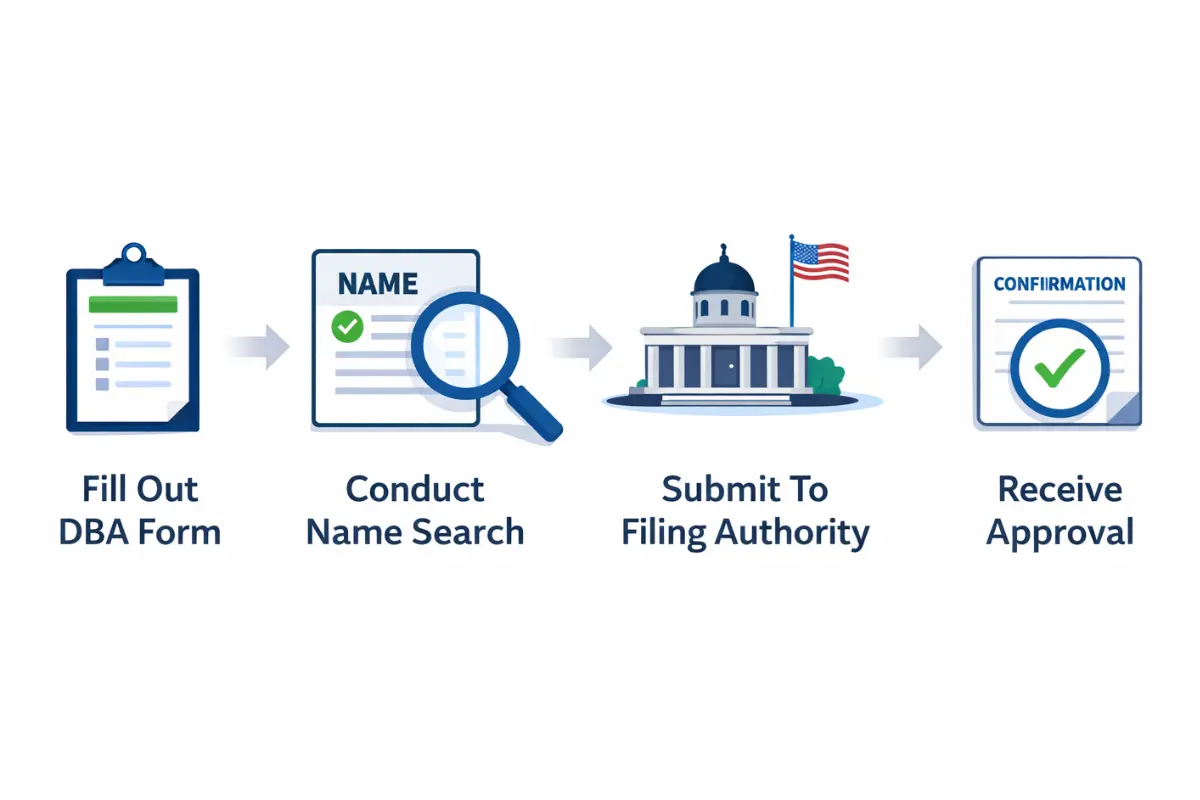
The DBA filing process generally follows similar steps across jurisdictions, though specific procedures vary. Business name registration guidance indicates that understanding the general process helps businesses prepare to file a DBA name.
Step 1: Check DBA Name Availability
Before filing, businesses typically conduct a DBA name availability check to determine whether the proposed name conflicts with existing registrations. Most states and counties maintain searchable databases. The availability check searches for exact matches and similar names. If the desired name is already registered or too similar to an existing registration, the filing authority may reject the application.
It is important to note that DBA name availability check processes do not provide trademark protection or exclusive nationwide rights. The search confirms local availability only.
Step 2: Prepare DBA Filing Information
DBA application process requirements typically include the business's legal name, the proposed DBA name, the business entity type, the principal business address, and owner information. Entity formation guidance recommends gathering current information before filing. LLCs and corporations may need to provide their formation date or entity identification number.
Step 3: Submit the DBA Application
The DBA application process involves submitting completed forms to the appropriate filing authority. Depending on the jurisdiction, this may be a state agency, county clerk, or municipal office. Many jurisdictions offer online filing systems. Others require paper forms submitted by mail with payment by check or money order.
Step 4: Publication Requirements (If Applicable)
Certain jurisdictions require public notice through publication in approved newspapers. This notice typically runs for consecutive weeks in a publication serving the area where the business operates. After publication, the newspaper provides an affidavit of publication. This document must be filed with the original filing authority to complete registration. Not all jurisdictions require publication. The requirement depends on state law and local ordinances.
Step 5: Receive Confirmation
Once the filing is processed and publication requirements are satisfied, the filing authority issues confirmation. This may be a certificate, stamped copy, or acknowledgment letter. The confirmation serves as proof of DBA registration. Banks often require this documentation to open accounts under the DBA name. Registration allows the business to operate under the DBA name. The filing does not change the entity's legal name or tax obligations.
DBA Filing Costs and Processing Time
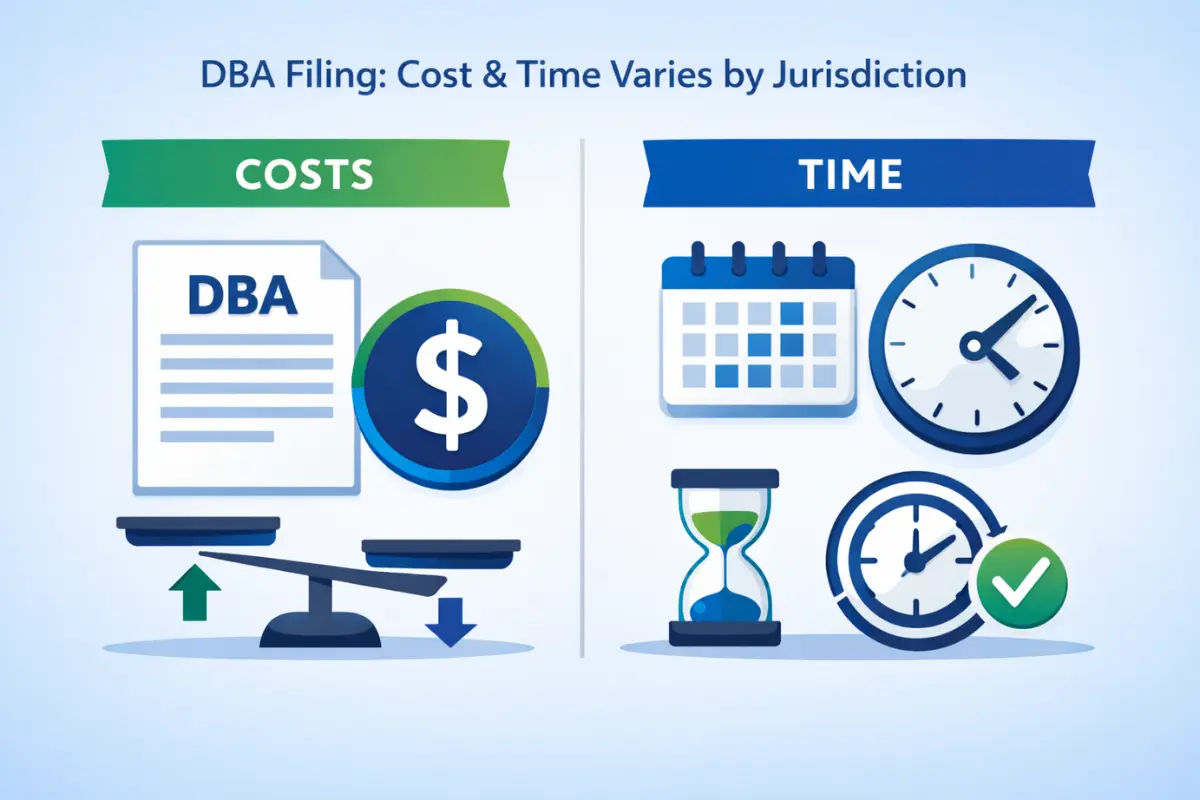
DBA registration requirements include filing fees and processing periods that vary by jurisdiction.
Typical Filing Fees
Filing fees for State DBA registration differ significantly across jurisdictions. State-level fees typically range from approximately $10 to over $100 per filing. County and municipal fees follow similar ranges. Some jurisdictions charge flat fees, while others tier fees based on entity classification. Publication costs, when required, represent separate expenses.
Processing Timelines
Processing time depends on the filing method, jurisdiction workload, and application completeness. Online filings often take days to weeks to process. Paper filings generally take longer. Publication requirements add time to the overall process. The notice must run for the required period, then the affidavit must be filed and processed.
DBA Name vs Legal Business Name
The distinction between a DBA and a legal business name is fundamental. The legal business name is the name on formation documents for entities, or the owner's personal name for sole proprietorships. The DBA serves as an alternate operating name but does not replace the legal name on tax returns, annual reports, and regulatory filings. A DBA filing does not provide trademark protection. Federal trademark registration through the USPTO is required for broader name protection. The DBA also does not alter the business's legal structure or liability framework.
Do DBAs Need to Be Renewed?
DBA renewal requirements depend on the jurisdiction where the filing was made. Some states and counties require periodic renewal, typically every five years, though periods range from two to ten years. Other jurisdictions maintain DBA registrations indefinitely until the business files a withdrawal. These perpetual registrations require action only when the business closes or no longer uses the trade name. Jurisdictions requiring renewal typically send notices before expiration. Missing renewal deadlines can result in the registration lapsing, making the name available for other entities.
Common DBA Filing Mistakes to Avoid
Certain procedural errors occur frequently in DBA registrations.
Filing in the Wrong Jurisdiction
DBA filing requirements require submitting to the appropriate authority based on the business's location. A business operating in County A cannot satisfy requirements by filing in County B. Some businesses mistakenly file only at the state level when county filing is also required. Others file in the county of formation rather than the county where the company operates. Filing in the wrong jurisdiction results in rejected applications and wasted fees.
Assuming a DBA Provides Legal Protection
A DBA registration provides public notice of a trade name. It does not confer trademark rights or prevent other businesses from using similar names in other jurisdictions. Federal trademark registration provides broader protection but involves separate procedures through the USPTO. The DBA also does not shield owners from personal liability or change the business's legal structure.
Missing Renewal Deadlines
In jurisdictions that require periodic renewal, missed deadlines can cause registrations to lapse. Once a registration expires, the DBA name may become available for other entities. Reinstating an expired DBA may require filing a new application. If another entity registered the name during the lapse, the original business may be unable to reclaim it.
Inconsistent Name Usage Across Documents
Business compliance practices include using the registered DBA name consistently across all business documents. Variations in spelling or wording can create confusion. Contracts, invoices, and permits should reference the DBA exactly as registered. When a business uses both its legal name and DBA, proper notation clarifies the relationship.
How InCorp Helps With DBA Filings
Professional services can assist businesses with doing business as name filing procedures by guiding them through jurisdiction-specific requirements, preparing applications, and tracking filing status. Assistance may include researching DBA registration requirements for specific jurisdictions, conducting name-availability searches, preparing filing documents, and monitoring renewal deadlines.
InCorp offers support for businesses navigating DBA filing procedures across different jurisdictions. Services help ensure applications include the required information and comply with procedural requirements. For comprehensive business formation support beyond DBA filings, see business formation services and entity type comparisons.
Conclusion
Understanding "How to File a DBA" means recognizing that a Doing Business As name serves as an alternate operating name while the legal business name remains unchanged. The DBA filing process requires identifying the correct filing jurisdiction, checking name availability, preparing required information, and satisfying publication requirements. DBA registration requirements vary by state, county, and municipality. Common errors include filing in the wrong jurisdictions, assuming DBAs provide legal protections they do not offer, and missing renewal deadlines.
Professional services like InCorp provide support for navigating jurisdiction-specific requirements and ensuring accurate, timely filings. Contact InCorp to learn how professional DBA filing assistance can help navigate jurisdiction-specific requirements and maintain accurate Business name registration records.
FAQs
Who can file a DBA?
LLCs, corporations, sole proprietorships, and general partnerships can typically file a DBA, depending on regulations. Specific eligibility requirements vary by jurisdiction. Individuals operating as sole proprietors can generally file DBAs to operate under business names rather than personal names.
Where do I file a DBA?
DBA filings can occur at the state, county, or local level, depending on the jurisdiction and business location. Some states require filing with the Secretary of State. Other states mandate county-level filing with the county clerk. Certain jurisdictions require both state and local filings.
How much does it cost to file a DBA?
Costs vary by jurisdiction and filing type. Fees generally range from approximately $10 to $100 per filing. Some jurisdictions charge additional fees for expedited processing. Publication requirements, when applicable, involve separate costs. Total expenses depend on the specific jurisdiction requirements.
How long does it take to process a DBA filing?
Processing times depend on the filing method and jurisdiction workload. Online filings often take days to weeks to process. Paper filings generally require longer periods. County offices may process walk-in filings immediately or require several weeks for mail submissions. Publication requirements extend the timeline.
Does filing a DBA provide legal or trademark protection?
No. A DBA does not confer trademark rights, provide liability protection, or alter the entity's legal obligations. It is strictly a registration of an alternate business name. Federal trademark registration through the USPTO is required for trademark protection. Only the formation of entities like LLCs or corporations creates liability shields.
Can a single business entity register more than one DBA name?
Yes, in many states a single LLC or corporation can register multiple DBA (assumed) names, but each fictitious business name usually requires a separate filing, fee, and name-availability check with the appropriate state or county office.
Does filing a DBA change my legal business structure or provide liability protection?
No, registering a DBA does not create a separate legal entity or provide the same legal protection as forming an LLC or corporation; it simply allows a business to conduct business under an alternate trade name while liability remains with the underlying legal entity or owner.
How is a DBA different from a trademark for my company name and brand identity?
A DBA registration is mainly a public notice and banking requirement that lets you use a fictitious business name locally, while a federal or state trademark can grant exclusive rights to a name or logo and legal remedies against infringers.
Why do banks and other institutions often require proof of DBA filing?
Most financial institutions require a DBA certificate or similar proof before opening a business bank account or accepting checks under a trade name that differs from the owner's or legal entity's registered name, to verify who is legally behind the business activities.
What happens if I use a fictitious business name without registering a DBA where required?
Operating under an unregistered assumed name in states that require DBA filings can lead to fines, difficulty enforcing contracts, and other legal issues, and may leave the business out of good standing with local or state authorities.
Disclaimer: This content is intended for general educational and informational purposes only and does not constitute legal, tax, or accounting advice. Every effort is made to keep the information current and accurate; however, laws, regulations, and guidance can change, and no representation or warranty is given that the content is complete, up to date, or suitable for any particular situation. You should not rely on this material as a substitute for advice from a qualified professional who can consider your specific facts and objectives before you make decisions or take action.
Share This Article:
Stay in the know!
Join our newsletter for special offers.