

A business owner searching for her company name online found her home address, phone number, and full name displayed on dozens of data-broker websites. Within weeks, unsolicited sales calls increased, marketing mail flooded her mailbox targeting her new business. Her mistake was using her home address as her Registered Agent Address when forming her LLC, permanently exposing personal information in public state records. To prevent similar exposure and protect personal privacy, understanding who qualifies to be a registered agent helps businesses make informed choices about service providers.
Every Limited Liability Company and corporation must designate a registered agent to receive service of process and official state correspondence. State law requires this agent to provide a physical office address, which becomes part of permanent public records accessible to anyone. Business owners who list their personal addresses as their Registered Agent Address inadvertently create privacy vulnerabilities that affect their homes, families, and daily operations.
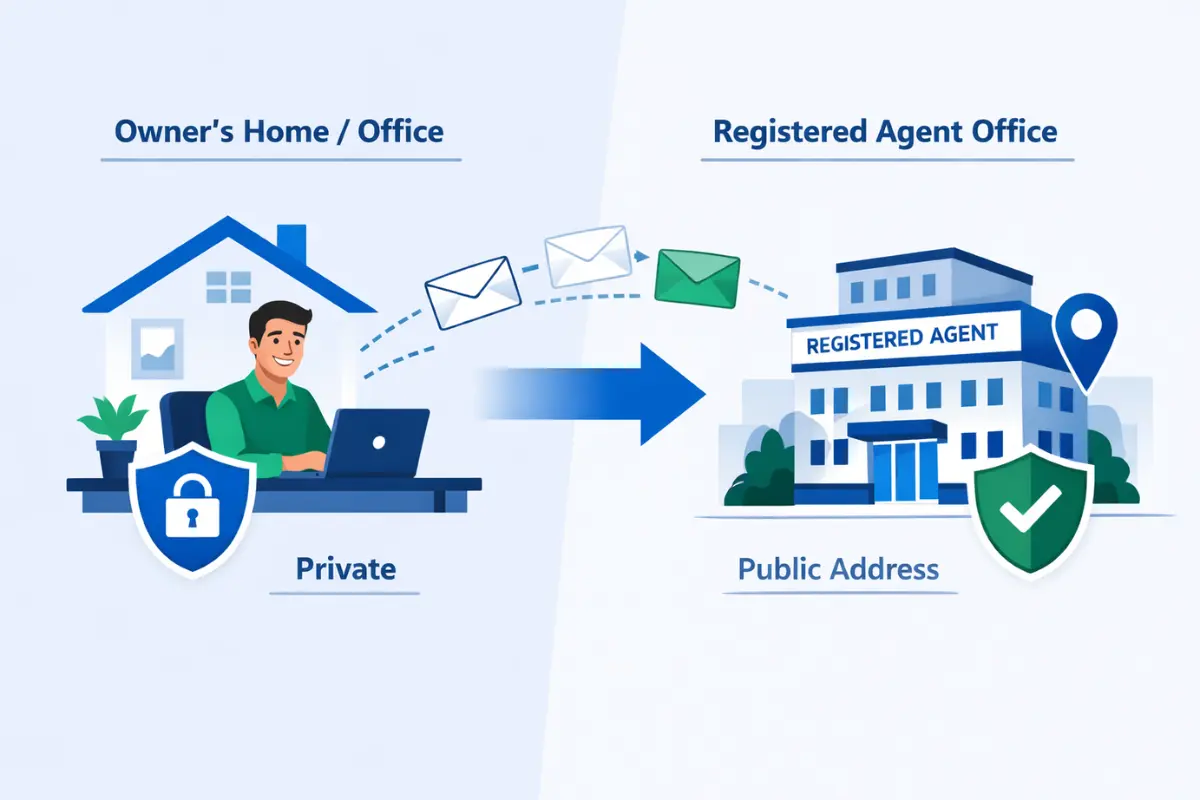
Using a professional business address together with registered agent services, rather than serving as your own registered agent at a personal address, creates a clear separation between public business requirements and private life. By designating a professional Registered Agent Address, owners keep sensitive residential information off state filings while still meeting all legal notice requirements. This approach helps manage exposure while maintaining full compliance with state regulations. Understanding how Registered Agent Address choices impact privacy proves valuable for home-based businesses, growing companies, and any entity seeking to protect owner information.
Key Takeaways
-
Your Registered Agent Address is part of permanent public records, so using your home address can expose your residence, family, and daily life to marketers, data brokers, and anyone who looks up your company.
-
Professional registered agent services provide a business address that appears on Secretary of State websites instead of your home, protecting privacy while still meeting legal requirements for service of process and state correspondence.
-
A separate Registered Agent Address helps reduce junk mail, unsolicited sales contacts, and in‑person visits at your home or storefront by routing solicitations and legal documents through a professional intermediary.
-
Using a professional Registered Agent Address supports asset protection and corporate formalities by reinforcing separation between personal and business affairs in public filings and legal records.
-
Registered agents with modern document-management systems can securely receive, scan, and forward legal notices, giving owners timely, private access to critical documents without sacrificing business privacy or compliance across multiple states.
Establishing a Professional Public Profile
The Registered Agent Address appears on the Secretary of State websites in place of business owners' home addresses. When potential clients, partners, or investors research companies, they see professional business addresses rather than residential streets. This presentation helps maintain corporate image and separates personal spaces from business operations.
Commercial Registered Agent services maintain business addresses in professional office buildings. These locations provide a consistent, credible public presence regardless of where owners actually work. Understanding the fundamentals of a registered agent clarifies how address choices affect business presentation.
Reducing Unsolicited Mail and Solicitations
Public databases attract marketers creating mailing lists targeting new businesses. Secretary of State records become sources for commercial solicitations and junk mail. When personal addresses serve as Registered Agent Address locations, this influx reaches owners' homes or private mailboxes.
Marketing companies monitor business formations and send promotional materials to newly registered entities. Volume increases significantly after formation, with some owners receiving dozens of unsolicited offers weekly.
Agent services directed to professional addresses filter this noise. Registered agents receive business mail at their locations and forward only official state correspondence and legal documents to business owners.
Safeguarding Your Home Address from Public Search
Home-based business owners face unique Privacy Protection challenges. Operating from residences makes sense economically, but listing home addresses in state filings exposes private living situations to public scrutiny. Anyone can search business databases and obtain residential addresses that were previously considered private.
This exposure creates security concerns beyond unwanted mail. Disgruntled customers or individuals with grievances can locate owners' homes through simple online searches.
Using a registered agent for LLC services keeps the owner's residence separate from the business's presence. Professional agents provide physical office addresses listed in public records, while their actual business operations continue from homes. Understanding what registered agents do explains how professional services support home-based operations.
Controlling the Delivery of Sensitive Legal Documents
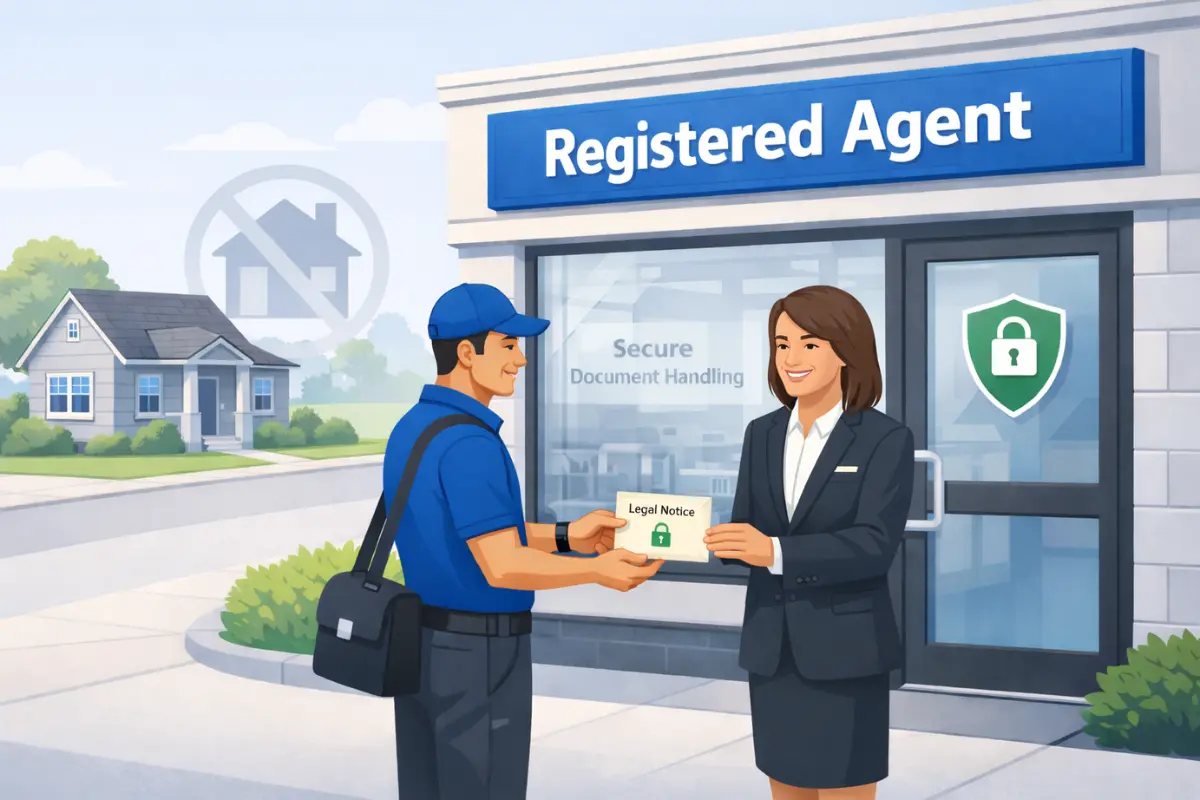
Process servers deliver lawsuits and subpoenas to public addresses listed in state records. These deliveries occur wherever the Registered Agent Address indicates, potentially at owners' homes, in front of families or neighbors. Legal matters become public events when service is made at a residential address.
Service of process agent addresses ensures sensitive documents reach secure, professional environments. Process servers visit agent offices, not owner residences. Legal matters remain confidential until owners choose to address them.
Modern document management systems help organizations efficiently receive, track, and respond to sensitive legal documents. Professional registered agents use technology solutions that provide immediate owner notification.
Maintaining Privacy During Workplace Interactions
Businesses with physical storefronts or client-facing locations face reputational risks when legal notices are publicly posted. Clients witnessing document exchanges or employees present during process service can create awkward situations that affect the professional atmosphere.
Public delivery of legal notices raises questions about business stability. Even routine legal matters appear concerning when delivered visibly in business environments.
Separate Registered Agent Address locations prevent these disruptions. Legal notices are delivered to designated location offices away from business operations. Owners receive confidential notifications without public workplace delivery, which affects business relationships.
Protecting Personal Information During Expansion
Foreign qualification to expand into new states requires a registered agent in each jurisdiction. Using personal addresses in multiple states increases privacy exposure by placing owner information in numerous public databases.
Corporate Registered Agent services with nationwide presence provide professional addresses across all jurisdictions. Single providers handle multi-state representation, preventing owners from listing personal addresses in each expansion state.
State compliance complexity increases with geographic expansion. Professional agents familiar with multi-state operations support compliance while protecting privacy. Registered agent provider information details multi-state service capabilities.
Prevention of "Doxing" and Random Walk-ins
Public-facing addresses can lead to unwanted in-person visits from disgruntled individuals or aggressive salespeople who use state records to locate business owners. "Doxing" involves publishing private information to encourage harassment.
Professional agents act as physical barriers between public records and private locations. Visitors arriving at agent offices find trained staff handling official business, not direct access to owners.
Random walk-ins by vendors or solicitors disrupt operations and raise security concerns. Business privacy protection through separate agent addresses prevents these disruptions.
Digital Privacy and Data Scraping
Third-party websites scrape government databases to create online business directories. Once home addresses are entered into public records through state filings, they propagate across internet databases. Removing addresses from these automated digital cycles proves difficult after initial publication.
Data aggregators compile business information from multiple sources, creating comprehensive profiles that include addresses and officer names that appear in search results.
Using a professional Registered Agent Address location from formation prevents personal data from entering these digital systems. Addresses appearing in scraped databases belong to agent offices, not owner homes.
Asset Protection and Entity Separation
Maintaining corporate formalities supports the "corporate veil," protecting owners from personal liability. Keeping business filings professional and separate from personal life helps reinforce legal distinctions between owners and entities.
Use of a Professional Registered Agent Address demonstrates a commitment to proper corporate formalities. Professional addresses in state filings support separation between personal and business affairs.
Legal compliance services include proper documentation and professional representation in state records. While no single factor guarantees asset protection, maintaining professional separation supports formal legal structures.
Reliable Notice Without Public Exposure
Professional agents scan and upload documents to secure portals immediately upon receipt. This allows owners to stay informed privately and electronically. Documents arrive at agent offices, are digitized, and become accessible through password-protected systems.
Electronic notification provides instant awareness without physical delivery to owner locations. Owners who travel or work remotely maintain consistent access regardless of their physical location.
Managing legal obligations electronically from anywhere without disclosing actual locations demonstrates how modern services support business flexibility. Guidance on choosing registered agents explains evaluation criteria for service selection.

Protect Your Business Privacy with a Trusted Registered Agent
Registered Agent Address choices create lasting impacts on business privacy and professional image. Professional addresses separate public compliance requirements from private owner information while maintaining full state compliance.
Fines for not having a valid registered agents vary by state (for example, California charges $250, Texas $50 initially, Delaware issues warnings before dissolution). Many states provide grace periods (typically 30-60 days) before imposing penalties, but failure to comply leads to progressively severe consequences, including administrative dissolution. Requirements and penalties vary by state; always check your Secretary of State's website for jurisdiction-specific rules.
InCorp offers registered agent services across all 50 states, DC, Puerto Rico and U.S. Virgin Islands, providing professional addresses that protect owner privacy while ensuring reliable document handling. Our Entity Management System with EntityWatch® tracks compliance deadlines and to help efficiently manage multi-state obligations.
Discover how InCorp can help protect your business's privacy. Contact InCorp to learn more about our registered agent services and how we help businesses maintain privacy across all jurisdictions.
FAQs
What is the difference between a physical business address and a Registered Agent Address?
A physical business address (or principal office address) is where your business operates or receives regular business mail and customer communications, such as your storefront, office, or workspace. A Registered Agent Address, by contrast, is the specific physical address listed with the state where a designated registered agent is legally required to receive service of process and official government correspondence during normal business hours, and it can be completely different from your operating location to help protect privacy and ensure reliable handling of legal documents.
What happens if my registered agent resigns or becomes unavailable?
States provide short windows to appoint new agents after resignations. Statement of Change forms notify states of agent replacements. Failing to appoint new agents within the required timeframes can result in penalties or administrative dissolution, which can affect business standing.
Does a registered agent give legal advice?
No. Registered agents receive documents but do not interpret laws or provide legal guidance. Their role remains administrative, ensuring proper receipt and forwarding of official correspondence. Business owners should consult attorneys for legal advice regarding documents received.
Can I use the same registered agent for multiple businesses?
Yes. Many owners use a single professional service managing all entities in one place. This centralization simplifies compliance tracking across multiple businesses while maintaining consistent Privacy Protection for all entities through unified professional representation. This is exactly what InCorp is designed to support, providing multi‑state, multi‑entity registered agent coverage so business owners can manage all their companies' registered agent needs through one provider and platform.
Do I need a registered agent if my business has no physical office?
Yes. Even online-only businesses must list registered agents with physical addresses in formation states. Virtual businesses require a Registered Agent Address that meets state requirements for service of process delivery during standard business hours.
Can I use a virtual office address as my Registered Agent Address?
A Registered Agent Address must be a physical street address where someone can accept service of process during normal business hours, so a typical virtual office or mailbox service alone may not qualify. Some professional registered agent service providers use commercial office locations that meet these physical address and business-hours requirements, while still offering virtual office services separately for your primary business address needs.
Is my home address protected if I list only a professional Registered Agent Address on formation documents?
If you use a professional registered agent instead of your home as the Registered Agent Address, the public records for service of process will show the agent's physical office, not your residence. However, your home address can still appear in other state or licensing records if you list it as your principal office address, so you may also want a separate business address for licenses and business records to keep your home address private.
Can a PO Box or mailbox service be used as a Registered Agent Address?
A PO Box or private mailbox service is not acceptable as a Registered Agent Address because the law typically requires a physical street address where legal documents can be personally delivered. A commercial registered agent maintains a real physical office space that can receive official legal documents and government correspondence in person during regular business hours.
What happens if legal papers are served at my Registered Agent Address and I'm not there?
When you appoint a professional registered agent, their staff accept service of process and other official legal documents on your company's behalf, even if you are unavailable or out of state. They then forward these critical legal documents to you according to their mail-handling and notification procedures, helping you avoid missed deadlines that could lead to default judgments or administrative dissolution. With InCorp, documents are scanned the same business day and made available electronically through the client portal, so you can review and act on them promptly from anywhere.
Are registered agent fees tax-deductible?
Registered agent fees typically qualify as ordinary and necessary business expenses eligible for tax deduction under IRS rules. However, business owners should consult their accountant or tax professional to confirm deductibility based on their specific situation and ensure proper documentation for audit purposes.
Disclaimer: This content is intended for general educational and informational purposes only and does not constitute legal, tax, or accounting advice. Every effort is made to keep the information current and accurate; however, laws, regulations, and guidance can change, and no representation or warranty is given that the content is complete, up to date, or suitable for any particular situation. You should not rely on this material as a substitute for advice from a qualified professional who can consider your specific facts and objectives before you make decisions or take action.