
Personal Assets Protection: How an LLC Shields Your Personal Property


A real estate investor with three rental properties woke up to a lawsuit after a tenant slipped on icy stairs at one of his buildings. Without an LLC structure, his personal home, savings account, and investment portfolio would be exposed to the lawsuit. He learned that protecting Personal Assets requires more than simply forming a business entity; it demands consistent compliance, proper financial separation, and a clear understanding of how legal protections work.
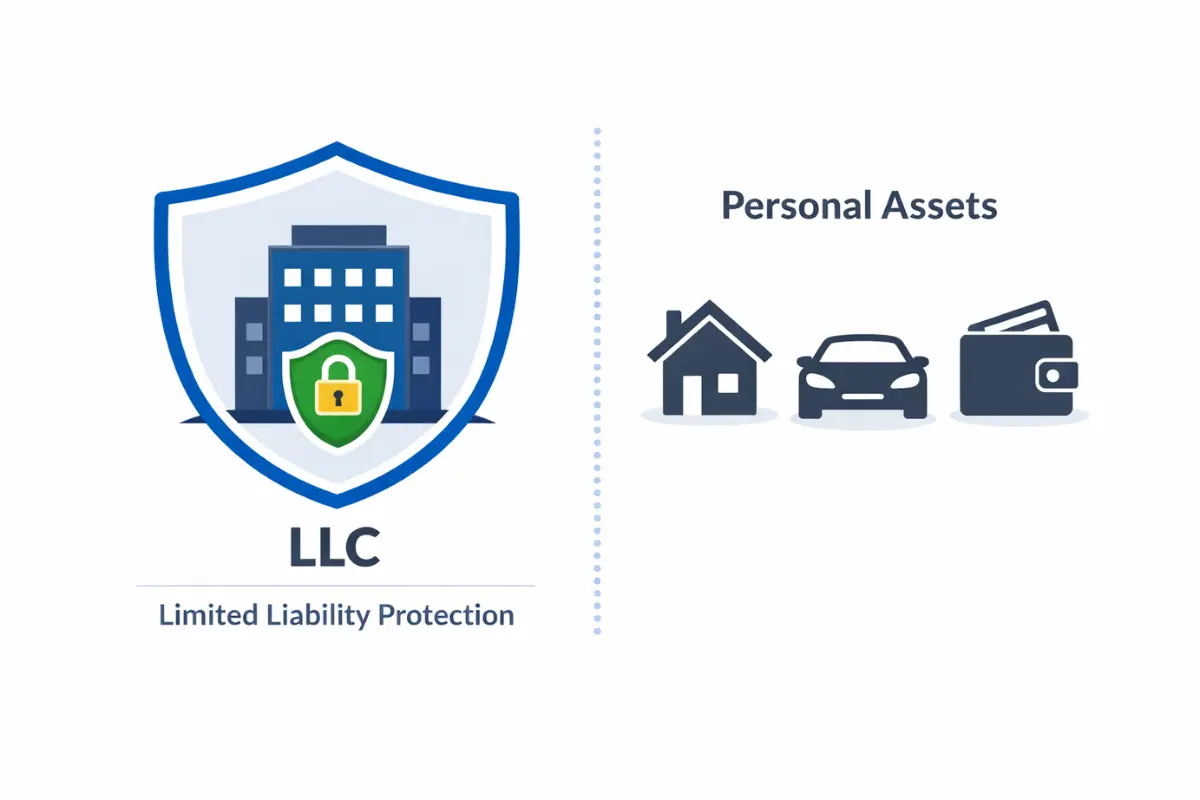
A Limited Liability Company (LLC) creates a separate legal entity, providing a distinct legal separation between the entity and its owners. While LLCs offer liability protection, this benefit arises from choosing and properly maintaining the entity type, not from its mere existence. A primary reason for forming an LLC is to limit personal liability for the business's debts and legal obligations.
Understanding business formation helps entrepreneurs establish proper structures from the start. The protective benefits of LLCs depend entirely on maintaining corporate formalities and treating the business as truly separate from the owner's personal affairs. This separation protects Personal Assets when properly maintained.
InCorp is not a law firm and does not provide legal or financial advice. This information is educational. Readers should consult with qualified legal professionals.
Key Takeaways
-
An LLC separates your personal assets from your business assets, so only what the LLC owns is typically at risk in a business lawsuit or creditor claim.
-
This protection works only if you keep finances and records clearly separate and follow basic LLC formalities; otherwise a court can “pierce the corporate veil.”
-
LLCs don’t cover everything: personal guarantees, your own negligence or illegal acts, and assets held in your personal name can still be reached by creditors or plaintiffs.
-
A solid operating agreement, good standing with the state, and a reliable registered agent all strengthen the LLC’s liability shield over time.
Establishing the Corporate Veil
Forming an LLC creates a "corporate veil LLC" that acts as a legal barrier between business liabilities and personal property. Under proper conditions, this structure helps ensure that creditors of entities cannot pursue members' personal assets to satisfy business debts.
LLC Asset Protection works because the law recognizes LLCs as distinct persons capable of owning property, incurring debts, and entering into contracts independently. When businesses incur obligations, those obligations belong to entities, not to individual members.
Maintaining this protection requires strictly adhering to corporate formalities and avoiding the commingling of personal and business funds. Separating business and personal assets is necessary to preserve protective barriers.
Separation of Personal and Business Finances
Maintaining dedicated business bank accounts and credit lines exclusively for entities proves necessary. Every business transaction within the LLC must flow through business accounts; no personal expenses may be paid from business funds, and no business expenses may be paid from personal accounts.
While Employer Identification Numbers (EINs) serve as helpful federal identifiers, they alone do not create financial separation. Disciplined financial practices are required.
Clear financial boundaries help demonstrate to courts that LLCs are truly separate legal persons. When businesses face lawsuits, opposing attorneys scrutinize financial records seeking evidence of commingling. Any instance in which personal and business funds are mixed can provide grounds for piercing the corporate veil.
Protection Against Business Debts and Loans
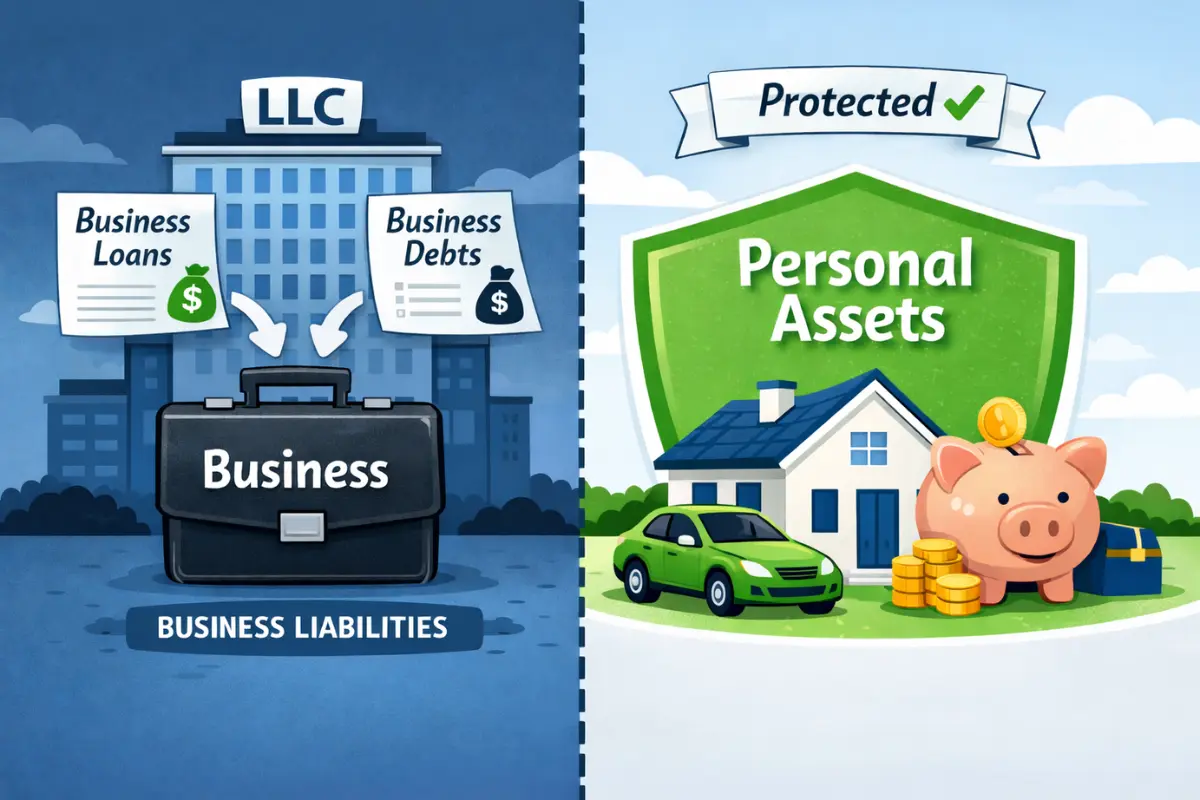
If LLCs enter into contracts or take out loans in their own names, entities (not individual owners) are generally responsible for repayment. This protection helps safeguard Personal Assets like homes, vehicles, and personal savings from being seized to pay business organization creditors.
Investopedia explains that business asset protection through LLCs provides meaningful shields against routine business liabilities. However, owners should be aware that signing personal guarantees for business loans can bypass these standard protections.
Lenders frequently require personal guarantees from LLC owners, especially for small businesses without established credit histories. Before signing personal guarantees, owners should understand that they are voluntarily surrendering LLC protections in exchange for specific obligations.
Limiting Liability for Legal Judgments
LLCs can help protect owners when the entity is sued for business-related incidents, such as slip-and-fall accidents or contractual disputes. In successful lawsuits against LLCs, judgments are typically limited to the assets owned by the business organization entities.
LLC personal asset protection proves particularly valuable in high-liability industries. Businesses with significant public interaction or physical premises face constant litigation risks. LLC structures ensure that one unfavorable judgment does not destroy owners' personal financial security.
This protection does not extend to individuals' own personal negligence or illegal acts. If LLC members personally commit wrongful acts, they remain liable for their own conduct.
The Role of the Operating Agreement in Asset Protection
The Operating Agreement serves as a foundational document outlining the entity's management and financial structures. Well-drafted agreements reinforce entities' status as separate legal persons under the law. These documents establish formal rules governing how businesses operate, make decisions, and handle financial matters.
The SBA explains that operating agreement LLC documents are necessary even for single-member LLCs. Having formal internal rules helps prevent "piercing the corporate veil" by demonstrating that businesses follow consistent procedural standards. Courts examine whether businesses operate formally or merely serve as alter egos of their owners.
Operating agreements should address profit distributions, voting procedures, meeting requirements, and financial management protocols. The more formally businesses operate according to written procedures, the stronger their corporate veils become. Informal operations in which owners disregard their own rules suggest that entities are not truly separate persons deserving liability protection.
Maintaining Good Standing to Preserve Protection
LLCs must meet ongoing state requirements, such as filing annual reports and paying franchise taxes, to remain in "good standing." Failing to maintain an active status with states can lead to administrative dissolution, which may jeopardize entities' liability protections. Dissolved entities lose their separate legal status, potentially exposing members to direct liability.
LLC compliance requirements vary by state but typically include annual reports, registered agent maintenance, and state fee payments. Converting from sole proprietorships to LLCs requires understanding these ongoing obligations. Formation represents just the beginning, as maintenance determines whether protections continue.
Keeping entities compliant helps safeguard their legal rights and operational continuity. States impose deadlines that, if missed, trigger penalties or dissolution proceedings. Professional compliance tracking services help ensure businesses never miss important deadlines that could compromise their protective status.
Importance of a Registered Agent for Legal Notice
Registered agent for LLC services receives service of process and official government correspondence for entities. Indiana explains that having reliable agents helps ensure entities are notified of legal actions in time to respond, helping avoid default judgments.
Default judgments occur when defendants fail to respond to lawsuits within the required timeframes. Without proper notice, businesses may lose cases by default, resulting in judgments they never had the opportunity to defend against. Registered agents provide consistent, reliable service, ensuring legal notices reach business representatives promptly.
Using professional services like InCorp helps protect owners' address privacy while meeting this mandatory state requirement. Professional registered agents maintain business hours at physical addresses in every state where entities operate, guaranteeing service of process acceptance. This reliability protects businesses from technical defaults that could otherwise destroy their defensive positions.
Risks of "Piercing the Corporate Veil"
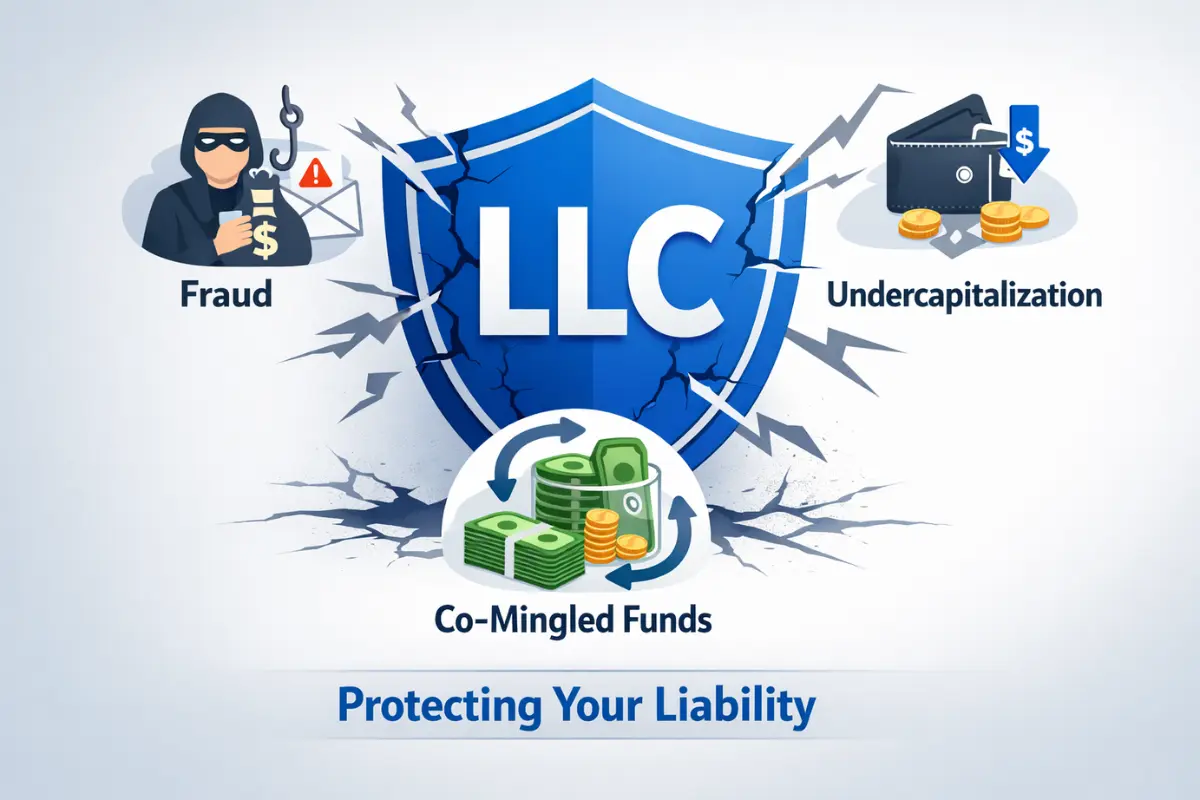
Courts may disregard LLCs' limited liability if owners fail to treat the business as a separate entity. Piercing the corporate veil is a legal doctrine that allows plaintiffs to reach members' Personal Assets despite LLC structures.
Common factors that increase this risk include fraud, commingling funds, or gross undercapitalization. Fraud occurs when businesses are formed to deceive creditors. Commingling means mixing personal and business funds. Undercapitalization means starting businesses with insufficient capital.
Consistent administrative and financial discipline is required to maintain the entities' protective benefits. Business risks include losing liability protections entirely if corporate veils are pierced. Modern LLC management requires vigilance in maintaining proper separation.
Protection in Multi-Member Structures
In some states (such as Delaware, Nevada, Wyoming, and South Dakota), multi-member LLCs benefit from stronger "charging order protection" than single-member LLCs. This prevents members' personal creditors from seizing control of businesses or their assets to satisfy individuals' personal debts. Charging orders limit creditors to receiving whatever distributions businesses make to debtor members.
Charging order protection provides additional layers of stability for business entities as a whole. Without this protection, personal creditors could force business sales or liquidations to satisfy individual members' personal obligations. Such forced sales would harm innocent co-members who bear no responsibility for debtor members' personal financial problems.
These state-specific rules vary considerably in strength and application. Some states provide robust charging order protection, making it the exclusive remedy for personal creditors. Other states allow creditors additional remedies beyond charging orders. Legal business structure choices should consider state-specific protective provisions when multiple members exist.
How Professional Compliance Tools Support Protection
Utilizing filing services and tracking platforms helps business owners manage mandatory deadlines. Automated alerts, such as those provided by InCorp's EntityWatch®, help reduce risks of accidental oversights that could lead to loss of good standing. These tools track filing deadlines across multiple states for businesses operating in various jurisdictions.
Business insurance complements LLC protections by covering risks that liability insurance does not. While LLCs protect personal assets from business obligations, insurance protects business assets from claims and judgments. Comprehensive risk management combines proper entity structures with adequate insurance coverage.
While these tools help maintain entities, owners remain responsible for ensuring all legal and tax obligations are met. Technology assists compliance but cannot replace owners' fundamental responsibilities. Professional services support compliance efforts but work best when combined with owners' understanding of their obligations and commitment to meeting them.
Protect What You've Built — Strengthen Your LLC the Right Way
Forming and correctly maintaining LLCs represents practical steps toward protecting Personal Assets and reducing operational risk. The protective benefits of LLC liability protection depend entirely on maintaining proper boundaries between personal and business affairs. Owners who understand these requirements position themselves to preserve protections throughout the life of their businesses.
InCorp's formation and registered agent services help establish solid foundations for business entities. Professional formation ensures proper documentation from the start, while ongoing registered agent services maintain compliance with state requirements. Contact InCorp to explore how professional services support LLC protection strategies.
InCorp's EntityWatch® system helps businesses maintain compliance standards necessary for ongoing liability protection. Automated tracking across all states where businesses operate ensures no deadlines are missed and no filing requirements are overlooked. This systematic approach to compliance preserves the protective structures that owners work to establish.
FAQs
Does having an LLC protect me from every type of lawsuit?
No. LLCs protect against business-related claims, but they do not protect owners from personal wrongdoing or illegal actions. If members personally commit negligent acts or crimes, they remain liable for their own conduct regardless of the LLC's structure.
Can an LLC protect assets held in my personal name?
No. Only assets owned by LLCs receive protection. Personally owned property remains outside the LLC's shield and is vulnerable to personal creditors. Owners wanting protection must formally transfer asset ownership to LLCs through proper legal conveyances.
Is asset protection automatic after forming an LLC?
No. Protection depends on how well LLCs are maintained through proper recordkeeping, financial management, and compliance. Formation creates potential for protection, but only consistent maintenance actually provides protection. Courts pierce corporate veils when proper separation is not maintained.
Can an LLC protect intellectual property?
Yes, if intellectual property is formally owned by LLCs and not by individual owners. Intellectual property should be assigned to LLCs through written assignments recorded with appropriate government offices. Proper ownership documentation is necessary for LLC protection to extend to intellectual property.
Does an LLC protect future assets, too?
Yes, as long as new assets are properly titled in LLCs' names and managed through entities. All asset acquisitions should occur in LLCs' names with funds flowing through business accounts. Consistent practices regarding new assets maintain the protective separation established at formation.
Does a single-member LLC give me the same personal asset protection as a multi-member LLC?
Yes, a properly formed and maintained single-member limited liability company (LLC) can provide limited liability protection similar to a multi-member LLC, meaning only the LLC's assets are typically available to satisfy business debts and claims, not your personal property. However, courts may scrutinize single-member LLCs more closely, so keeping business and personal finances strictly separate and following formalities (operating agreement, business records, separate business bank account) is critical to maintaining the corporate veil and personal asset protection.
If I pay personal expenses from my LLC's business account, do I lose liability protection?
Using LLC business funds to cover personal expenses (or vice versa) can be seen as commingling business and personal assets, which undermines the idea that the LLC is a separate legal entity. If a court finds that business and personal finances are mixed, it may pierce the corporate veil and hold you personally liable for business debts and liabilities, even though you formed a limited liability company.
Can an LLC protect my personal assets if I personally guarantee a business loan or lease?
When you personally guarantee a business loan, lease, or line of credit, you agree that business creditors can pursue your personal assets if the LLC does not pay. In that scenario, the lender can go beyond only the LLC's assets and reach things like your personal bank accounts or other personal property, despite the LLC structure. Personal guarantees should therefore be used carefully and weighed against other asset protection strategies.
How do liability insurance and an LLC work together to protect my personal wealth?
A limited liability company helps protect your personal assets by legally separating business liabilities from your personal finances, so only the LLC's assets are generally at risk for business activities. General liability insurance and other policies (such as professional liability insurance) then help protect the LLC's business assets and income from claims, creating a layered risk-management approach that safeguards both the business and your personal financial future.
What are common mistakes small business owners make that weaken LLC asset protection?
Many business owners weaken limited liability protection by treating the LLC like a sole proprietorship—using personal accounts for business expenses, failing to maintain separate business bank accounts and business credit cards, or not documenting business operations and decisions. Others fail to keep the LLC in good standing (missing filings or fees) or ignore their operating agreement, all of which can make it easier for business creditors to argue the LLC is not truly separate and that the owner should be held personally liable.
Disclaimer: This content is intended for general educational and informational purposes only and does not constitute legal, tax, or accounting advice. Every effort is made to keep the information current and accurate; however, laws, regulations, and guidance can change, and no representation or warranty is given that the content is complete, up to date, or suitable for any particular situation. You should not rely on this material as a substitute for advice from a qualified professional who can consider your specific facts and objectives before you make decisions or take action.
Share This Article:
Stay in the know!
Join our newsletter for special offers.