
Business Lien Search: What It Is and Why It Matters


A small business owner preparing to finalize a bank loan discovered, days before closing, that the seller had an undisclosed tax lien on the equipment being purchased. Without conducting a Business Lien Search, the buyer would have acquired assets already claimed by the IRS, jeopardizing the new business before operations began.
A Business Lien Search reviews Public records to identify existing liens filed against a business or its assets. According to the NCS Credit Lien Index, lien activity across the U.S. remained elevated in mid-2025, with the index ending Q2 2025 at 58, indicating persistent lien filings as businesses continue to grapple with payment and credit challenges.
Understanding when to conduct lien searches supports informed decision-making. Business compliance processes often include lien searches as due diligence. These searches provide visibility without determining legal validity or enforceability.
Key Takeaways
-
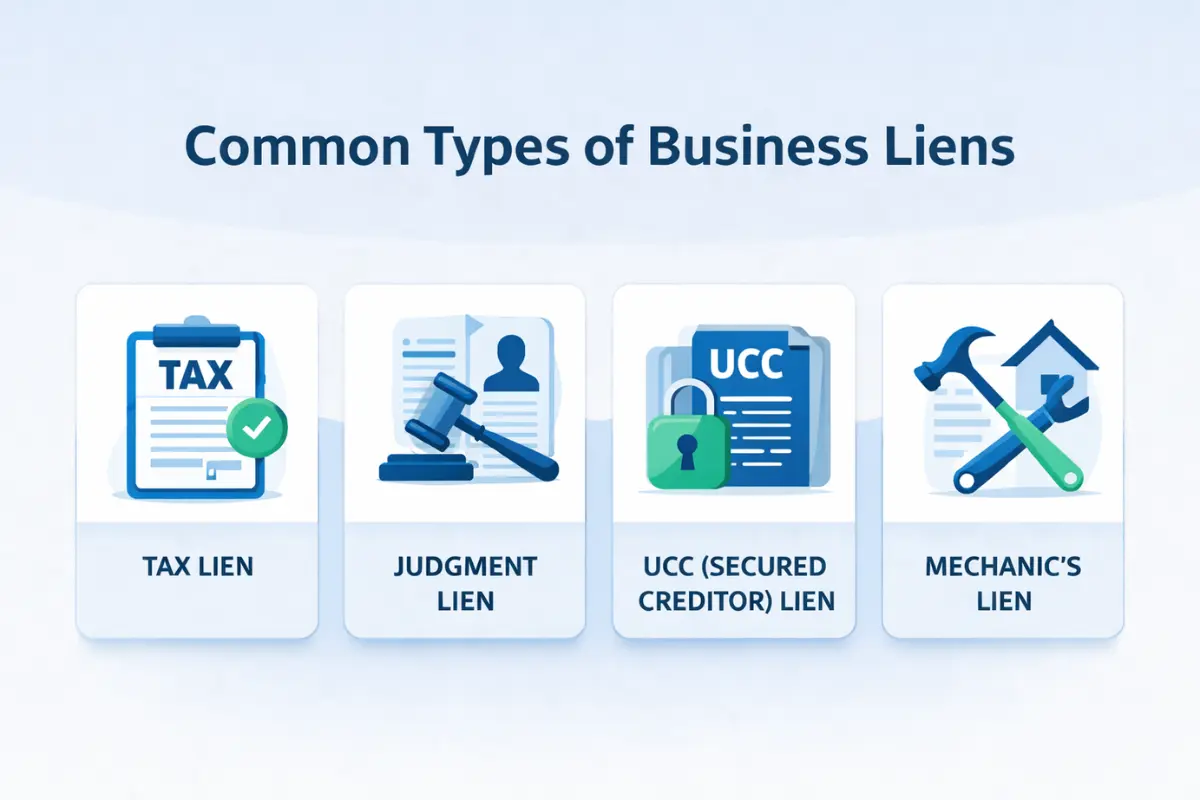
A business lien search reviews public records to identify tax liens, judgment liens, UCC filings, and other statutory liens that may affect a company or its assets.
-
Lien searches are commonly used before acquisitions, during financing reviews, when entering key contracts, or as part of periodic due diligence and broader business compliance programs.
-
Search results show what liens have been filed but do not, by themselves, determine the legal validity, enforceability, or priority of those claims.
-
Because records can be incomplete, delayed, or limited to specific jurisdictions, lien searches provide important visibility but cannot uncover every possible claim or eliminate all risk.
-
Professional support, including UCC search and filing services, can help businesses and lenders efficiently identify recorded security interests and use that information to inform transactions and risk management decisions.
What Is a Business Lien Search?
A business lien check reviews public records to identify existing liens filed against a business or its assets. The lien search process uncovers claims recorded in federal, state, and county filing systems.
Lien searches are information-gathering processes, not legal determinations. Results show what liens have been filed, but do not establish validity or priority. Commercial lien search activities provide data for evaluation with professional advisors.
Search procedures vary by jurisdiction and lien type. Comprehensive searches often require checking multiple filing offices to capture complete information.
What Is a Business Lien?
A business lien is a legal claim placed on business property due to unpaid obligations. On public filings or business credit reports, this may appear as a business debt records lien, indicating that the lien is tied to a specific recorded debt.Liens may arise from taxes, court judgments, financing arrangements, or statutory rights. They can attach to specific property or to all business assets, depending on the lien type, and some remain effective until debts are satisfied and formal releases are filed, giving creditors defined collection rights against the encumbered property.
Common Types of Business Liens
Different lien types follow different rules for creation, recording, and enforcement. The following sections provide high-level explanations without legal interpretation.
Lien classifications help organize search strategies. Knowing which types might affect transactions helps determine the appropriate search scope.
Tax Liens
Tax liens and business debts connect when taxing authorities file claims for unpaid obligations. The IRS files federal tax liens while state and local agencies file liens for their respective taxes. Tax lien verification requires checking multiple levels of government.
Tax liens may attach to business assets depending on applicable laws. Federal tax liens typically cover all taxpayer property. Tax authorities generally have broad collection powers.
Judgment Liens
Investopedia explains that judgments and statutory liens arise from court rulings that grant creditors collection rights. Courts enter judgments after litigation, then creditors record those judgments as liens.
Judgment liens are typically recorded in the state or county records where the business operates. Business credit risk assessments often include judgment searches because judgments indicate businesses lost lawsuits and owe money.
UCC (Uniform Commercial Code) Liens
UCC filings are public records that indicate creditors' security interests in a business's personal property. InCorp's UCC filing services help businesses and lenders properly document security interests. UCC filings are commonly associated with business loans.
UCC-1 financing statements establish secured interests in specific assets or all business property. UCC searches reveal which assets are pledged as collateral. UCC filings follow first-in-time priority rules.
Mechanics' and Other Statutory Liens
Cornell Law School defines mechanics' liens as liens created under state laws for unpaid labor, services, or materials. Contractors and suppliers may obtain lien rights when businesses fail to pay for work or materials.
Eligibility and filing rules vary by state. Statutory liens appear in various public records, depending on the property type and the state's filing systems.
When a Business Lien Search Is Commonly Needed
The following scenarios are common situations in which lien searches occur. Timing varies by transaction and business context.
The scope of the lien due diligence process varies based on transaction size and risk tolerance. Professional advisors help determine appropriate search depth.
Before Buying or Acquiring a Business
Lien searches commonly occur during acquisitions to identify existing claims. Buyers want to understand obligations attaching to assets. Asset encumbrance search activities reveal which assets carry liens.
Discovered liens may affect prices, deal structures, or closing conditions. Pre-acquisition searches provide information for informed decisions.
During Financing or Lending Reviews
Lenders review liens to understand existing security interests. Business risk assessment includes determining what other creditors have claims on borrowers' assets.
UCC searches reveal consensual interests while tax and judgment searches uncover non-consensual claims. Lenders use this information when determining loan amounts and security requirements.
When Entering Certain Contracts or Partnerships
Some businesses review lien records before entering into contracts or partnerships. Business credit risk evaluation may include lien searches on potential partners.
Practices vary by industry and contract scope. Contract provisions sometimes require parties to maintain lien-free status or disclose new liens.
As Part of Ongoing Compliance or Due Diligence
Lien searches may occur as part of periodic reviews to maintain accurate business records. Businesses operating in multiple states may conduct regular searches to ensure they understand their lien positions across jurisdictions. Frequency and scope are not standardized and vary by business needs.
Business compliance programs sometimes include periodic lien monitoring. Changes in lien status may trigger required disclosures to lenders, investors, or regulatory agencies. Regular searches help businesses stay informed about their legal positions.
Publicly traded companies and businesses with complex financing arrangements often maintain ongoing lien monitoring programs. Search frequency depends on business circumstances, contractual obligations, and risk management strategies.
Why Business Lien Searches Matter
Understanding existing liens provides visibility into potential financial obligations affecting business assets. Lien information helps parties assess risks, evaluate asset values, and make informed decisions about transactions. Searches cannot eliminate risks but provide data for analysis.
Discovered liens may reveal information about businesses' financial health, payment histories, and existing obligations. Multiple liens or large tax liens might indicate financial difficulties. Clean search results suggest businesses maintain current obligations, though searches cannot guarantee future performance.
Lien information informs negotiation positions, deal structures, and risk allocation in business transactions. Buyers may request price adjustments. Lenders may require additional collateral or guarantees. Partners may reconsider relationships. Search results provide factual bases for these decisions.
How Business Lien Searches Are Typically Conducted
The general process involves accessing public lien records at the federal, state, and county levels. Procedures vary by jurisdiction and lien type. Federal tax liens and bankruptcy information appear in federal systems. State UCC filings are typically recorded with the Secretary of State.
Lien search process methods range from online database searches to formal record requests. Many states offer free online UCC search systems, while others charge fees.
Comprehensive searches often require checking multiple databases. Businesses operating in several states need searches in each jurisdiction.
Limitations of a Business Lien Search
Several factors limit the completeness and reliability of the search. There are delays between lien filing and record availability. Some filing offices update databases weekly rather than daily. Recently filed liens may not appear in search results for days or weeks.
Incomplete public records pose challenges. Not all liens require public filing. Some claims arise by operation of law without recorded notice. Statutory liens may arise automatically when triggering events occur. Searches cannot reveal unrecorded or unfiled liens.
Jurisdictional differences create coverage gaps. Searches only cover jurisdictions actually examined. Businesses with assets or operations in unchecked locations may have liens that go undiscovered. Multi-state searches require knowing where to look, which may not always be obvious.
How Professional Search and Compliance Support Can Help
While InCorp does not perform general lien searches, it supports businesses with UCC searches and UCC filings, which are commonly used to identify existing secured interests in business assets. Forbes explains that UCC searches serve similar purposes in commercial and financing contexts by helping uncover whether assets are already pledged as collateral.
UCC searches reveal consensual security interests that creditors filed to perfect their positions. These searches help lenders verify collateral availability before extending secured credit. Businesses can check their own UCC filing status to ensure accuracy and monitor their security interest positions.
Professional UCC search and filing support provides time savings and administrative efficiency. Services familiar with state-specific filing systems and requirements help reduce errors. Proper UCC searches and filings protect creditors' security interests and facilitate commercial transactions.
Key Takeaways for Business Owners
A Business Lien Search reviews public records to identify filed liens against businesses or assets. Common lien types include tax liens, judgment liens, UCC filings, and statutory liens. Searches typically occur before acquisitions, during financing reviews, when entering into contracts, or as part of periodic due diligence.
Lien searches provide visibility into existing claims, helping inform business decisions. However, searches have limitations, including delays in timing, incomplete records, and gaps in jurisdictional coverage. Professional support through services like InCorp's UCC searches helps businesses efficiently gather relevant information on security interests.
InCorp's business services include UCC search and filing support, helping businesses and lenders properly document and verify security interests. Professional assistance reduces administrative burdens while helping ensure accurate information gathering.
FAQ's
Why would a business need a lien search?
Lien searches are typically performed before buying a business or its assets, applying for bank financing, entering important contracts, or as part of periodic due diligence and risk management. In each of these situations, a lien search helps identify existing legal claims on business assets so that buyers, lenders, and partners can make informed decisions about price, structure, collateral, and contractual protections.
What types of liens might show up in a search?
A business lien search can reveal several types of liens, including federal and state tax liens for unpaid taxes, judgment liens arising from court cases, UCC liens reflecting secured transactions under the Uniform Commercial Code, and mechanic's or other statutory liens created by specific laws. Each lien type provides different creditors or government agencies with legal rights against a business's property, so understanding the mix of liens helps assess overall risk.
Can a lien search prevent legal or financial issues?
A lien search cannot guarantee that future problems will not arise, but it can significantly reduce the risk of unexpected issues by revealing known, recorded claims before a transaction closes. When parties know about tax liens, UCC filings, or judgments in advance, they can address them through payoffs, escrow arrangements, or revised deal terms instead of being surprised after money changes hands.
How often should a business conduct a lien search?
There is no fixed rule, but many businesses and lenders conduct lien searches whenever they are considering a major transaction, such as a significant loan, acquisition, asset sale, or new long‑term partnership. Some organizations also build periodic searches into their ongoing due diligence processes—especially if they extend trade credit, operate in multiple jurisdictions, or are subject to investor or lender reporting obligations.
Does a lien search show all possible claims on a business's assets?
No. A lien search shows only what has been recorded in the public offices and jurisdictions that are actually searched, and some liens arise by operation of law without a filing or may be recorded in locations that were not checked. Because of these limits, businesses often combine lien searches with other due diligence steps—such as financial statement reviews, pending litigation searches, and tax compliance checks—and consult legal professionals to interpret the results.
How is a business lien search different from a UCC search?
A business lien search is a broader review of public records that can include tax liens, judgment liens, UCC liens, and certain statutory or mechanic's liens filed against a business or its assets. A UCC search focuses specifically on secured transactions under the Uniform Commercial Code, revealing security interests in a debtor's personal property that have been perfected by filing a UCC‑1 financing statement.
Why does the seller's exact legal name matter in a business lien search?
Public lien indexes are typically organized by the debtor's exact legal name, so even small spelling errors or missing words can cause existing liens to be missed. Using the correct legal name from formation documents (for entities) or official identification (for individuals) helps ensure the lien search captures all relevant records tied to that party's business assets.
Can a business lien search show both real property and personal property liens?
Yes, but usually through different record systems. Liens on real property, such as mortgages or certain mechanic's liens, are often recorded at the county level in land or deed records, while UCC liens and many tax or judgment liens related to personal property appear in state‑level or other designated registries. A thorough business lien search may therefore need to cover multiple offices or databases depending on the types of liens and assets involved.
Why might a lender or buyer care about "blanket liens" discovered in a search?
A blanket lien often secures a creditor's interest in "all assets" or substantially all of a debtor's personal property, which can leave little unencumbered collateral for new lenders or buyers. When a business lien search uncovers a blanket lien, potential lenders or purchasers may need payoff letters, lien releases, or intercreditor agreements to clarify what assets will remain subject to that creditor's legal claims after a transaction.
Is a one‑time business lien search enough for ongoing risk management?
Not always. Because new liens can be filed after an initial review, businesses, lenders, and investors often incorporate periodic lien searches into their broader due diligence and risk management processes, especially before major financings, additional capital raises, or significant asset sales. Regular searches help identify newly filed tax liens, judgment liens, or UCC filings that could affect the value or availability of business assets over time.
Disclaimer: This content is intended for general educational and informational purposes only and does not constitute legal, tax, or accounting advice. Every effort is made to keep the information current and accurate; however, laws, regulations, and guidance can change, and no representation or warranty is given that the content is complete, up to date, or suitable for any particular situation. You should not rely on this material as a substitute for advice from a qualified professional who can consider your specific facts and objectives before you make decisions or take action.
Share This Article:
Stay in the know!
Join our newsletter for special offers.