
A Complete Guide to the Trademark Filing Process


A startup founder spent months developing a unique brand name and logo for her sustainable clothing line, only to discover during the Trademark Filing process that a similar mark already existed in her industry. The USPTO rejected her application, forcing her to rebrand entirely at high cost. Understanding the systematic steps involved in trademark registration helps businesses avoid such setbacks and protect their brand identities effectively from the start.
A trademark is a type of intellectual property that protects brand identifiers such as names, logos, and slogans used to distinguish an entity's goods or services in the marketplace. While common-law rights exist, formal registration with the United States Patent and Trademark Office (USPTO) provides broader legal protections nationwide. The USPTO received over 730,000 trademark applications in 2023 (approximately 657,000 in fiscal year 2023), according to Patent PC, underscoring the importance businesses place on protecting their brand identity in a competitive marketplace.
The filing process is a procedural sequence that helps an entity establish its exclusive right to a mark. Understanding business naming forms the foundation for trademark decisions. Each step requires careful attention to detail and compliance with USPTO requirements.
InCorp is not a law firm and does not provide legal or financial advice. This information is educational. Readers should consult with qualified legal professionals.
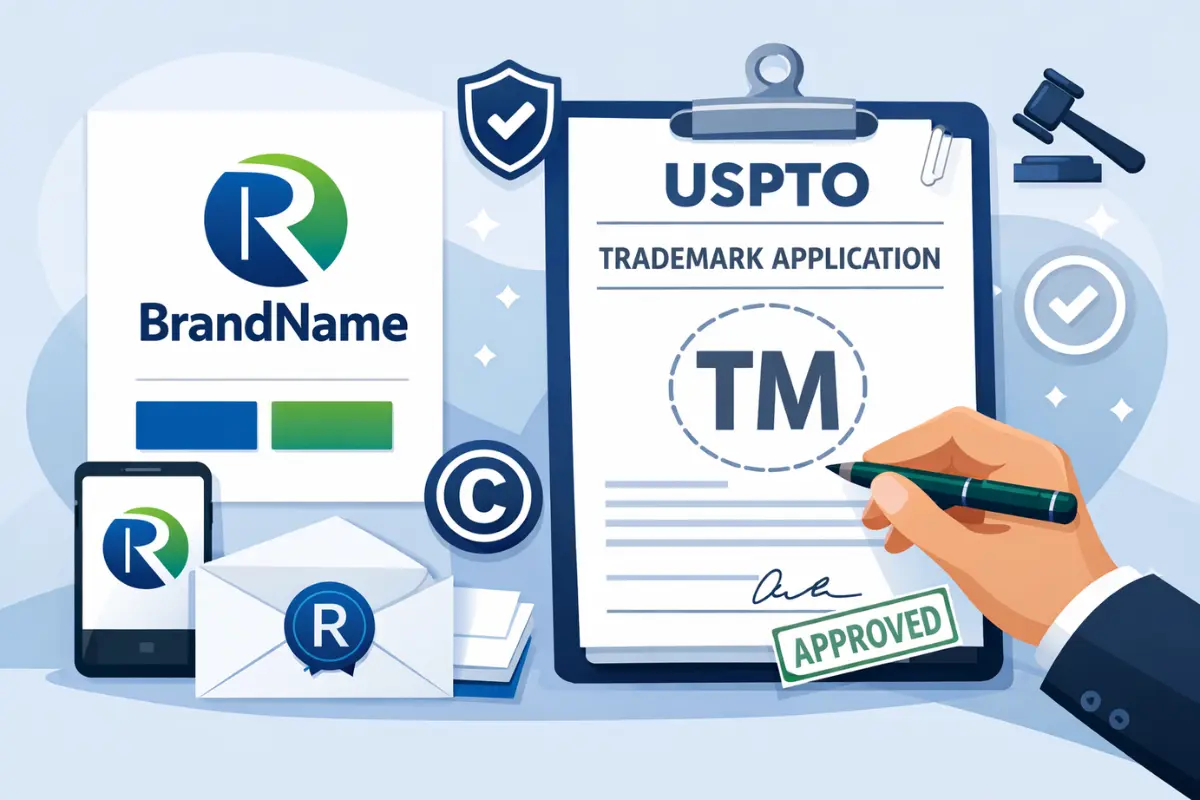
Key Takeaways
-
A trademark is an intellectual property right that protects brand identifiers (names, logos, slogans) and, when federally registered with the USPTO, provides broader nationwide protection than common‑law use alone.
-
The trademark filing process follows a structured sequence—search, choose filing basis, select classes, file, examination, publication, and registration—so careful planning at each step helps avoid costly refusals and rebranding.
-
Applicants must choose between “Use in Commerce” and “Intent to Use” bases, submit proper specimens, and classify goods/services correctly to ensure the application matches how the mark is or will be used in the marketplace.
-
Registration is not the end of the process: owners must file maintenance documents (like Declarations of Continued Use and renewals) and actively monitor for infringement to keep their trademark rights strong over time.
-
InCorp’s trademark services support businesses with searches, application preparation, and administrative communication with the USPTO, helping filings stay organized and compliant while leaving legal advice to licensed trademark professionals.
Step 1: Conducting a Preliminary Trademark Search
Searching the USPTO database to identify existing marks that may be similar to the proposed trademark represents the necessary first step in the trademark registration process. This assessment helps entities evaluate the likelihood of "confusion" with registered marks before committing to the federal registration process.
Trademark search tools include the USPTO's Trademark Electronic Search System (TESS), which provides free access to the federal trademark database. Investopedia explains that searches should examine not only exact matches but also terms that sound or look similar in related industries.
Comprehensive searches include state trademark databases, common-law use research via internet searches, and domain name registries. This preliminary work prevents wasted application fees and rebranding costs if conflicts surface during examination.
Step 2: Determining the Basis for the Application
Two primary filing bases exist for U.S. USPTO trademark application submissions: "Use in Commerce" and "Intent to Use." The USPTO identifies common problems that arise when applicants select inappropriate filing bases. The chosen basis affects application requirements, timelines, and what applicants must prove to the examining attorney.
Selecting the correct basis requires an honest assessment of current business operations. Using the wrong basis can lead to application refusal or abandonment. Understanding each option's requirements and implications helps applicants make informed decisions aligned with their business circumstances and timelines.
Use in Commerce (Section 1a)
This basis applies when entities are already using the mark in the ordinary course of trade. "Use in commerce" means the mark appears on goods sold or transported across state lines, or in connection with services rendered across state boundaries. Applicants must provide specimens showing actual use at the filing date of the application.
Acceptable specimens of goods include photographs of product labels, tags, or packaging that display the mark. For services, acceptable specimens include advertising materials, brochures, or website screenshots that show the mark used in connection with the service offerings. The USPTO scrutinizes specimens carefully to ensure they demonstrate proper trademark use rather than merely ornamental or informational appearances.
Applications filed under Section 1(a) proceed directly to examination and, if approved, to potential registration without additional use-proving requirements. This streamlined path makes Use in Commerce the preferred basis when marks are already in active commercial use.
Intent to Use (Section 1b)
This basis allows entities to reserve marks they plan to use in the future, providing early filing dates while businesses prepare for launch. Intent to Use applications protect marks during development periods, preventing others from registering confusingly similar marks before launch. However, applicants must eventually prove actual use before receiving registration.
After approval, Intent to Use applicants receive a notice of allowance rather than immediate registration. They must then file a statement of use within six months (with possible extensions) showing the mark is now used in commerce. Without a timely Statement of Use submission, applications are abandoned despite initial approval.
Intent to Use filings require good faith intentions to use marks in commerce. Filing without a genuine intent to use constitutes fraud and may invalidate any eventual registration. This basis suits businesses in development stages, but should not be used speculatively to warehouse marks without actual business plans.
Step 3: Selecting the Correct International Classes
Trademark classes are explained through the Nice Classification system, which categorizes goods and services into 45 classes. Classes 1-34 cover goods while Classes 35-45 cover services. Entities must accurately identify the classes that match their business activities to ensure an appropriate scope of protection.
Each class requires separate fees and evidence of use for that category. The USPTO's Identification Manual lists pre-approved descriptions for thousands of goods and services, helping applicants choose precise classifications.
Incorrect classification can limit protection or lead to refusals. A clothing retailer needs Class 25 (clothing), while a restaurant needs Class 43 (restaurant services). Professional classification assistance helps ensure comprehensive protection matching business operations.
Step 4: Submitting the Application and Filing Fees
Understanding how to file a trademark begins with submission through the USPTO's electronic filing system, Trademark Center. Entities must provide a clear representation of marks and precise descriptions of associated goods or services. As of 2025, filing fees are $375 per class for electronic applications using the TEAS Standard form. Fees are subject to change; check uspto.gov for current rates.
Filing fees are non-refundable and vary depending on application type and the number of classes selected. Understanding business formation includes recognizing these intellectual property costs as part of startup budgets. Applications require complete and accurate information at submission because amendments are subject to restrictions.
Electronic filing provides faster processing and lower fees than paper applications. The Trademark Filing date becomes the priority date, establishing the applicant's place in line relative to other applications. This date is important if conflicts arise with marks filed before or after it.
Step 5: The Examination Phase by the USPTO
Once filed, applications are assigned to examining attorneys who review them for compliance with legal and procedural requirements. Examiners check for conflicts with other marks and ensure marks are not merely descriptive or generic. The Trademark Trial and Appeal Board handles appeals if applicants disagree with examiner decisions.
Examiners evaluate whether marks meet distinctiveness requirements and do not create a likelihood of confusion with existing registrations. They also verify that all filing requirements are satisfied and specimens adequately demonstrate proper use.
Examination does not guarantee eventual registration. Approximately 40% of applications receive initial refusals that require responses.
Step 6: Responding to Office Actions
An "Office Action" is a formal letter from the USPTO identifying issues or refusals that must be addressed before a mark can proceed. Common issues include the likelihood of confusion with existing marks, descriptiveness refusals, or specimen inadequacies. Entities must submit timely and substantive responses to overcome these objections.

Response deadlines are typically six months from the issue date of the Office Action, though applicants can request extensions. Failure to respond timely manner results in application abandonment. Responses must directly address every issue raised and provide legal arguments and evidence supporting registration.
Professional filing support can help entities navigate these technical legal responses to keep applications moving forward. Trademark attorney assistance proves particularly valuable for complex refusals or when multiple issues arise. Well-crafted responses significantly increase approval likelihood.
Step 7: The Publication for the Opposition Period
The USPTO publishes marks in the "Official Gazette" for a 30-day period after overcoming examination objections. This notice of publication allows third parties who believe they might be damaged by registration to file oppositions. Opposition proceedings before the Trademark Trial and Appeal Board resemble federal court litigation.
Third parties can request extensions of time to oppose, potentially extending this period up to 180 days. If oppositions are filed, proceedings can take years to resolve. Most applications face no opposition and proceed smoothly to registration after the 30-day period expires.
During publication, the trademark symbol ™ remains appropriate for unregistered marks. Only after registration issues can entities use the ® symbol indicating federal registration. Using ® before registration violates federal law and can compromise trademark rights.
Step 8: Issuance of the Registration or Notice of Allowance
For "Use in Commerce" applications, the USPTO issues Certificates of Registration if no successful oppositions occur. Registrations confirm federal trademark protection, establishing nationwide priority and exclusive rights. The registration date differs from the filing date but provides significant legal benefits, including presumed validity and nationwide constructive use.
"Intent to Use" applications receive Notices of Allowance, giving entities time to submit Statements of Use. Applicants must file Statements of Use within six months or request extensions totaling up to three years. Without a timely Statement of Use, approvals expire even after the examination and opposition are passed.
Final registration is the federal government's formal recognition of an entity's trademark rights. This registration serves as prima facie evidence of validity, ownership, and exclusive right to use marks nationwide. These presumptions shift the burden to the challengers in litigation.
Step 9: Maintaining the Trademark through Post-Registration Filings
Trademark maintenance requirements include periodic filings to keep registrations active. Entities must file Declarations of Continued Use (Section 8) between the fifth and sixth years after registration. These declarations include specimens showing continued use in commerce and signed declarations under penalty of perjury.
Regular renewal filings are required every ten years to preserve exclusive rights. Renewals combine Section 8 declarations with renewal applications (Section 9). Registered agent services help businesses track compliance deadlines across all jurisdictions and federal filings.
Failure to file required maintenance documents results in cancellation of registration. Unlike many jurisdictions, the USPTO does not send reminder notices. Registration owners are responsible for tracking deadlines and filing on time. Missing maintenance deadlines means losing federal registration and all associated benefits.
Step 10: Monitoring and Enforcing Trademark Rights
The USPTO does not "police" trademarks after registration. Responsibility for monitoring and enforcement lies with entities. Identifying unauthorized third-party use prevents marks from losing distinctiveness through genericide or abandonment. Forbes discusses how trademarks protect business names through active enforcement.
Brand name registration requires ongoing vigilance in monitoring marketplaces for infringement. This includes watching for confusingly similar marks in USPTO applications, domain name registrations, social media accounts, and commercial use. Early detection of infringement allows for a less costly resolution through cease-and-desist letters before litigation becomes necessary.
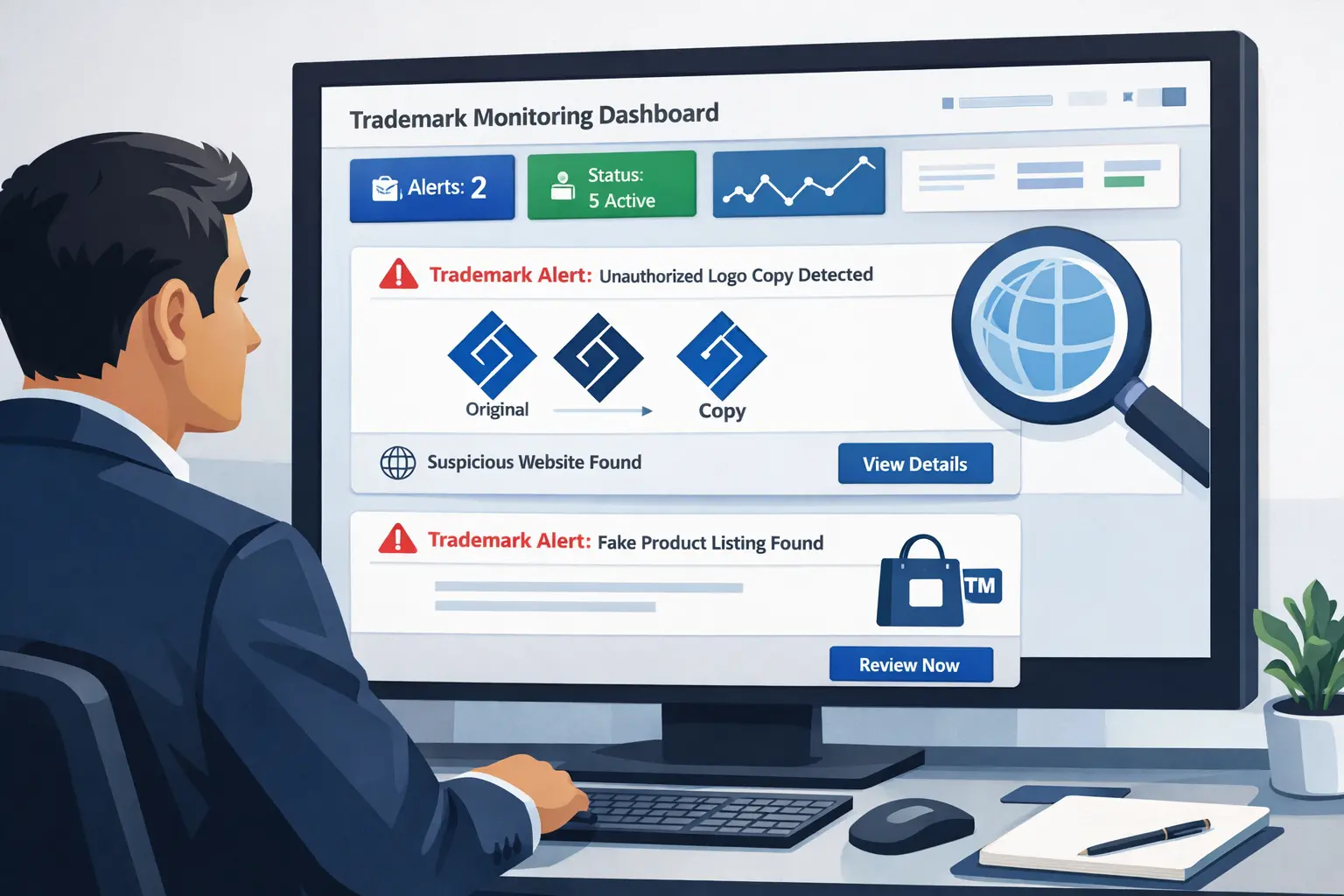
A consistent monitoring strategy helps entities maintain their brands' professional image and legal strength. Professional monitoring services scan trademark applications, domain registrations, and online marketplaces. Some monitoring services integrate with compliance platforms, helping businesses manage intellectual property alongside corporate filings.
Ready to Protect Your Brand? Start Your Trademark Filing Today
While the Trademark Filing process involves detailed steps, it remains important for any business looking to protect unique brand identifiers. Federal registration provides exclusive nationwide rights, legal presumptions of validity, and enhanced remedies against infringers.
InCorp's trademark services help entities manage administrative and compliance requirements throughout the application process. Professional filing support ensures applications meet all USPTO requirements, reducing the likelihood of refusals and delays.
InCorp's Entity Management system with EntityWatch® helps monitor state and federal filing deadlines and maintain entities' good standing across all jurisdictions. Contact InCorp to explore how comprehensive compliance support protects your business at every level.
FAQ's
Can I file a trademark myself without a lawyer?
Yes. The USPTO allows individuals and businesses to file directly, and many applicants successfully complete the process on their own. However, the trademark filing process involves technical details like choosing the correct filing basis, identifying the right classes, and preparing acceptable specimens, so some businesses choose professional support. InCorp's trademark services help with searches, preparing and submitting applications, and handling administrative communication with the USPTO, giving you structured guidance even though InCorp does not provide legal advice or replace the role of a trademark attorney.
Can I trademark a name that's already a business name?
Not automatically. A business name must meet trademark rules and not conflict with existing marks. State business name registration does not equal federal trademark protection. Comprehensive searches determine whether business names qualify for trademark registration.
Does a trademark protect my domain name?
A trademark can support domain disputes, but owning a domain alone does not equal trademark rights. Trademark rights come from use of marks in commerce to identify goods or services. Domain ownership does not provide automatic trademark protection without such use.
Can I trademark a phrase I use in marketing?
Yes, if it's distinctive and used to identify your brand, not just a generic slogan. The phrase must function as a source identifier rather than merely descriptive or informational language. Phrases that consumers recognize as indicating specific brands qualify for protection.
Is a logo and a name covered under one trademark?
No. Names and logos are usually filed as separate trademarks. Filing separately provides broader protection, allowing independent use of each element. Combined filings protect only the specific combination, not individual components.
What is the difference between a trademark and a service mark?
A trademark identifies and protects the brand of goods—such as product names, logos, or packaging—used on physical items like clothing, electronics, or food. A service mark serves the same legal function but applies to services instead of goods, protecting names, logos, or slogans used by businesses like law firms, consulting companies, or marketing agencies to identify the source of their services.
What is the difference between common law trademark rights and federal registration?
Common law trademarks arise automatically from using a mark in commerce, but protection is generally limited to the geographic area where you actually use the mark. Federal registration with the United States Patent and Trademark Office (USPTO) creates a public record, grants nationwide priority for the listed goods or services, and provides additional legal tools such as presumptions of ownership and validity in court.
Why is a trademark search important before I file a trademark application?
A trademark search helps you identify existing trademarks and similar marks in the USPTO database and in common law use that could cause a likelihood of confusion refusal. By spotting conflicts early, you can adjust your proposed mark or filing strategy before paying filing fees and entering the full trademark registration process.
What does an examining attorney do during the trademark registration process?
After you submit your application through the USPTO's electronic system, an examining attorney reviews it to confirm minimum filing requirements are met and checks for conflicting trademarks on related goods or services. The examining attorney also evaluates whether the mark is distinctive, complies with applicable rules, and may issue an Office Action if there are problems that must be addressed before moving to publication.
What is the Trademark Official Gazette and why does publication matter?
The Trademark Official Gazette is the USPTO's weekly online publication that lists marks the Office intends to register. Once your application passes examination, your mark is published there to give the public notice and a chance to file either an opposition or request more time to oppose, which is a key step before a registration certificate or Notice of Allowance can issue.
Disclaimer: This content is intended for general educational and informational purposes only and does not constitute legal, tax, or accounting advice. Every effort is made to keep the information current and accurate; however, laws, regulations, and guidance can change, and no representation or warranty is given that the content is complete, up to date, or suitable for any particular situation. You should not rely on this material as a substitute for advice from a qualified professional who can consider your specific facts and objectives before you make decisions or take action.
Share This Article:
Stay in the know!
Join our newsletter for special offers.